High Bridge: A Span Across Time
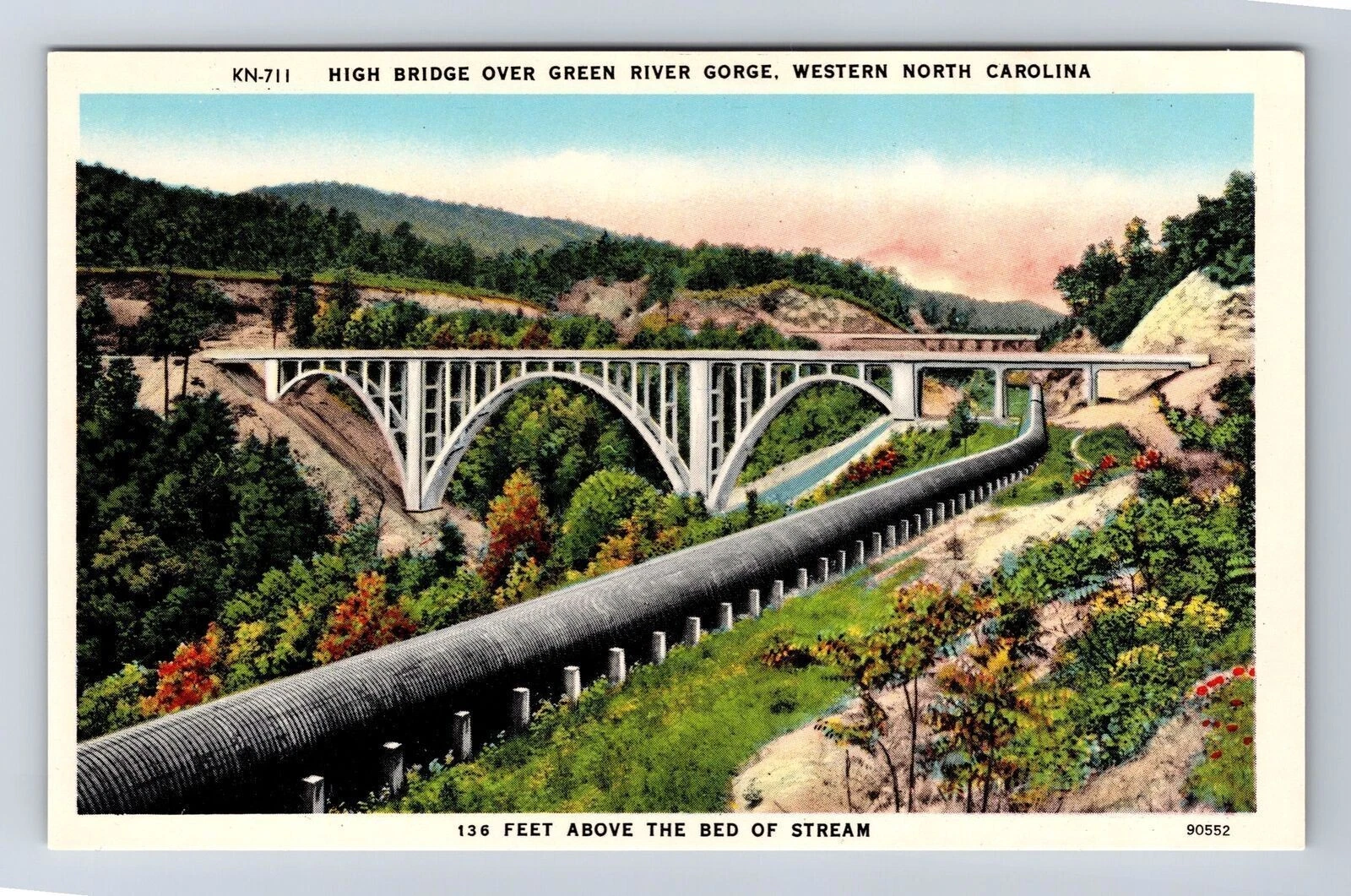
Post Card depicting High bridge
The first thing you notice when you step onto the old High Bridge on U.S. 176, just south of Flat Rock, is a vivid sense of the passage of time.
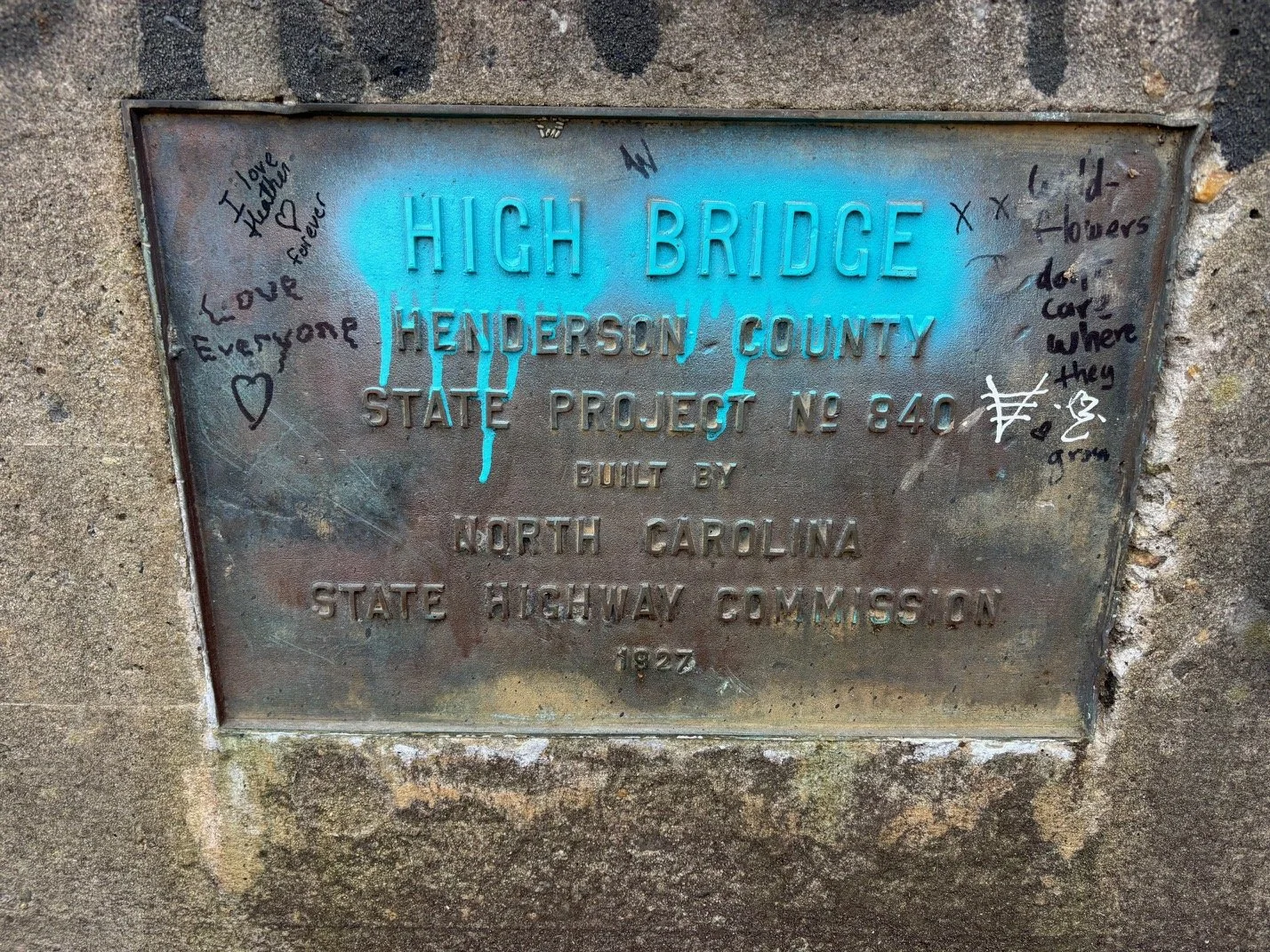
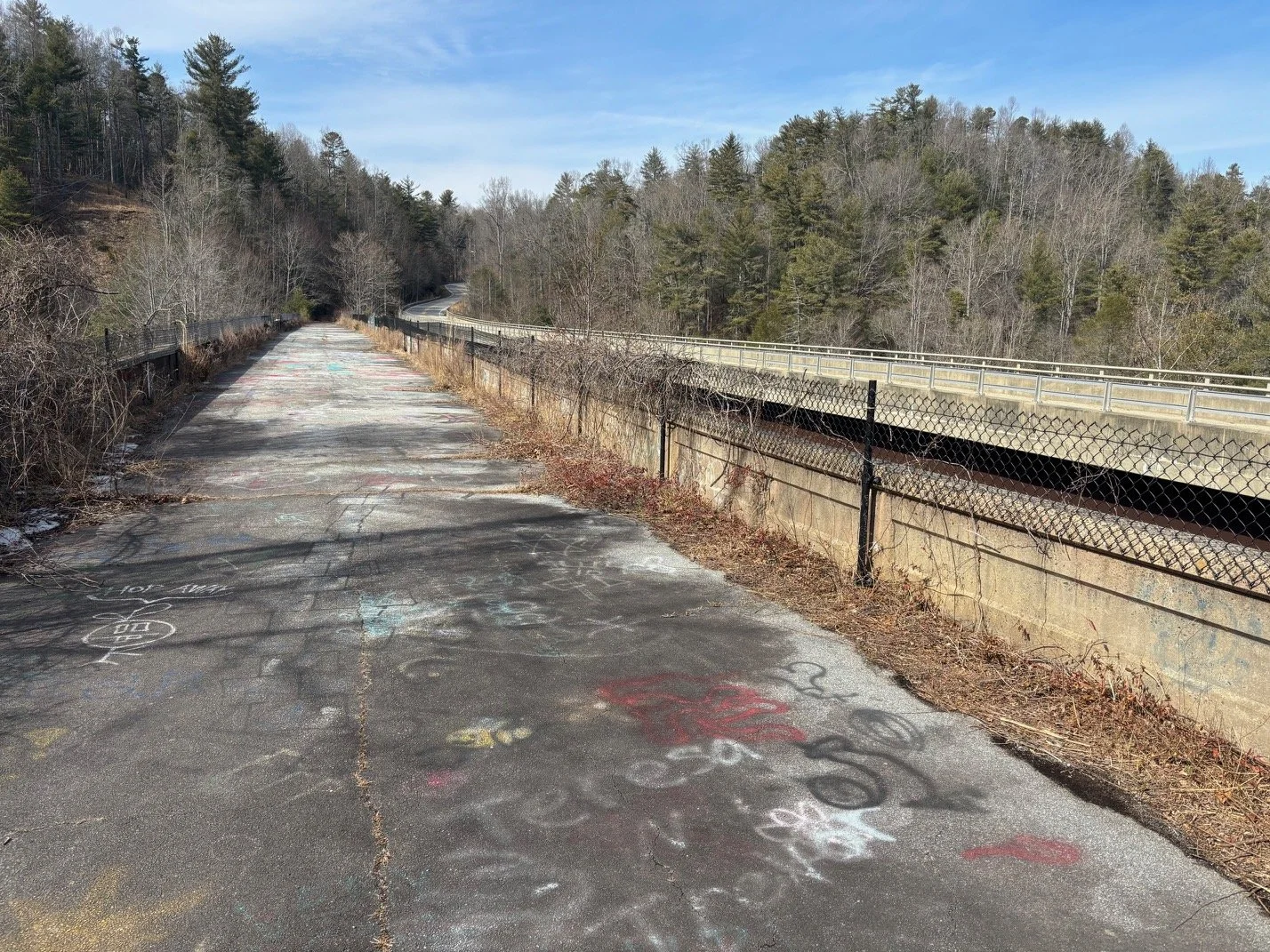
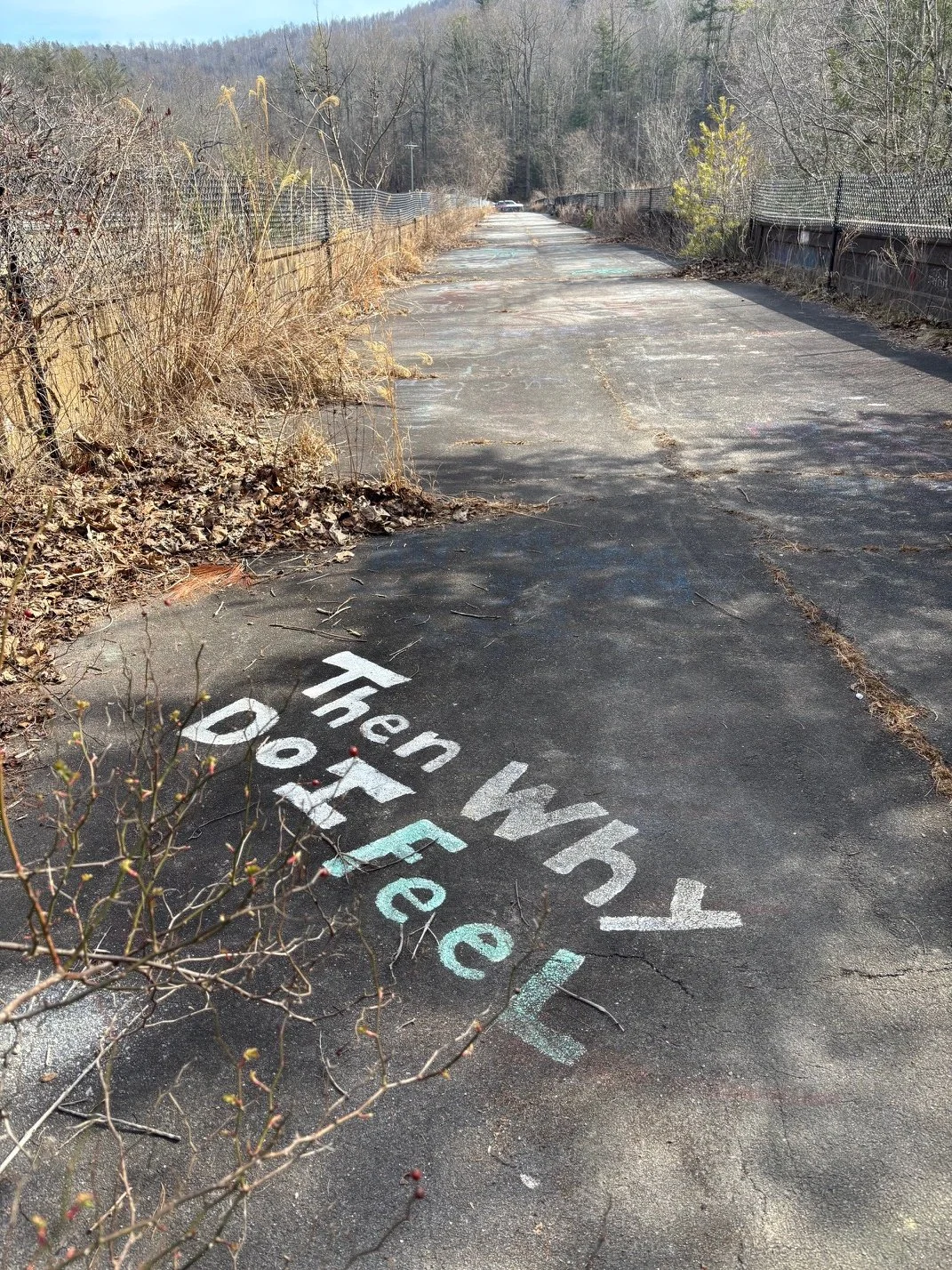
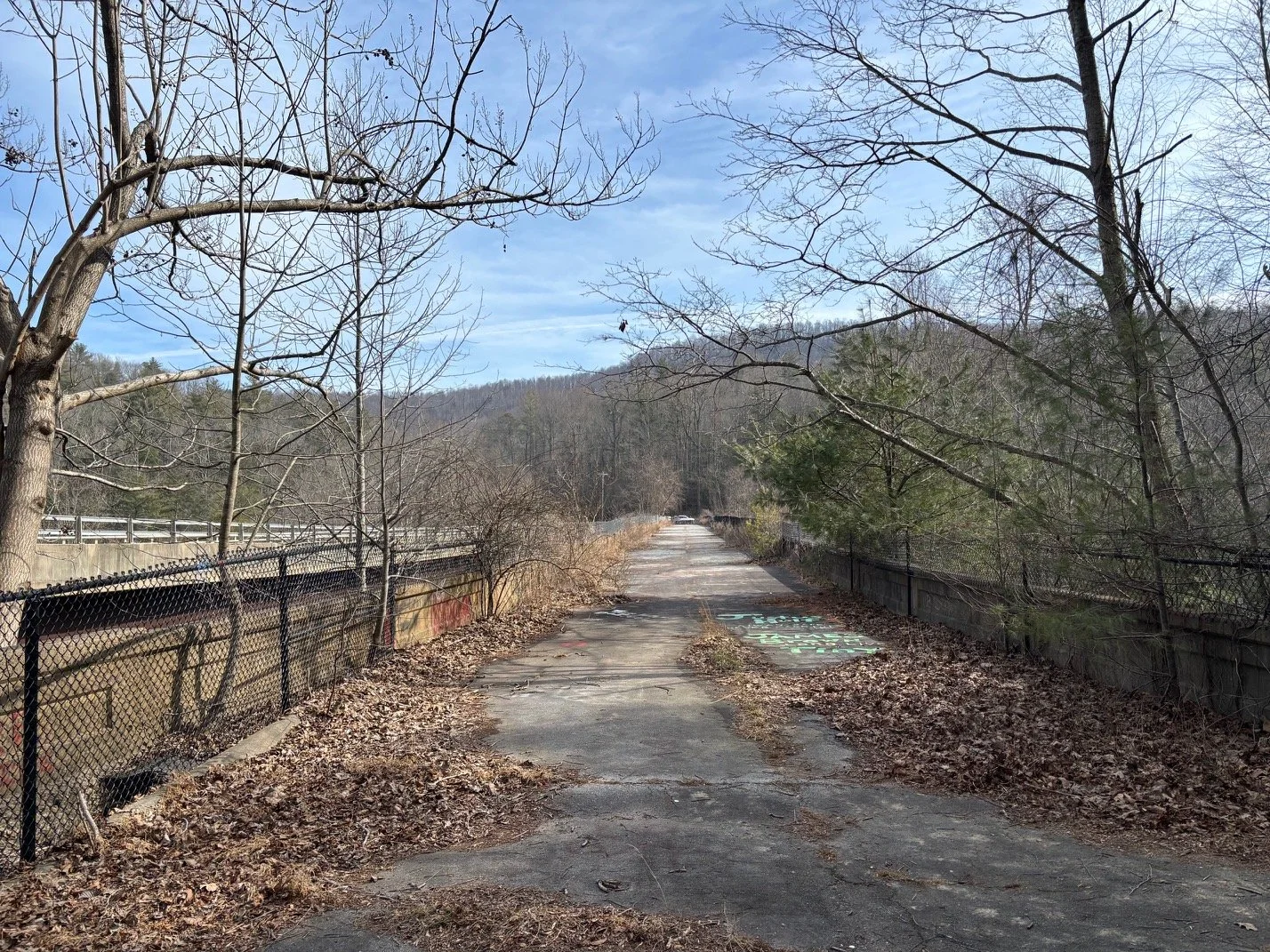
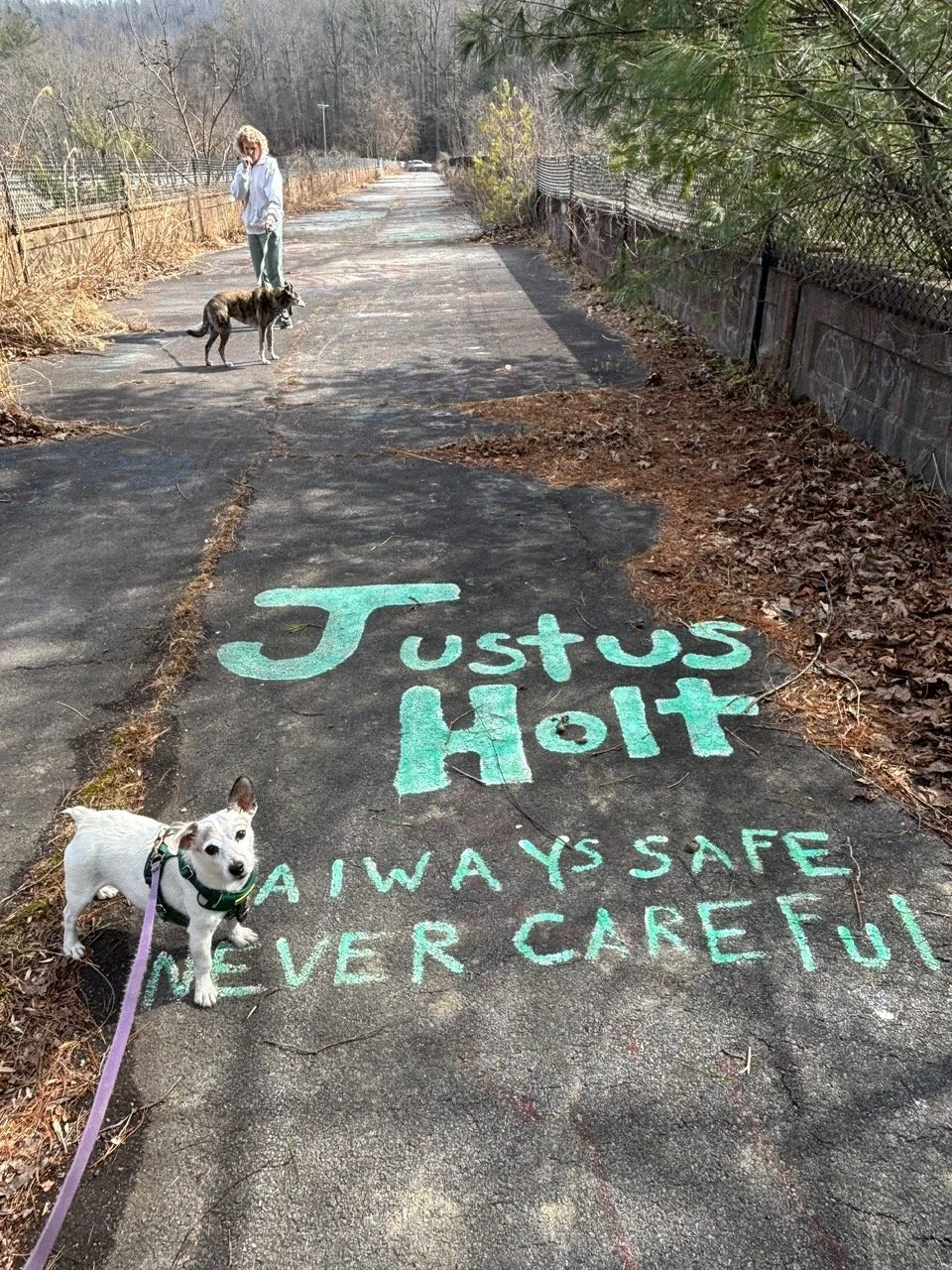
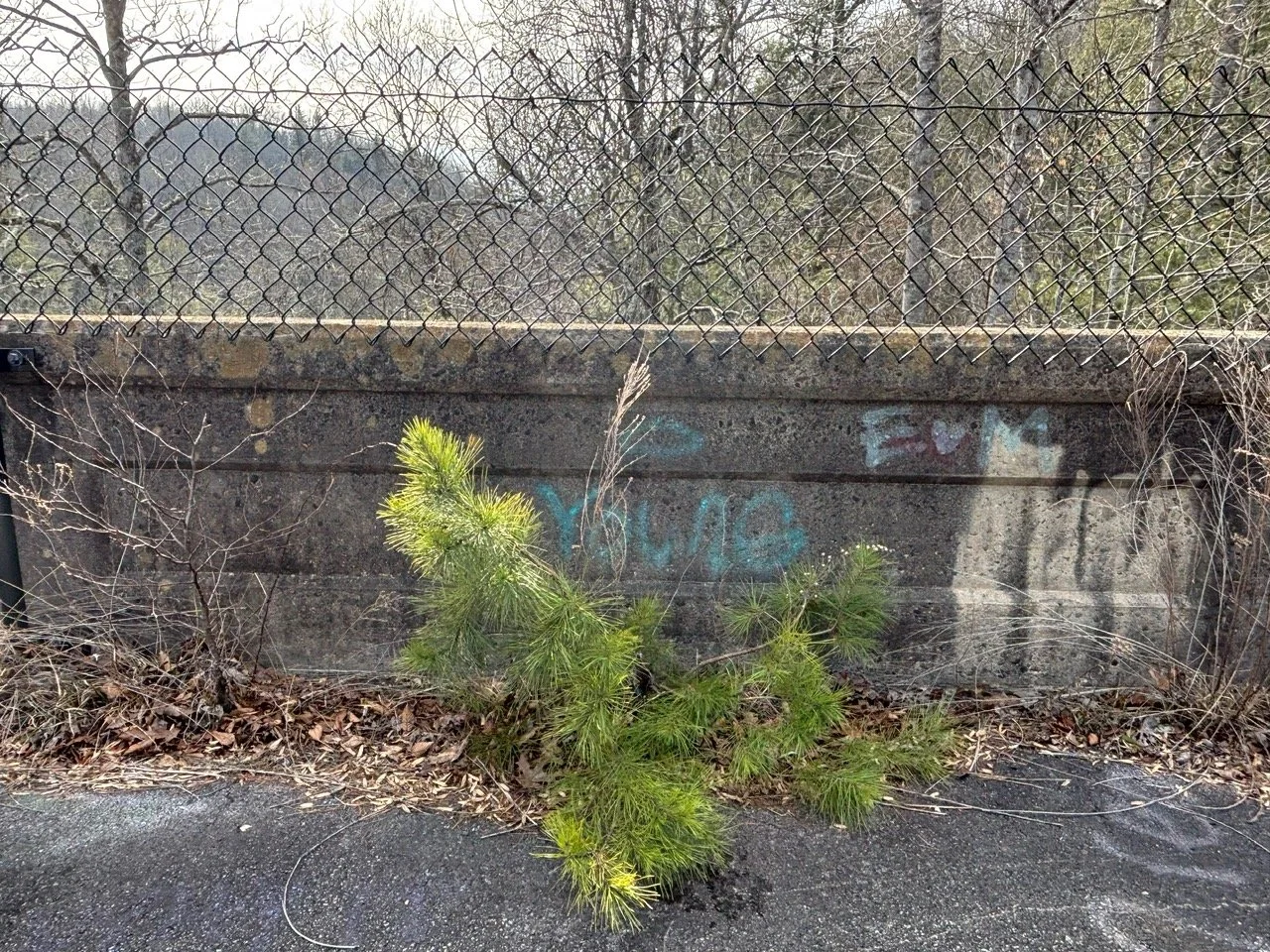
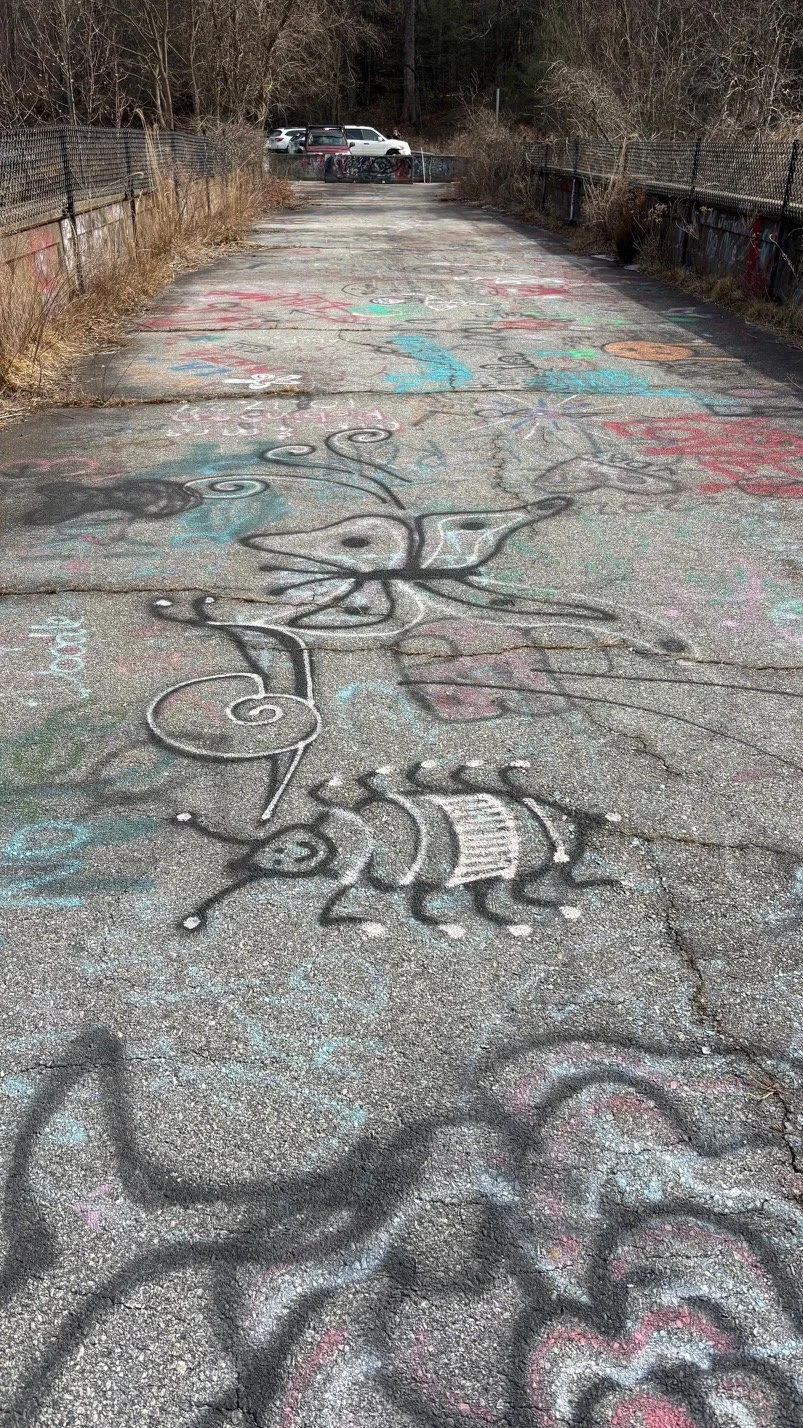
Just feet away, traffic whizzes across the newer span that replaced High Bridge in 2001. Here on the 1927 bridge, however, there is only wind, graffiti, and a riot of weeds pushing up through cracks in the concrete.
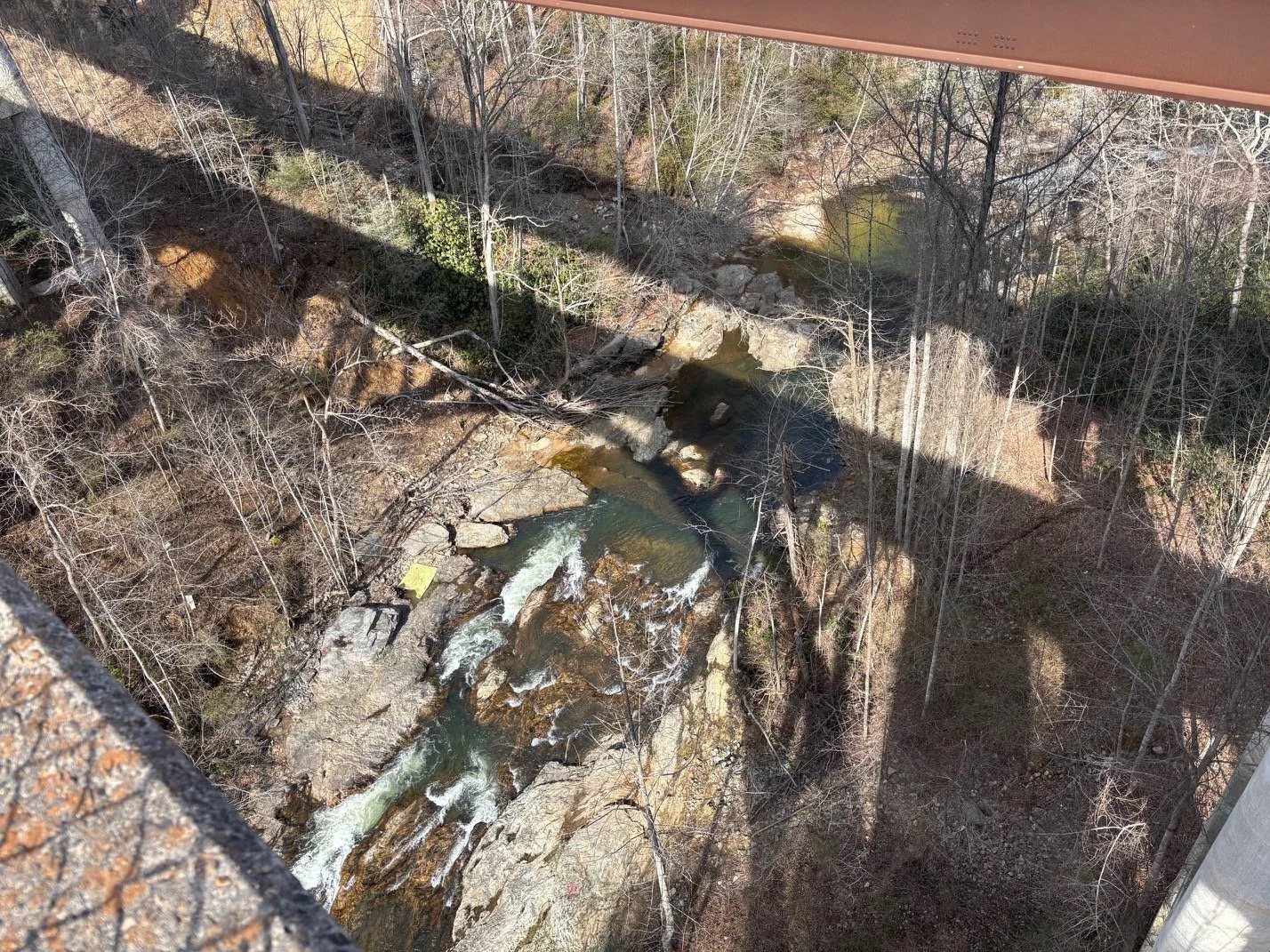
As I walked slowly out onto the span, I eventually came to a gap in the chain-link safety fence on either side. I leaned over a short concrete barrier and peered at the Green River Gorge below - and immediately remembered that heights make me queasy.
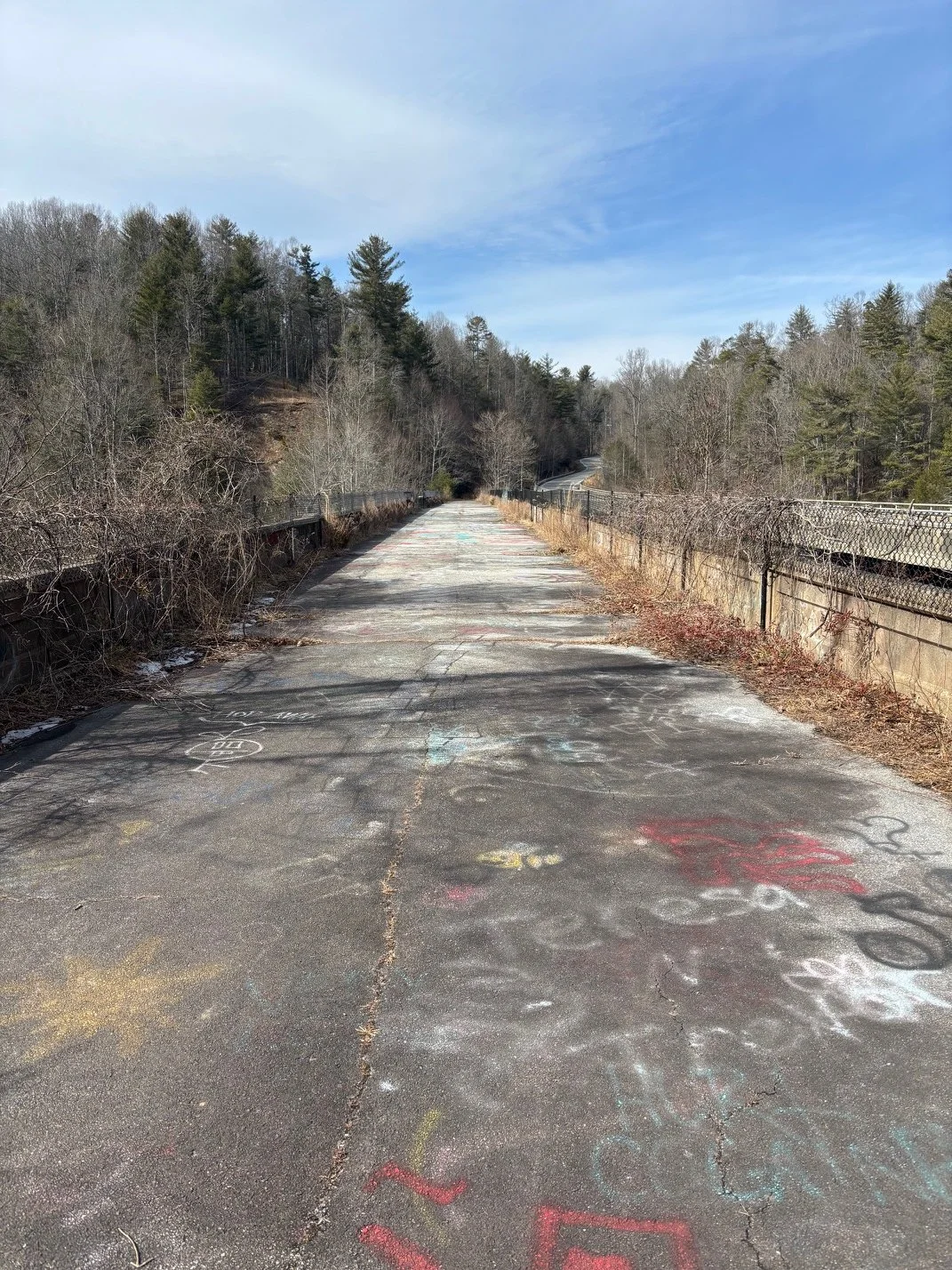
High Bridge Today is only open to pedestrian traffic.
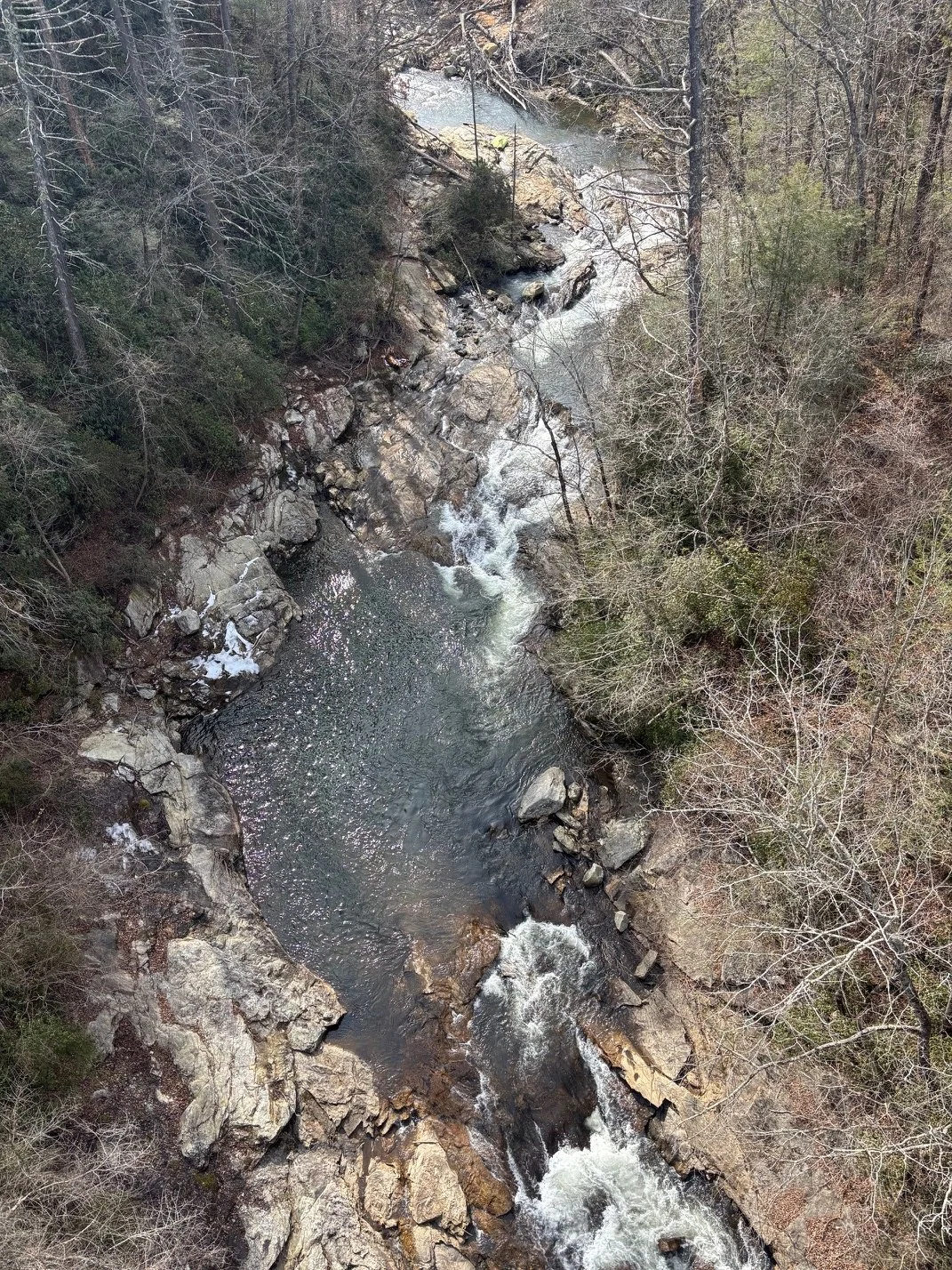
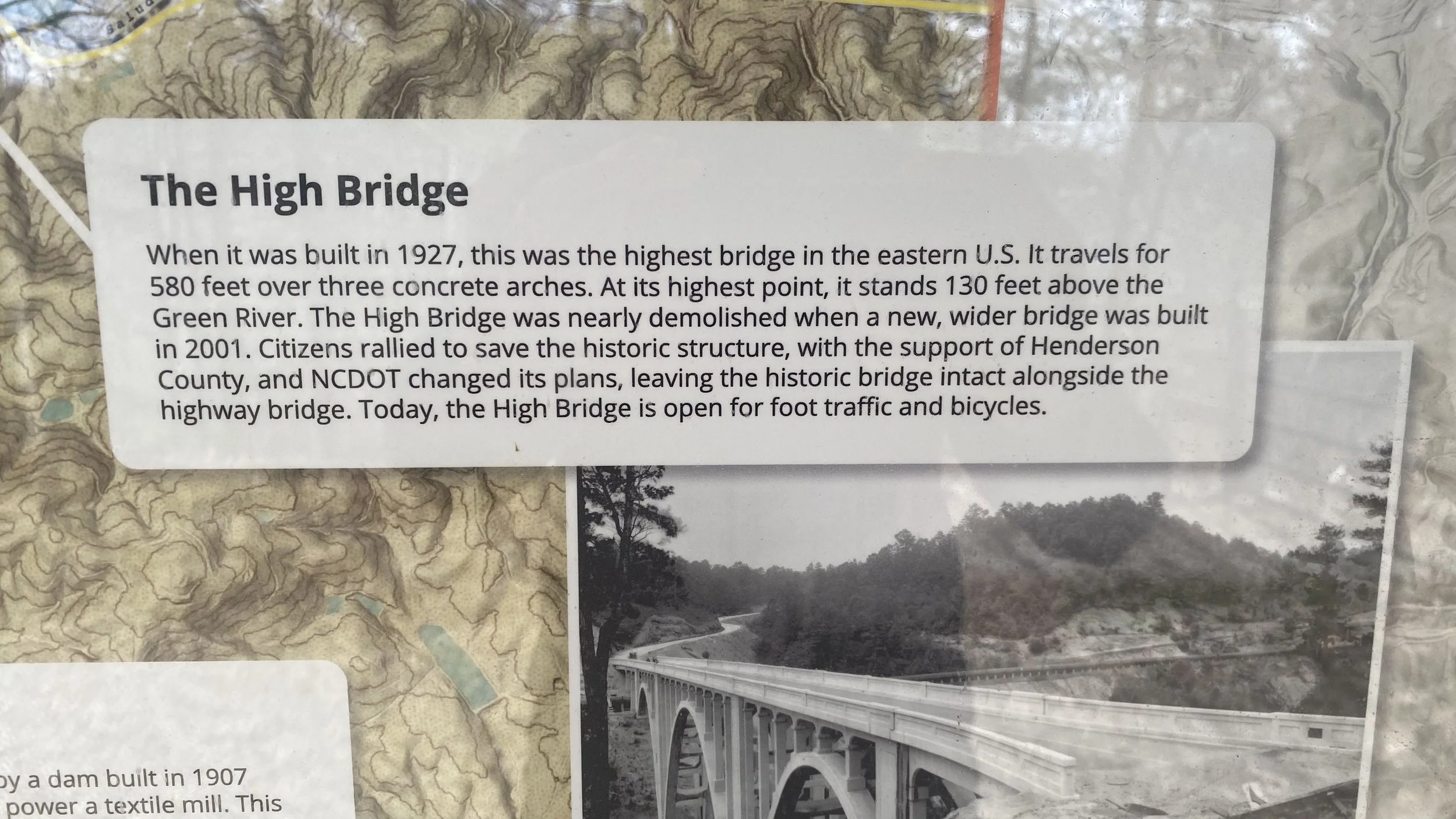
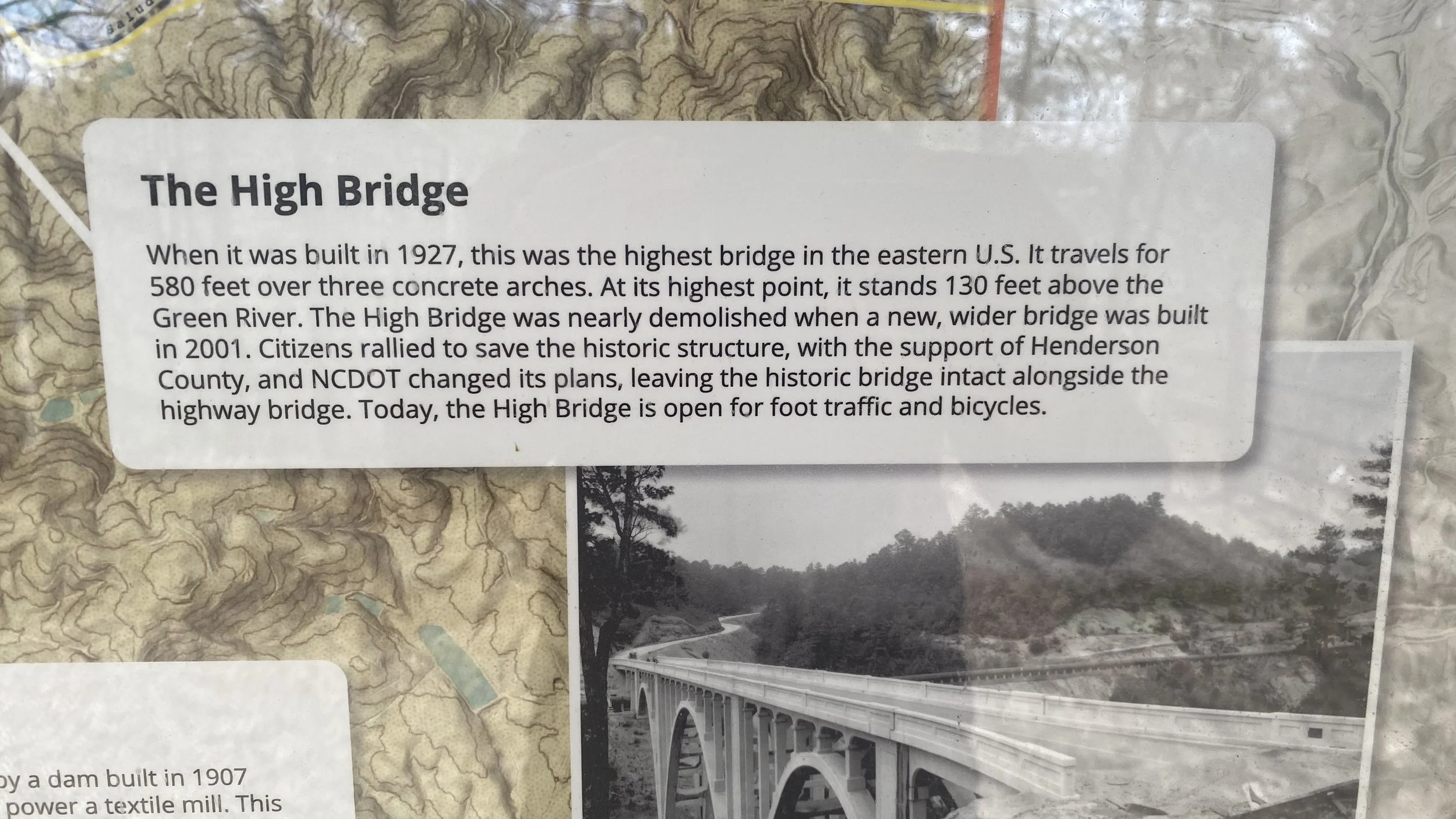
The Green River lies 130 feet beneath the old High Bridge on US 176 between Flat Rock and Saluda. The view down to the river is dizzying, and it is not hard to understand why, when the bridge opened in 1927, it was acclaimed as the highest bridge of its kind east of the Mississippi River.
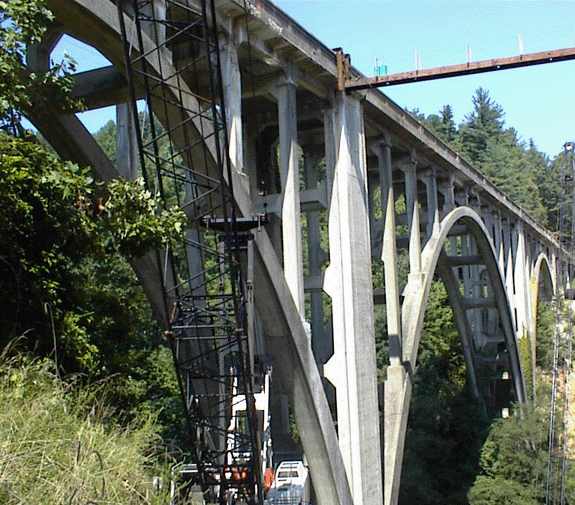
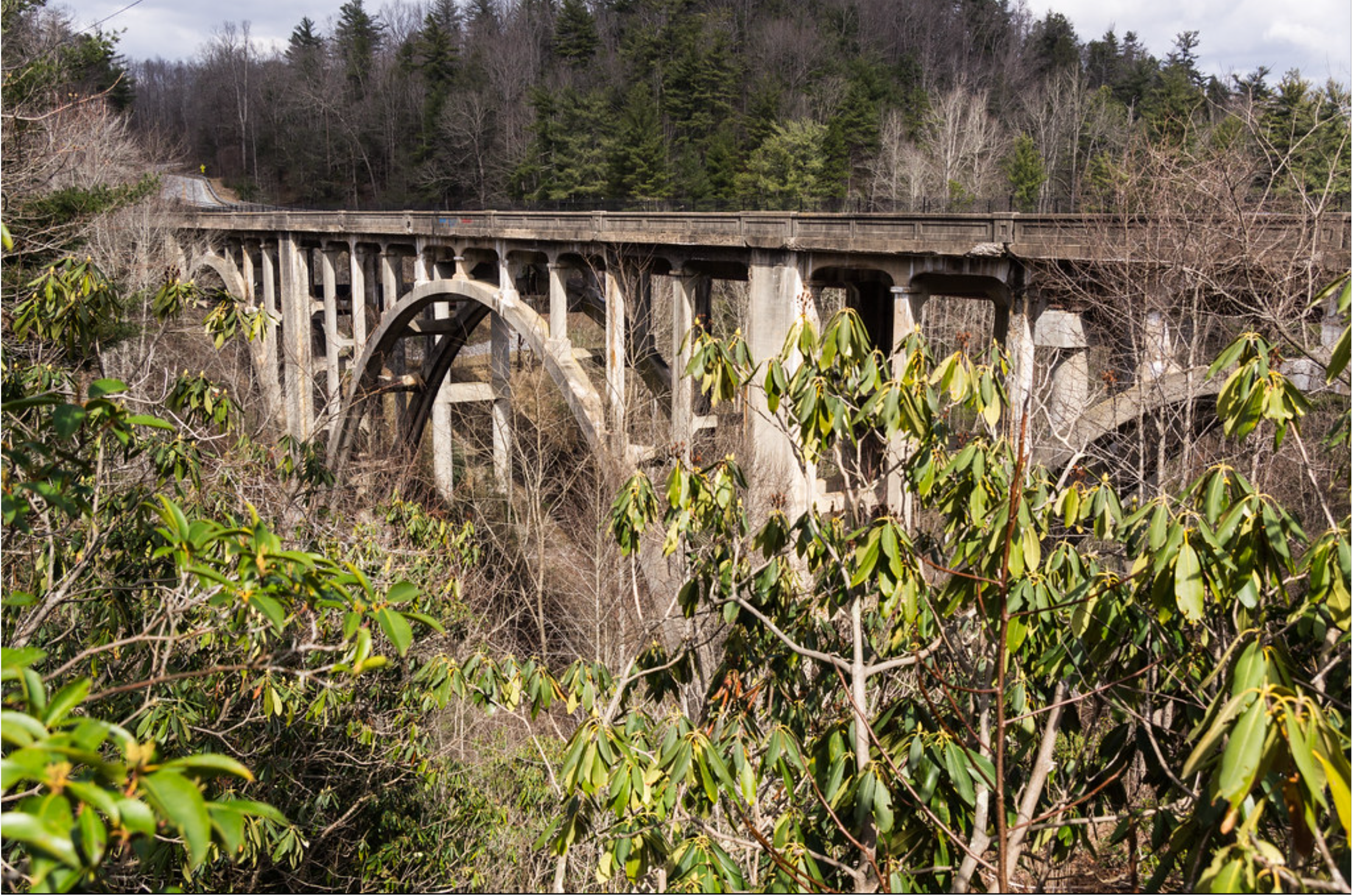
But the High Bridge is more than tall. It is elegant. The bridge stands with a quiet dignity, and even now, nearly a century later, the sweeping concrete arches that once supported the ancient roadway command respect.
Looking down to Green River from the High Bridge
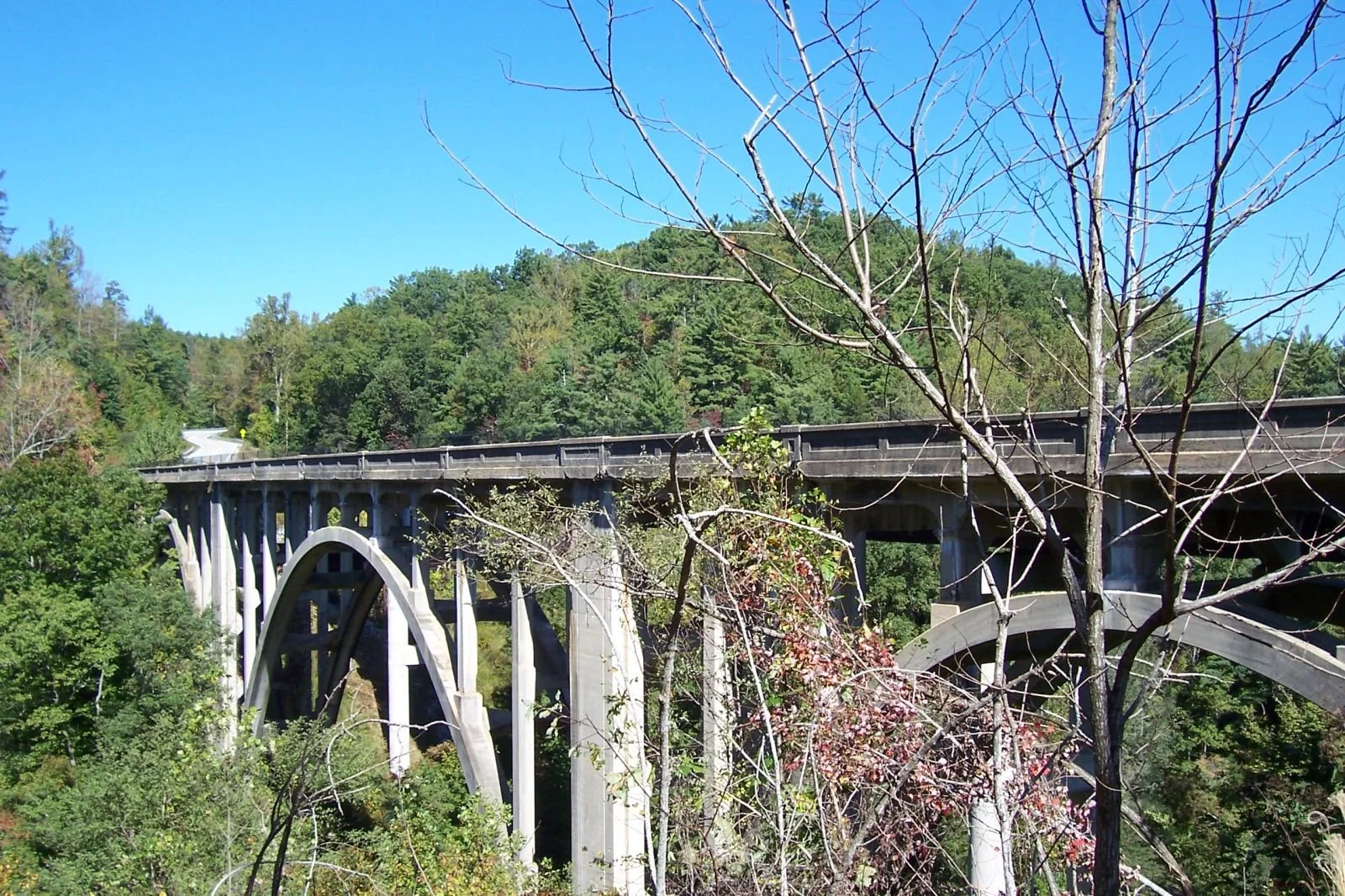
Stretching 580 feet across the gorge, the structure is an open-spandrel reinforced concrete deck arch - a design that was both structurally innovative and visually striking in its day. Its main arch spans 185 feet, flanked by two 110-foot arches with ribbed underpinning. Tee-beam approach spans anchor both ends. The symmetry of the arches gives the bridge a visual rhythm that feels almost musical, rising and falling across the gorge with delicate grace.
When it opened as part of U.S. 176, the High Bridge became the principal link between Hendersonville, Saluda, and Spartanburg. For 74 years, it carried nearly all the traffic moving through this corridor while reshaping how people traveled and how communities connected.
And it did so beautifully.
Postcards celebrated its arches. Drivers approached the span knowing they were about to cross something remarkable. In an era before interstates and soaring sound barriers, bridges were often designed to be seen - and even admired.
Before Concrete: The Howard Gap Route
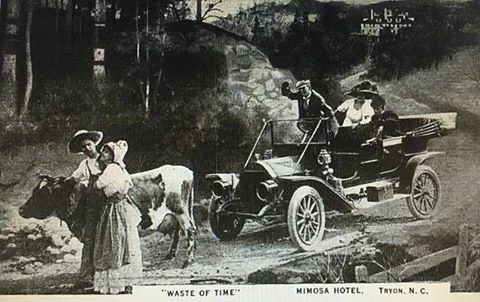
Post Card of Howard Gap Road from the Mimosa Hotel in Tryon, NC
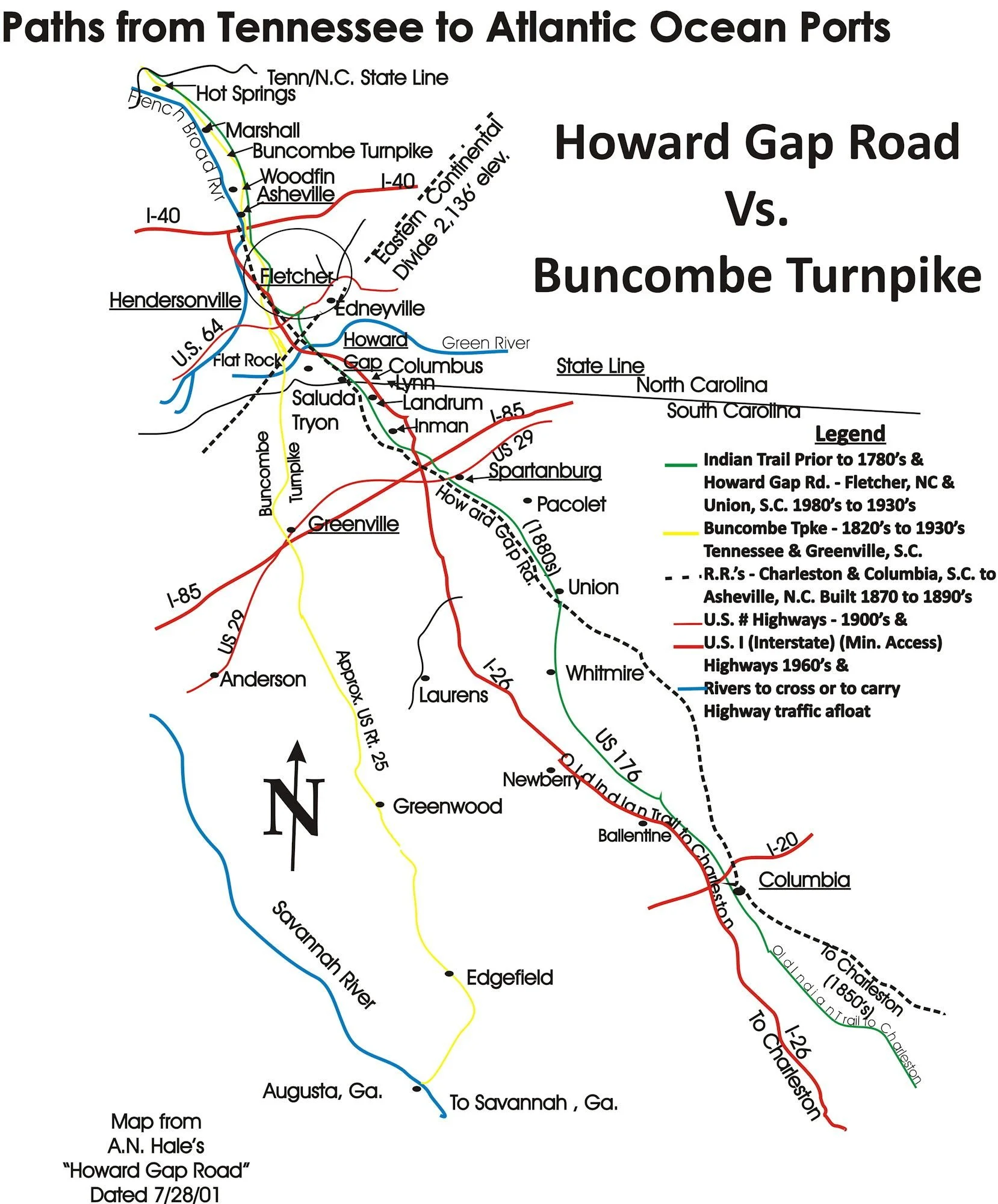
Long before the High Bridge rose across the gorge, it was Howard Gap Road that carried travelers through the mountains separating Flat Rock from South Carolina.
Recognized as one of the principal routes early settlers used to enter North Carolina, Howard Gap served as a gateway between western North Carolina and Upstate South Carolina. In the early 1800s, Peter Guice operated a toll bridge where the early primitive road crossed the Green River. Long before engines hummed across concrete arches, hooves clacked and wagon wheels creaked on wooden planks over the Green River at that crossing.
When the High Bridge opened in 1927, it largely replaced that long-established route. The earlier Howard Gap bridge was eventually demolished when it became obsolete as a main thoroughfare. Later still, portions of the original Howard Gap Road were absorbed into Interstate 26, while other stretches were rerouted, truncated, or quietly overtaken by development. Today, traces of Howard Gap still lie hidden beneath modern asphalt and neighborhoods, reminders that even our most familiar landscapes rest atop earlier paths.
-
High Bridge. Photo by Michael Mller.
Back on the High Bridge, I found myself imagining the 1930s: Ford Model A’s, other early automobiles, and the occasional farm truck rolling across the span. Speeds were slower then, and traffic was considerably lighter. It’s easy to imagine drivers pulling to a stop mid-bridge, stepping out of their cars to take in the mountain air and the dizzying view of the river below.
Today, modern bridges rarely invite that kind of pause. Compare High Bridge to the Peter Guice Bridge on I-26. At 70 miles per hour, in a steady stream of traffic, inspiration from the passing scenery is hard to come by. These days, we cross the Green River Gorge efficiently. We do not linger. Nor are we often moved by the beauty of the topography or by the quiet miracle of the engineering that spans the gorge.
As I walk slowly across the aging bridge, I try to imagine the earliest travelers to cross it. In 1927, the advances in technology must have felt astonishing. For someone born in the late 1800s, the world had transformed at breathtaking speed. Horses gave way to automobiles. Muddy, rutted roads yielded to smooth paved roads. Radios delivered news instantly from around the world. And occasionally, the most spectacular sight imaginable - an aeroplane puttering improbably across the sky.
High Bridge, in that sense, stood as proof in 1927 that the future had arrived in western North Carolina. That future, of course, soon became the past and gave way to further changes. By the 1970s, Interstate 26 diverted much of the traffic that once crossed the majestic High Bridge.
Then, in 2001, a new steel girder bridge was constructed directly adjacent to High Bridge for all vehicular travel. The old span was spared and left open to pedestrians - though today it is classified as deteriorating. Now, graffiti and weeds overwhelm surfaces where graceful engineering once defined the view.
Standing atop High Bridge, I felt connected - not just to the structure, but to the generations who passed through the Green River Gorge. Rural families heading north into Hendersonville or south to Saluda. Salesmen and delivery trucks driving toward Spartanburg. Sunday motorists out for a mountain excursion. And further back still, settlers and drovers crossing Peter Guice’s toll bridge two centuries ago.
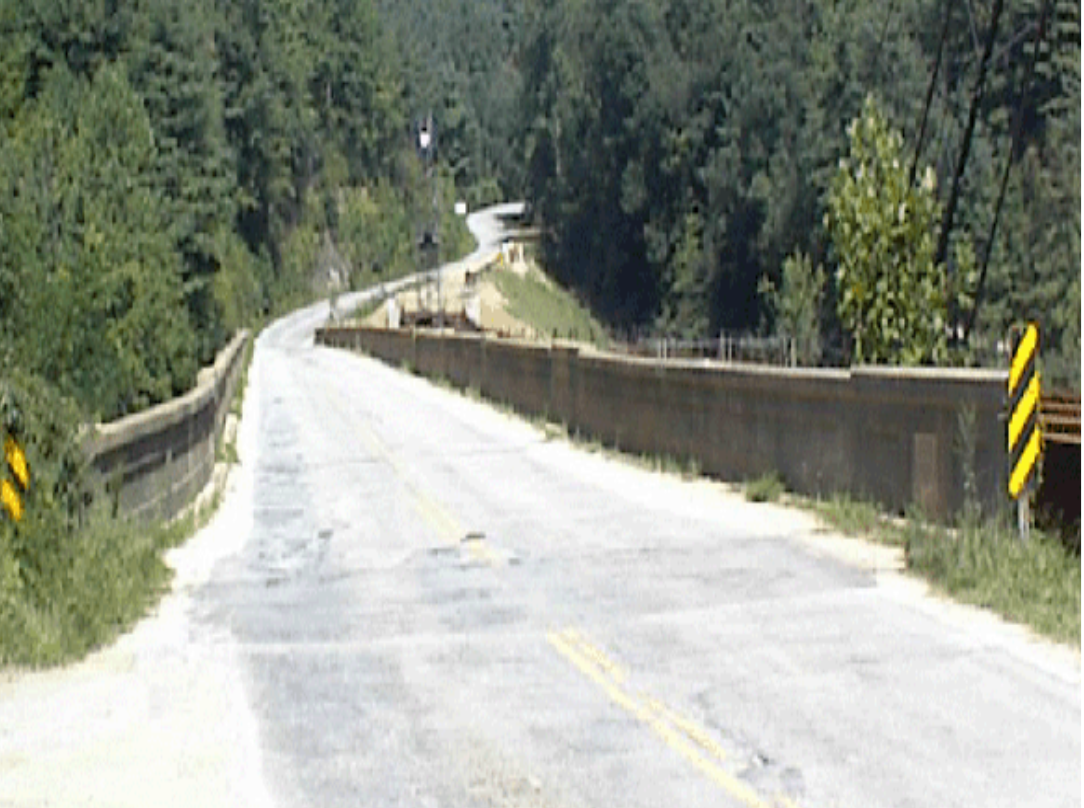
High Bridge when still in Use
The High Bridge, decaying and weed-strewn as it is, spans more than the Green River. It spans imagination. It reminds us that every generation believes it stands at the height of progress. The arches that once symbolized modern engineering now feel antique. Yet in their time, they were daring and new.
As I stepped back toward solid ground, the dizziness eased. But the sense of connection lingered. The High Bridge no longer carries cars. Instead, it carries memory. For those willing to walk its length, it offers something rare - the chance to stand in one place and feel centuries of time flowing quietly beneath your feet.