Hand in Hand: The Creative Life of David and Molly Sharp Voorhees
Nestled in the mountains of the Green River Valley near Zirconia, North Carolina, lies Sunburst Hollow, the beautiful mountain home and artistic sanctuary of David and Molly Sharp Voorhees. David, an accomplished potter, and Molly, an exquisite jewelry artist, have spent decades creating art inspired by the natural beauty of Western North Carolina.
The Voorhees Family Art Legacy
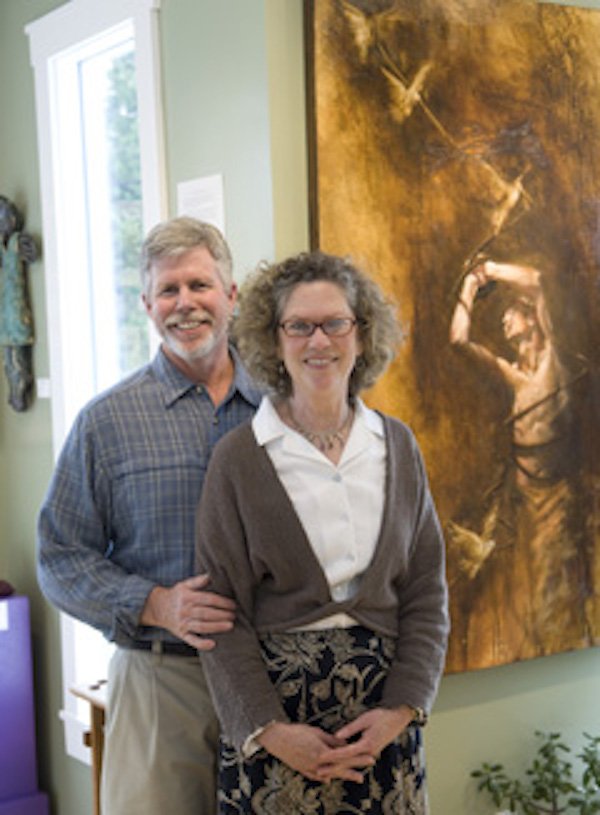
David and Molly Voorhees
The Voorhees family artistic legacy began with Edwin Voorhees (1919–1999) and Mildred “Milie” Voorhees (1924–2007), parents of David and his four siblings. Edwin studied at the Art Students League of New York before moving his family to coastal North Carolina to pursue his passion for watercolor seascapes. Milie became known for her colorful patterned watercolors and richly textured oil paintings of still lifes and landscapes.
Edwin and Milie believed that both nature and nurture were essential to the creation of artists. When they relocated to the North Carolina coast in the 1960s, they found an environment that nourished both their own artistic ambitions and those of their children. There, they became the accomplished painters they longed to be while raising a family of artists and craftsmen whose creative pursuits continue to this day.
Kanuga was the family's introduction to Western North Carolina. Beginning in the 1960s, the Voorhees family spent summers attending Guest Period at the conference center. Edwin frequently taught watercolor classes there, and his paintings of the Old Pavilion and the Old Lodge still hang in Kanuga's Fireplace Room. David's older brother, Ted, would later become an Episcopal priest, and Edwin served on the Kanuga Board for many years.
Ironically, it was at Kanuga that I first met David. We both worked at the conference center during several summers in the early 1970s. Edwin's painting of the Old Pavilion was later reproduced as a print, and it became one of the first pieces of art I ever purchased. I still have it today. As a young person, I regarded the Voorhees family as something of an artistic dynasty.
The family's ties to Kanuga have continued across generations. David's daughter, Liz, and her husband, James, were married there, and Edwin and Milie's ashes were interred at the outdoor St. Francis Chapel, a fitting resting place for two artists whose lives were deeply rooted in both faith and nature.
For years, Edwin dreamed of hosting a family art show that would gather relatives together while showcasing the remarkable range of artistic talents within the family. That dream became reality in 1998 when the first Voorhees Family Art Show was held at the family home in Morehead City. Although Edwin passed away the following year, the tradition endured. The show continued in Morehead City before moving to Asheville, where it was hosted in several family homes in North Asheville over the next two decades.
The 27th and final Voorhees Family Art Show and Sale was held on November 22, 2025. After twenty-seven years—twenty-one shows in Asheville—the finale marked both an ending and a celebration: a celebration of art, family, connection, and community. The show featured new work by eight members of the Voorhees family and two guest artists, bringing together an extraordinary artistic legacy that has enriched North Carolina and the Southeast for generations.
About David
Born in New York in 1950 and raised in suburban New York City, David Voorhees grew up in a large family immersed in art. He fondly recalls family visits to the Metropolitan Museum of Art and explorations of Greenwich Village. Spending countless hours in his father's studio, he absorbed painting almost by osmosis.
David followed a fine arts track at Sewanee: The University of the South, where Professor Ed Carlos became an important mentor and influence. More than fifty years later, David still keeps in touch with Carlos and was delighted to see him during his 50th Sewanee reunion in 2023.
The summer of 1970 proved pivotal. While working at Camp High Rocks in Cedar Mountain, North Carolina, David threw his first pot on a pottery wheel and discovered the medium that would shape his life's work. Returning to Sewanee that fall, he enrolled in a wheel pottery class taught by Maizie McCready. There he found his passion for three-dimensional, functional art.
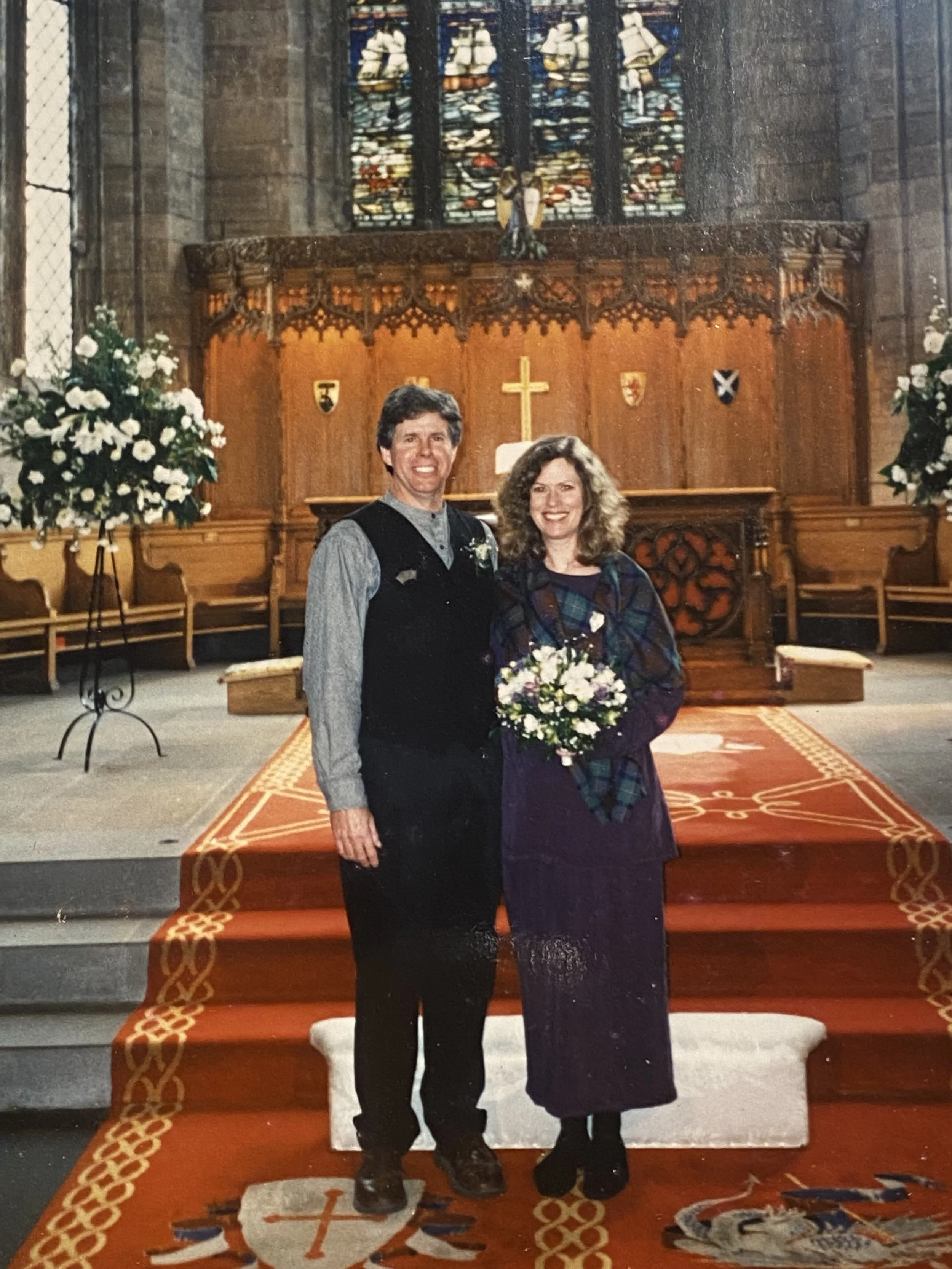
St. Michael's Parish Church in Linlithgow, Scotland. 1997
After graduating from Sewanee, David entered the MFA program in painting and sculpture at the University of South Carolina. After a single semester, however, he realized that his heart was elsewhere. In 1974, he left graduate school and moved to the mountains of Western North Carolina to pursue pottery full-time.
Primarily self-taught, David spent decades producing both functional wares and decorative vessels. Along the way he attended numerous workshops with potters from across the country. One of the most influential was English potter David Leach of Berea, Kentucky, son of Bernard Leach, who is widely regarded as the father of the modern studio pottery movement.
Through Leach's influence, David discovered porcelain and devoted himself almost exclusively to the material for more than fifteen years. Using underglaze painting on simple classical forms fired in oxidation, he developed a colorful and distinctive body of work that was exhibited at art fairs and galleries throughout the East Coast.
Molly and David
In 1995, David traveled to the Penland School of Craft to study pottery. As fate would have it, he and Molly Sharp were both assigned to work in the kitchen and dining room as part of their work-study responsibilities.
David was immediately captivated. Molly's first impression was less romantic. "I thought he looked goofy," she laughed, recalling his black flip-flops with white-socked toes shoved through the toe posts. David, however, was persistent. After Penland ended, he wrote Molly letters every day. Long phone conversations followed. "We never even held hands!" Molly exclaimed.
Molly's Journey
Like David's, Molly's path to becoming a full-time artist was anything but direct. Raised in an era when many women were encouraged to pursue practical careers and find husbands who would support a family, she attended a two-year women's college in New Jersey to study business.
While living in England with her first husband, Molly discovered metalsmithing and immediately found her passion. "My children were just babies when I took my first metalsmithing class in the mid-seventies and made a silver ring," she recalled. "I fell in love with it."
When she returned to the United States after nearly a decade abroad, Molly settled in Jacksonville, Florida, where she spent fourteen years raising her children while working as a graphic designer and museum administrator. Throughout those years, she continued to develop her skills by studying with some of the nation's most respected jewelers.
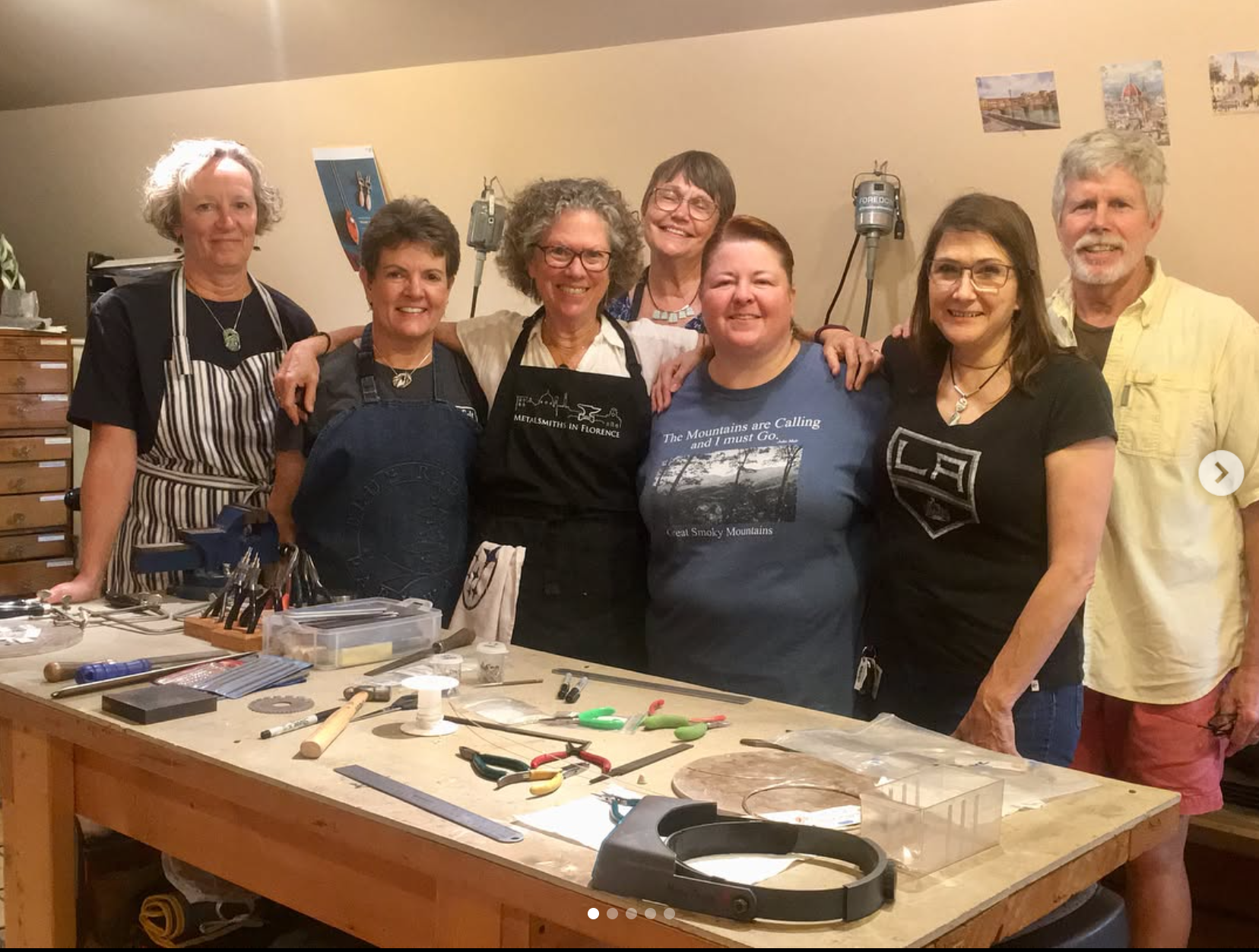
Molly at her Silveramics workshop
By 1995, she had reached a turning point. "It was time," she said, "to pursue my dream of becoming a full-time jewelry maker."
Molly's work evolved into a deeply personal expression of her experiences as a woman and her appreciation for the beauty found in ordinary things. Working primarily in sterling silver and gold, she fabricates each piece entirely by hand from sheet metal and wire. She creates distinctive surface patterns by drawing on brass plates with paint pens, acid-etching the designs, and transferring them to metal through a rolling mill.
A passionate collector of tiny, smooth pebbles, Molly often incorporates unaltered stones into her jewelry. Gathered from Scotland, England, the Outer Banks, California, Lake Superior, Alaska, Glacier National Park, and the coast of Maine, the pebbles become both artistic elements and treasured reminders of places and experiences. To Molly, their natural beauty and history are every bit as precious as traditional gemstones.
Building a Life Together
David became one of Molly's greatest supporters as she made the transition to full-time artistry "David was the first person to encourage me," she said. "He mentored me through the process of becoming a full-time artist." Not long after Penland, Molly relocated to Hendersonville, renting a house that served as both home and studio.
David was then living in the kitchen house at Elliott Place in Flat Rock, owned by the legendary gardener Emily Whaley and her daughter, Marty Whaley Cornwell. David fondly remembers his annual rent discussions with Mrs. Whaley. "She was the only landlord I ever had who consistently lowered my rent," he laughed. "She'd say, 'David, I like having you here, so I'll lower your rent if you'll stay.'"
Before long, Molly and David combined their lives and their creative pursuits. The kitchen house became a shared studio, with pottery downstairs and jewelry-making upstairs. In 1997, the couple decided to marry. Through a chance conversation with fellow artists at a Southern Highland Craft Guild show, they learned that a friend's son was the minister of St. Michael's Parish Church in Linlithgow, Scotland. Linlithgow was the birthplace of Mary, Queen of Scots, and the church where she was baptized. Since Molly's birth name is Mary, she took it as a sign. The weekend after Easter, Molly, dressed in purple, and David were married in the ancient Scottish church by the Rev. Will Jones of Memphis, Tennessee, whose unmistakable Southern accent echoed through the sanctuary.
Five years later, they returned to celebrate their anniversary. Will and his wife were still there, now with two young children, making the reunion a joyful reminder of the unlikely chain of events that had brought them together.
Building Community Through Art
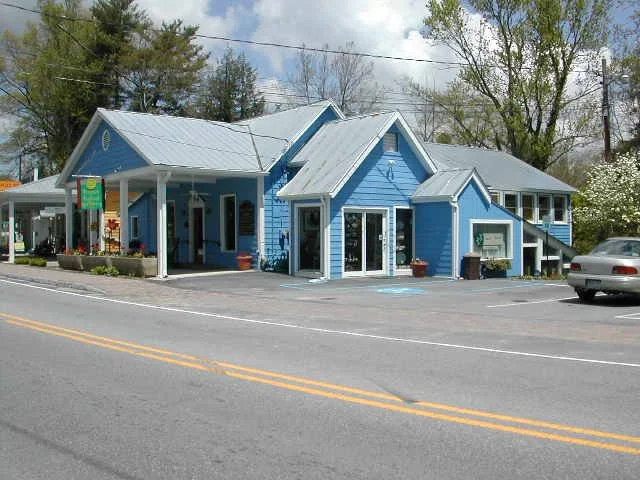
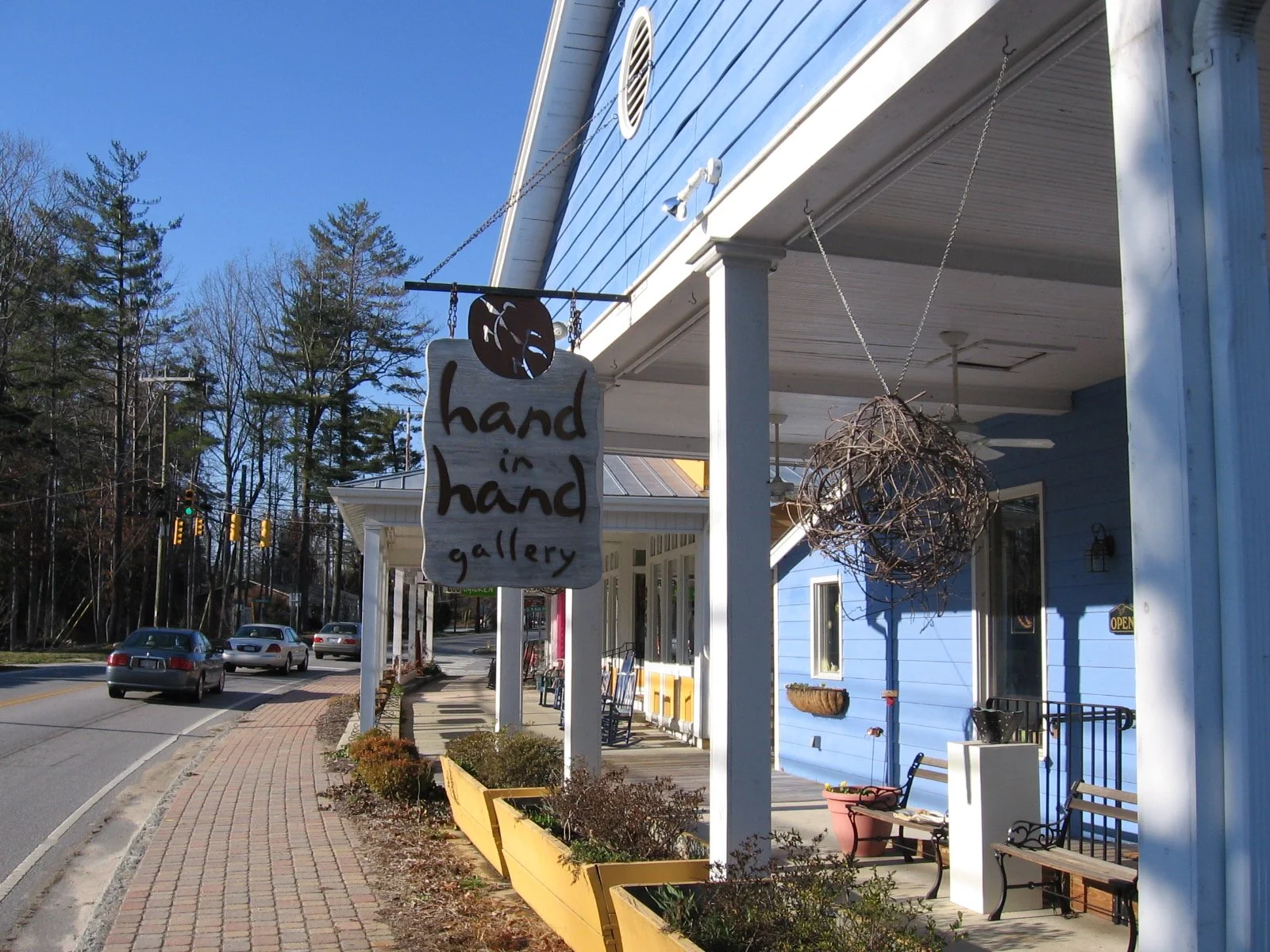
In 1996, David and Molly opened Hand in Hand Gallery in Flat Rock as a venue for their own work and that of several family members. What began as a small gallery soon evolved into one of the region's most respected showcases for fine craft and art. Over the years, Hand in Hand Gallery represented nearly 200 regional artists and mounted numerous invitational exhibitions. The gallery became far more than a place to sell artwork. It became a gathering place and a catalyst for community.
It was Molly who coined the nickname "Little Rainbow Row" for Flat Rock's colorful commercial district, drawing inspiration from Charleston's famous Rainbow Row. The name seemed fitting for a village often referred to as "The Little Charleston of the Mountains."
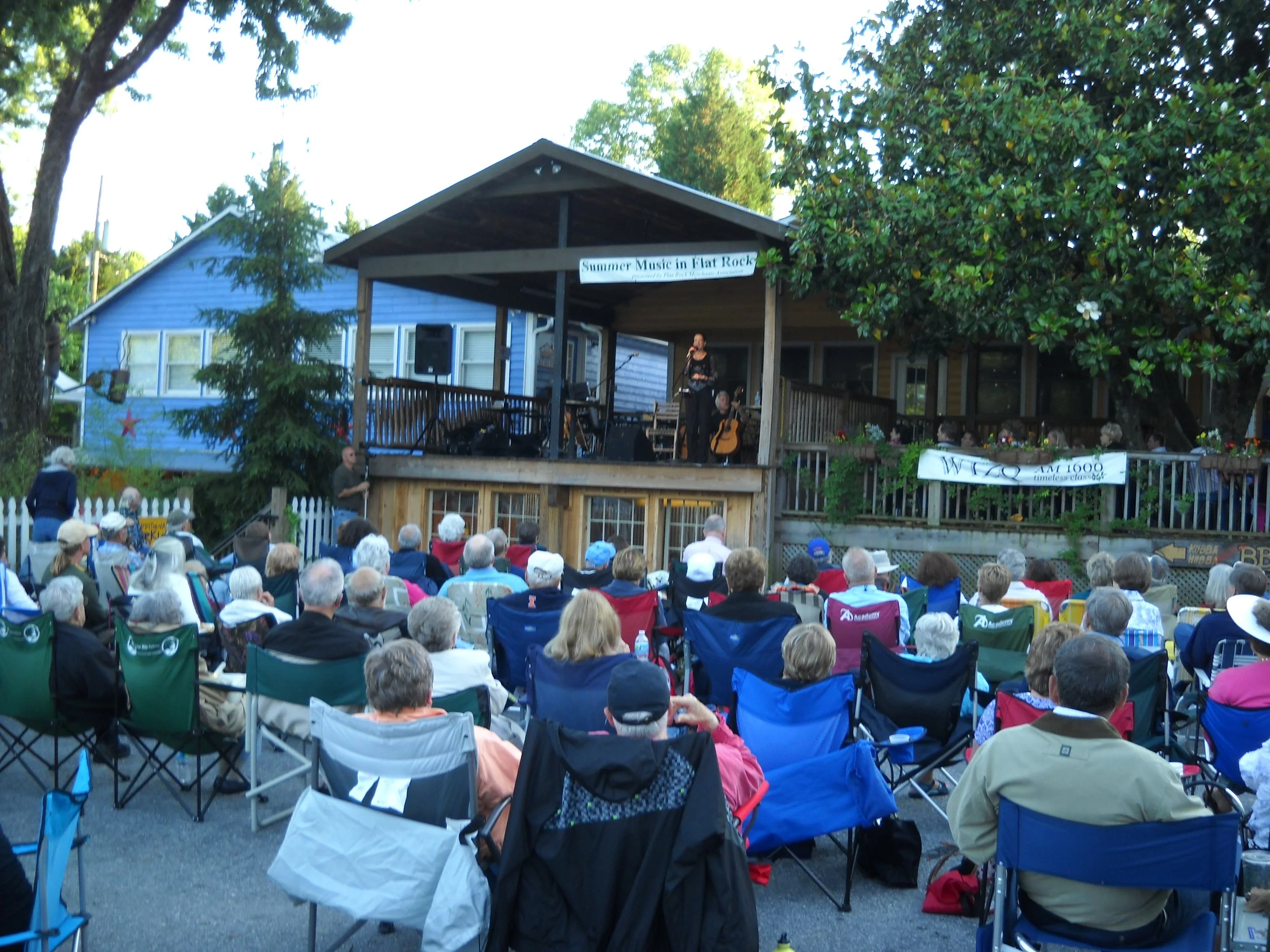
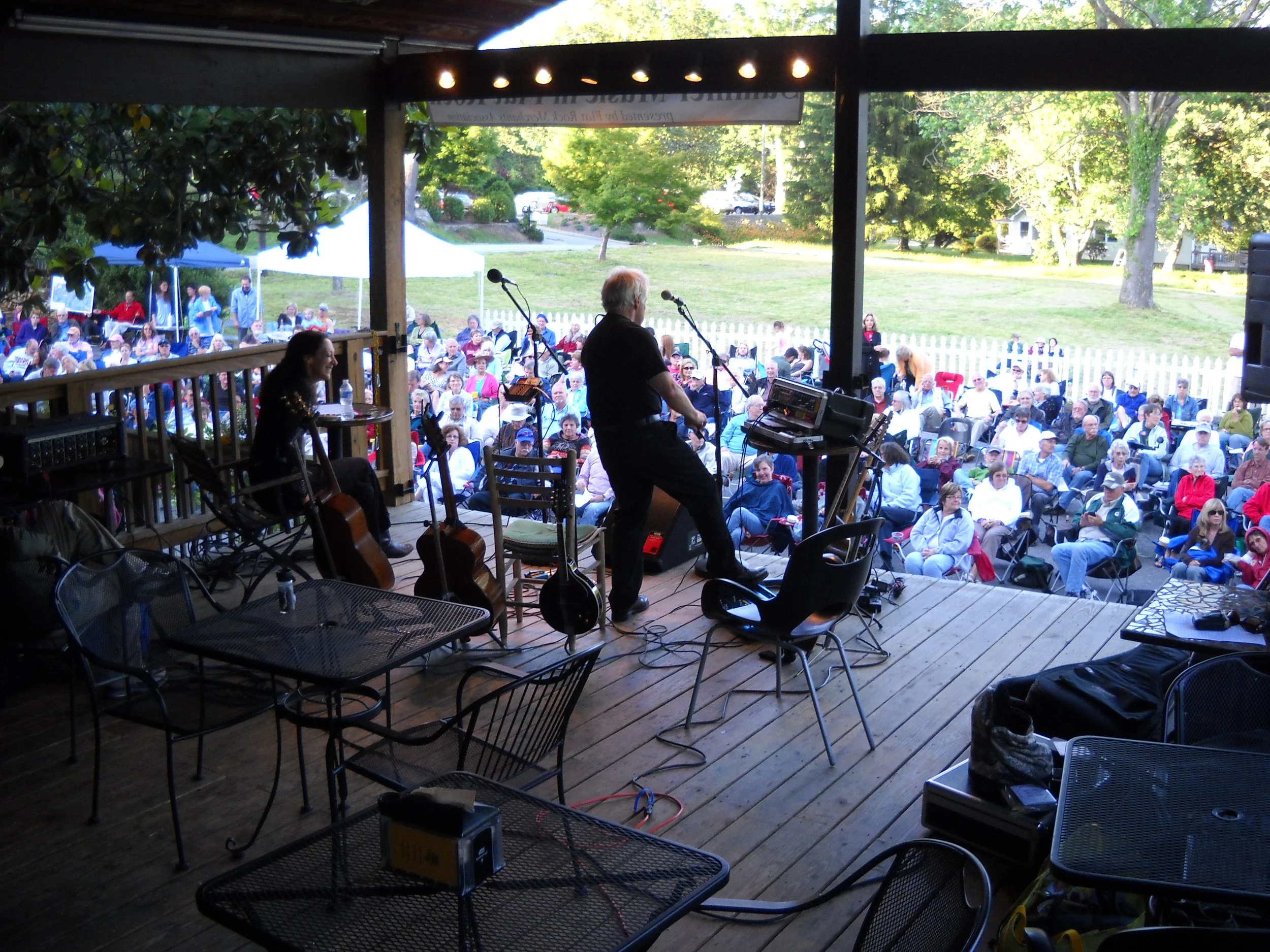
David and Molly embraced their role in the life of the village and looked for ways to bring people together. Working with local musician Tom Fisch, David organized a summer music series on the deck of Flat Rock Bakery, convincing the bakery's owner to remain open late so visitors could enjoy pizza while listening to live performances. The program quickly became a popular community gathering place.
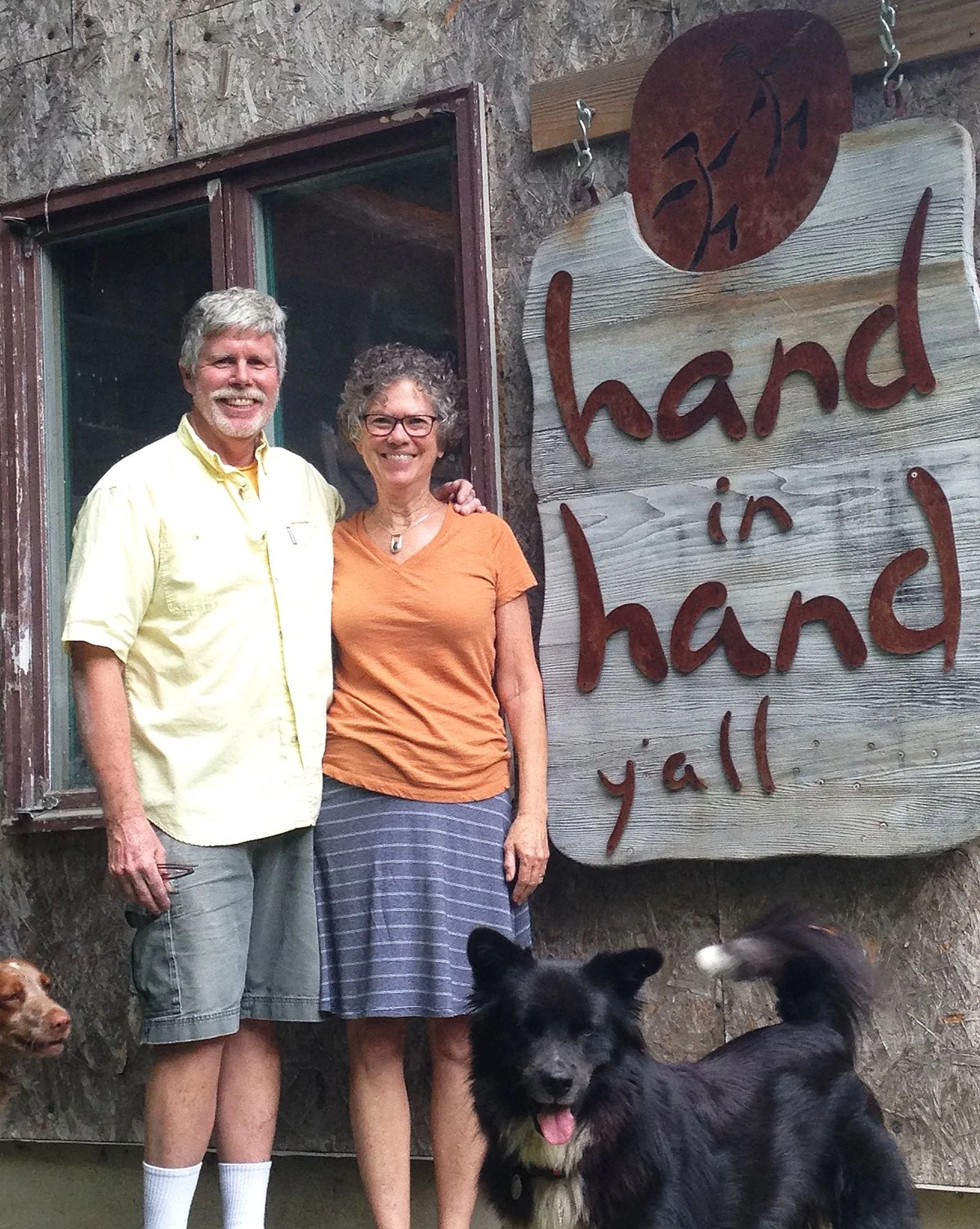
Hand in Hand Gallery
Following a trip to France, Molly returned inspired by the daily outdoor markets that connected local farmers and consumers. Convinced that Flat Rock needed something similar, she helped launch the Flat Rock Tailgate Market in the parking lot of Little Rainbow Row.
Recognizing that such an undertaking required a team effort, Molly enlisted friends Cheryl Stippich and Saundra Poces to help bring the vision to life. The market began with twenty-five carefully vetted vendors selling locally produced food. Crafts were intentionally excluded in order to maintain a focus on agriculture and food production. Vendors paid five dollars per market day, and each season concluded with a Harvest Festival at Thanksgiving.
The market flourished. After eight years, it outgrew its original location and moved to Pinecrest Presbyterian Church, where additional parking and vendor space allowed for continued growth. Today, the Flat Rock Tailgate Market remains one of the community institutions that grew from Molly's original vision.
David's commitment to community eventually extended beyond art. For many years, volunteers with the Backpack Program at St. John in the Wilderness packed food bags for local children in the space beneath Hand in Hand Gallery. The program provides supplemental food to students who rely on free and reduced-price lunches, helping ensure that they have enough to eat on weekends, holidays, and during the summer months.
Inspired by the national Empty Bowls movement, a grassroots effort created by artists to combat hunger, David recognized an opportunity to unite the artistic community in support of local children. Working with Backpack Program coordinators Debby Staton and Eleanor Flowers, he helped launch Flat Rock's Empty Bowls fundraiser. What began as an idea has become an annual tradition to help combat childhood hunger in the community.
Spending time with David and Molly, one quickly senses a shared philosophy: where there is a will, there is a way. Whether building a gallery, creating a market, organizing a fundraiser, or renovating a home they have repeatedly transformed ideas into reality. Molly puts it simply: "David can do anything." A walk through Sunburst Hollow—the home they renovated, the barn studio they built, and the artistic life they have created together—suggests she may be right.
The Next Step
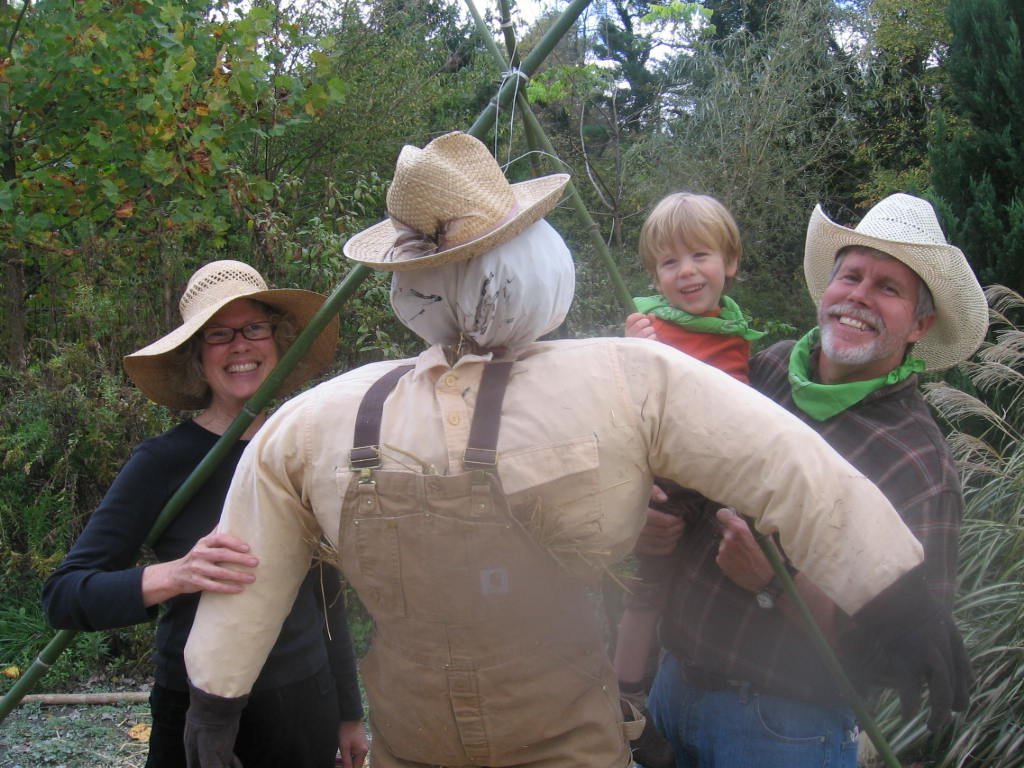
Molly and David in Sunburst Hollow
After sixteen years in retail, David and Molly closed Hand in Hand Gallery in 2012 to devote more time to their own artwork, teaching, and growing family.
At Sunburst Hollow, David designed and built a passive-solar, timber-frame studio overlooking the gardens. The building reflects the same combination of artistry and craftsmanship that has characterized much of his life's work. Upstairs, a loft serves as Molly's jewelry studio and workshop space. Downstairs, David's pottery studio opens onto the landscape that inspires much of his work. Together, the spaces provide a setting for teaching, creating, and sharing their craft with others.
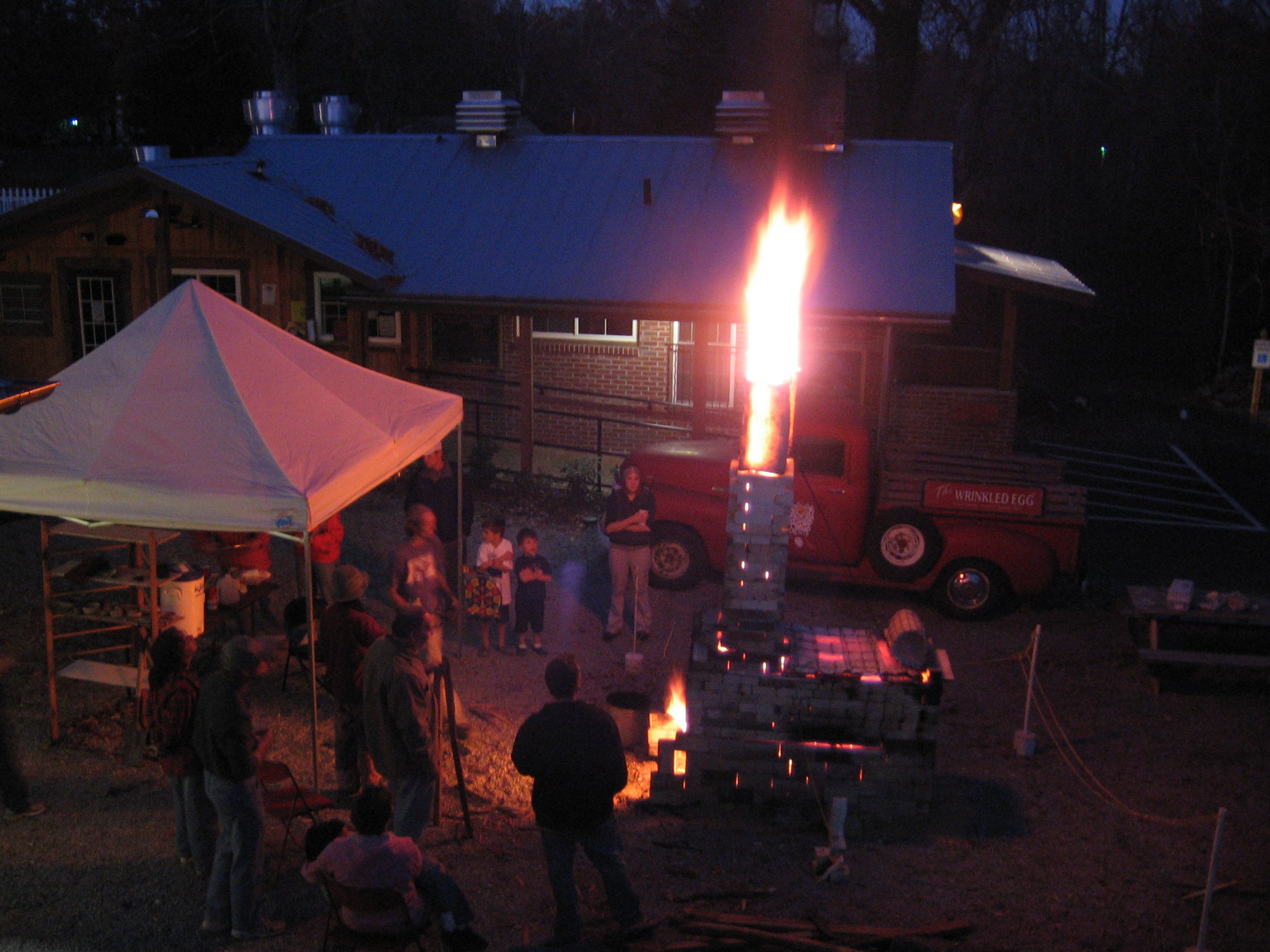
David's fascination with wood firing continued to grow after the move to Sunburst Hollow. In 2008, he constructed a unique kiln that combines elements from several kiln traditions. Featuring a Bourry-style firebox, soda and salt firing capabilities, and even a built-in pizza oven, the kiln has become a gathering place as much as a tool for making pottery. Visitors often find themselves drawn not only to the firing process but also to the meals and fellowship that naturally develop around it.
I experienced that sense of community firsthand. One summer, David hosted a pottery workshop for a group of campers around the kiln. The experience was such a success that I returned with additional groups later in the season. Watching David teach, it was easy to understand why so many people are drawn to his enthusiasm and generosity.
My own introduction to Molly's teaching came a few years later. Fascinated by her jewelry workshops, I joined David and Molly in Puerto Vallarta, Mexico, in 2019 for a week-long workshop devoted to Silveramics, the collaborative jewelry line they created together. A blend of metal and clay, Silveramics represents the union of two artistic traditions and two creative lives. Long recognized for their individual accomplishments in jewelry and pottery, Molly and David began designing pieces together and teaching as a team.
"Collaborating with Molly was a new and exciting challenge because we were each so used to working on our own," David explained. "It required a new openness to her perspective and design sense." Together they coined the name Silveramics, combining the words "silver" and "ceramics" to describe their work.
"We've talked about trademarking it," Molly said. "I think it's a great explanatory word for what we do, combining silver and ceramics."
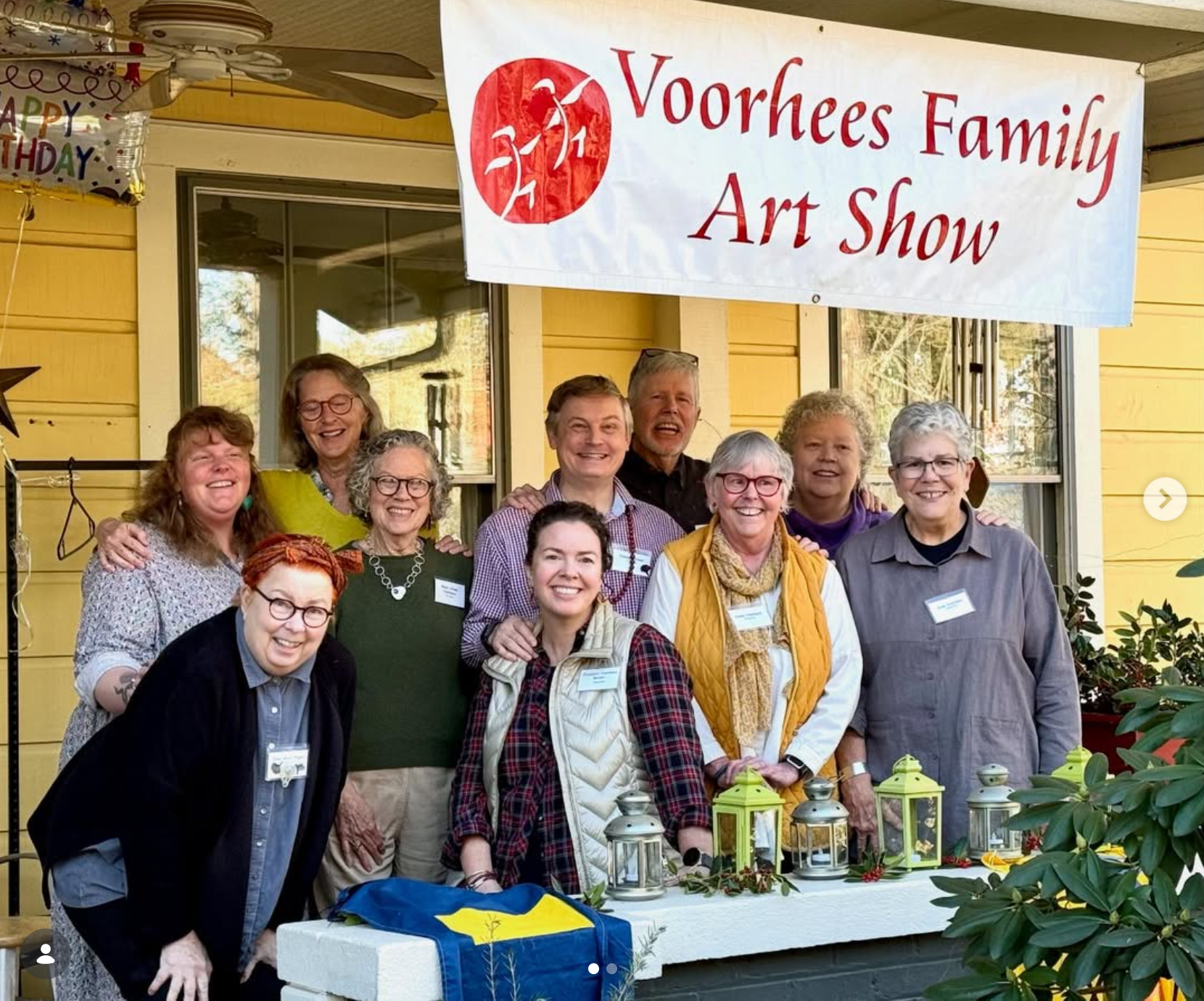
Voorhees Family Art Show
The collaboration reflects something larger about their lives. Whether creating pottery, designing jewelry, building studios, teaching workshops, cultivating gardens, or strengthening community, David and Molly approach life itself as a creative act.
When I asked them what served as the portal for their creativity, their answer was immediate. "Everything. Everything we do is creative," Molly said. "It spills over into our lives. It's the seeds of happiness. We don't make a lot of money at it, but we love what we do."
Standing at Sunburst Hollow, surrounded by the gardens, studios, and works of art they have created together, it is easy to see what she means. Their creativity extends far beyond clay and metal. It is woven into the life they have built, the community they have nurtured, and the quiet, unassuming way they have shaped a legacy in the mountains of Western North Carolina.
—
Missy Craver Izard was born and raised in Charleston, South Carolina, and now resides in Flat Rock, North Carolina. A retired summer camp director and art teacher, she is an entrepreneur, speaker, author, journalist, and community leader. Missy has received numerous honors for her work, including recognition as a White House Champion of Change.