Oakland Cemetery
Remembering the remarkable lives and enduring legacy of East Flat Rock's African-American pioneers.
There is a small cemetery along Highland Park Road in East Flat Rock that I've visited many times over the years. Quiet and unassuming, it is easily overlooked by those passing by. But beyond its modest entrance lie extraordinary stories of people who helped shape this community.
Oakland Cemetery is the final resting place of generations of African American residents of Flat Rock and East Flat Rock, including people born into slavery, entrepreneurs and craftsmen, ministers and midwives, soldiers and community leaders. Many helped establish Mud Creek Missionary Baptist Church and the remarkable charitable organization known as the Society of Necessity.
A recent Facebook post by Henderson County prompted me to return for another visit. On a crisp fall afternoon, I wandered among the gravestones, reading names and dates, recognizing familiar families, and wondering about the lives represented by the weathered stones.
With the help of local historian Michael Arrowood and others who have researched East Flat Rock's African American history, I've gathered a few of those stories here. They have been told before, some in considerable detail. My hope is to bring them together and introduce more people to the remarkable lives commemorated in this quiet corner of East Flat Rock.
A Place to Call Their Own
For generations, wealthy Charleston families traveled to Flat Rock to escape the summer heat of South Carolina's Lowcountry, bringing enslaved men, women, and children who worked on their summer estates.
Following the Civil War, many formerly enslaved people remained in the area, finding employment, purchasing property, raising families, and establishing a growing African American community in East Flat Rock.
In 1885, Henry Shield Simmons helped establish the Society of Necessity, a benevolent association whose members contributed to a common fund that provided assistance during illness, hardship, and death. The organization worked closely with Mud Creek Missionary Baptist Church, a center of religious and community life.
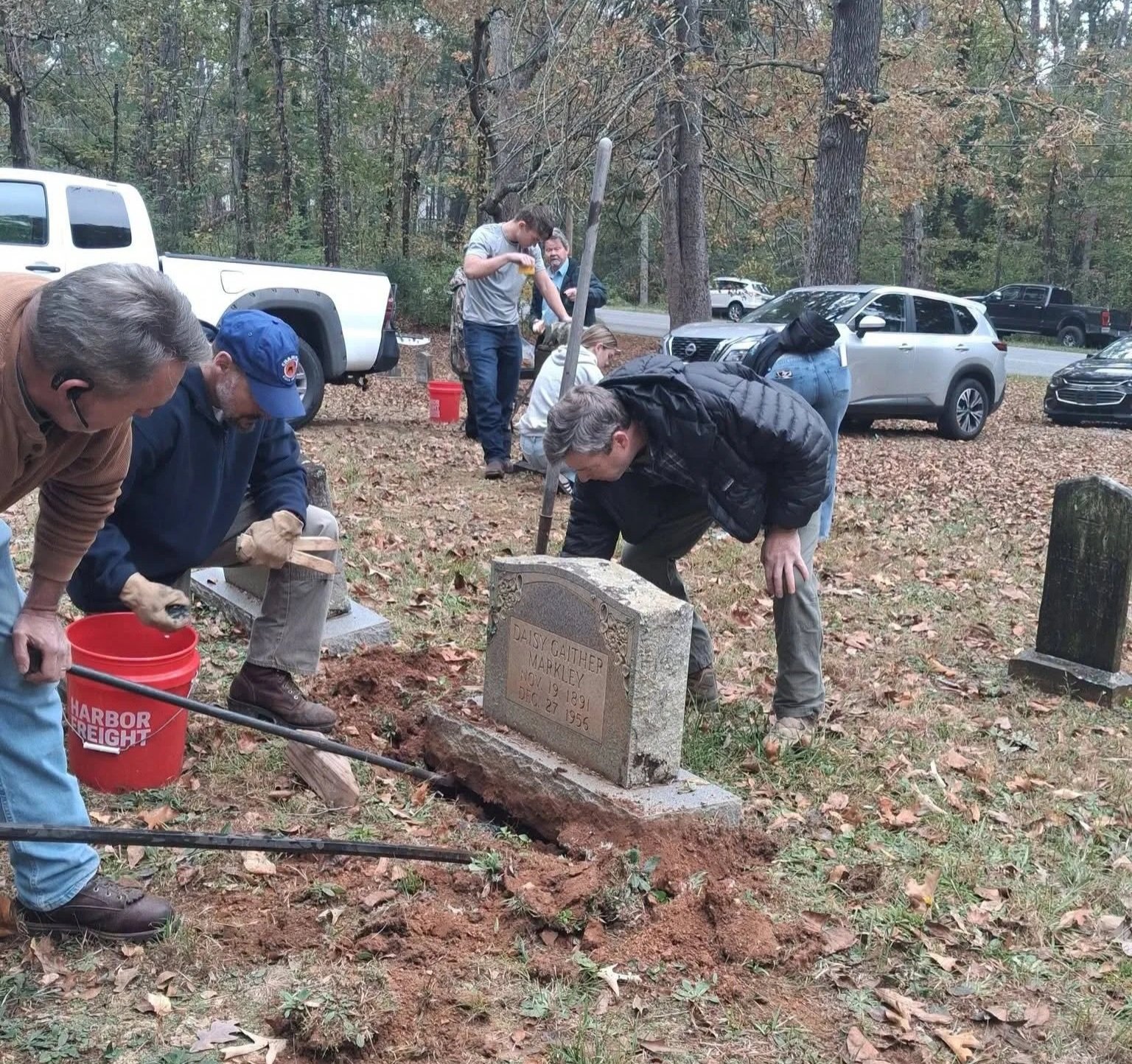
Volunteers with the Henderson County Cemetery Advisory Committee at Oakland Cemetery in East Flat Rock, cleaning and leveling historic gravestones.
At the time, African Americans had limited burial options. Many were interred in unmarked graves on the estates where they had lived and worked, while others were buried in the servants' section of St. John in the Wilderness churchyard.
In 1889, Henry Simmons purchased land near the railroad tracks in East Flat Rock from Constance Dent Baring for $35. The property became Oakland Cemetery, owned and maintained by the Society of Necessity.
The Society's Sick Committee handled funeral arrangements at a time when professional undertakers were generally unavailable to African Americans. Members prepared bodies for burial, secured coffins, dug graves, and conducted burials. Cemetery plots were initially available to Society members for just one cent per square foot.
Oakland Cemetery provided African American families with a burial ground of their own, where loved ones could be laid to rest and remembered.
The People Behind the Stones
Walking through Oakland Cemetery is a little like turning the pages of an old family album. Names recur from one generation to another. Husbands and wives rest beside children and grandchildren. Familiar surnames - Potts, Simmons, Markley, Edwards, Holback, Logan, Alston, Darity - appear throughout the grounds.
Together, they tell the story of a community built through determination, hard work, faith, and a commitment to one another.
What follows are brief profiles of some of the people buried in this sacred place. Their stories have been preserved through historical records, family recollections, and the work of dedicated researchers. Where possible, I've included links to fuller accounts of their lives. A list of sources for this article follows.
George and Lavenia Potts
George Potts was born into slavery in 1844, and Lavenia Moultrie two years later. They met while working at Glenroy (later renamed Kenmure), the Flat Rock estate of Dr. Mitchell King, and married in November 1871.
George worked as a gardener, farmer, and caretaker. Lavenia was a seamstress, midwife, and skilled cook, known for bringing homemade soup to sick neighbors and selling baked goods throughout the community.
In 1880, George purchased 82 acres on Glassy Mountain, where he built a two-story log cabin. The family later acquired farmland in East Flat Rock and established a homestead along Mine Gap Road.
George and Lavenia raised nine children and became respected community leaders. George served as a trustee of Mud Creek Missionary Baptist Church and the Society of Necessity, while Lavenia became the Society's first designated "mother."
Their descendants included educators, scholars, musicians, and community leaders who carried forward the family's commitment to education and service.
Fred Henderson Potts
George and Lavenia 's son Fred Henderson Potts inherited his father's love of plants and flowers. Largely self-taught, he became an accomplished horticulturist who worked as a caretaker, chauffeur, and landscaper for Flat Rock families.
His interests extended well beyond gardening. He played the flute with an Asheville symphonic group and was an inventor, handyman, and gifted conversationalist who, according to his daughter Hortense, could "talk the horns off a bull."
Fred and his wife, Ethel, raised their family at Brook Ledge on Mine Gap Road, surrounded by gardens and an extensive collection of plants. Their daughters, Hortense and Fredrica, recalled their father's remarkable knowledge of botanical names and his delight in sharing it with others.
Fredrica Potts Sayles and Hortense Potts — Keeping the Stories Alive
Fred Henderson Potts's daughters, Fredrica and Hortense, grew up with a deep appreciation for education and their family's remarkable history. Both graduated from Bennett College. Fredrica became the college's business manager, while Hortense earned a master's degree from Western Carolina University and pursued a career in teaching.
The sisters shared memories of their grandparents, parents, and East Flat Rock's African American community, helping preserve stories of Lavenia’s generosity, George's determination, and Fred's love of flowers and music.
Fredrica is buried at Oakland Cemetery, while Hortense continues to be a living link to the family's remarkable history.
Israel Simmons — Putting Down Roots
Born into slavery in South Carolina, Israel Simmons purchased 18 acres in East Flat Rock for $90 in December 1871. Historian Linda Parramore Culpepper identifies the transaction as an important early step in establishing the area's African American community.
For a formerly enslaved man, landownership offered independence, stability, and the opportunity to build a future for his family.
Simmons was a founding member of Mud Creek Missionary Baptist Church and served as a deacon for 28 years. He was also the father of Henry Shield Simmons, who founded the Society of Necessity in 1885. Together, father and son played instrumental roles in establishing and sustaining East Flat Rock's growing African American community.
Henry Shield Simmons — The Visionary
Born in 1867, Henry Shield Simmons founded the Society of Necessity in 1885 and became its first president, a position he held until his death in 1949. The organization provided assistance to East Flat Rock's African American residents during illness, financial hardship, and death.
Henry studied legal proceedings at the Henderson County courthouse, encouraged neighbors to secure deeds and prepare wills, helped families acquire property, and supported the establishment of a school. He also operated a cannery that provided seasonal employment and food for families during the winter months.
In 1889, Henry purchased the land that became Oakland Cemetery, providing the community with a burial ground of its own.
Katherine Edwards Simmons — Deep Roots in the Community
Katherine "Katie" Edwards Simmons came from a family whose history extended back to the earliest generations of African Americans in Flat Rock.
Her grandparents, Caesar and Venus Edwards, were the first Black couple to register their marriage at St. John in the Wilderness in 1855. Her parents, William Edwards and Katie Williams, recorded their marriage there in 1880.
Katherine and her husband, Henry Shield Simmons, were part of a family deeply involved in Mud Creek Missionary Baptist Church and the Society of Necessity, two institutions central to East Flat Rock's African American community.
Jackson and Flora Holback — Faith, Freedom, and Service
Jackson H. Holback was born in 1833, more than three decades before emancipation. His life would span slavery, the Civil War, Reconstruction, and the emergence of a new African American community in East Flat Rock.
He served in Company K of the 40th United States Colored Infantry during the Civil War, joining thousands of Black soldiers whose military service helped secure the freedom of millions. Following the war, Jackson became an important religious and community leader.
His gravestone records that he helped organize the first Baptist association for African Americans in this section of Western North Carolina in August 1867. He was also a member of Mud Creek Missionary Baptist Church for 50 years.
Jackson and his wife Flora were among the early African Americans who acquired land in the East Flat Rock area. Their property transactions helped establish the community that grew around the railroad and nearby estates. Flora died in 1895, and Jackson in 1915.
On Jackson's gravestone are words from the Gospel of John:
"I am the true vine, and my Father is the husbandman."
It seems an especially fitting inscription for a man who helped cultivate a community whose roots would extend through generations.
John and Sally Markley — The Blacksmith and the Midwife
John Calhoun Markley and his wife, Sally Darity Markley, were both born into slavery. Historical accounts connect them to the Kingdom of the Happy Land, a community of formerly enslaved people established in the Green River area following the Civil War. By 1877, they had settled in East Flat Rock.
John was a blacksmith, farrier, buggy maker, and handyman. His shop along West Blue Ridge Road became a familiar gathering place where horses were shod, wagon wheels repaired, farm implements fashioned, and stories exchanged. He also served as Flat Rock's first mail carrier.
Sally, affectionately known as "Aunt Sally," was a celebrated midwife, traditional healer, and gifted storyteller. One descendant recalled Sunday afternoons listening to her childhood memories of the Civil War, including hiding beneath rocks and in laurel thickets to escape soldiers.
The couple raised eleven children who survived to adulthood. Sally lived to be at least 104, witnessing extraordinary changes from the Civil War to the dawn of the space age.
One of Oakland Cemetery's most prominent gravestones marks the resting place of this remarkable couple, whose lives were so closely intertwined with the community they helped establish.
James and Garfield Markley — Keeping the Forge Burning
Two of John and Sally Markley's sons, James and Garfield, continued their father's blacksmithing business on West Blue Ridge Road, formerly Depot Road.
The shop served generations of Flat Rock residents, shoeing horses, repairing farm equipment, and providing a gathering place where neighbors exchanged news and stories.
Older Flat Rock residents still recall riding their horses to the Markley shop in the 1950s and 1960s to have them reshod. For decades, the ring of the Markleys' hammers was a familiar sound in the village.
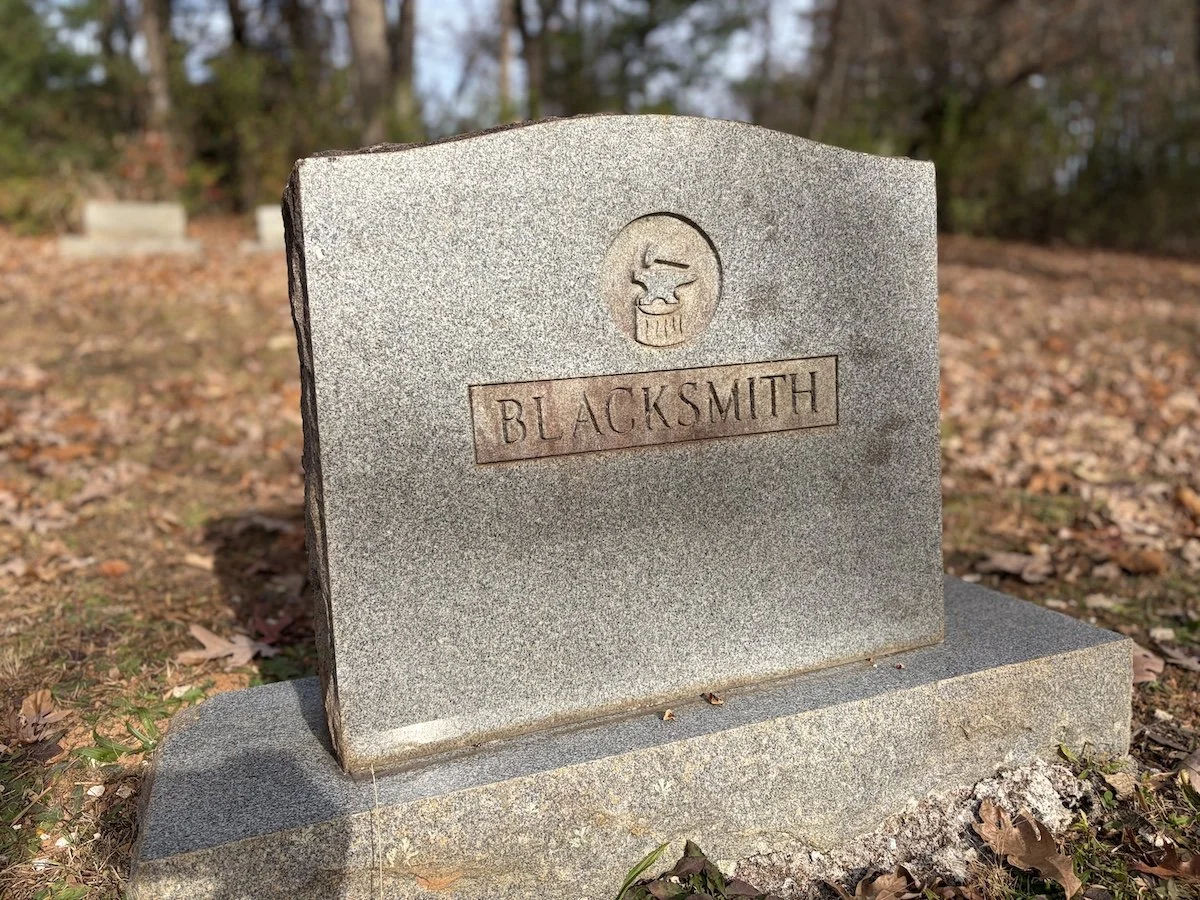
After Garfield's death in 1932, James continued operating the business until declining health forced him to close in the mid-1960s. James died in 1965. His gravestone bears a simple tribute to his life's work: Blacksmith.
Robert and Florilla Alston — A Welcoming Door
Many African Americans traveled between Charleston and Flat Rock for seasonal employment on the summer estates. Those without relatives nearby needed affordable lodging.
Robert and Florilla Alston operated a boarding house that welcomed Black workers and visitors during the summer months, providing accommodations and a connection to the local community.
We know little about the daily rhythms of their establishment. But it is easy to picture a house alive with conversation at the end of a long working day, with travelers exchanging news from Charleston, sharing meals, and renewing friendships.
Amy Potts Williams — A Connection to the Kingdom of the Happy Land
The history of Oakland Cemetery is also connected to the Kingdom of the Happy Land, a community established in the Green River area by formerly enslaved people following the Civil War.
Among those associated with the Kingdom were Perry Williams and his wife, Amy Potts Williams, who operated a roadside eatery along the Greenville Road, serving drovers and travelers between South Carolina and the mountains. It is easy to imagine their establishment bustling with hungry travelers, exchanging news and stories from the road.
As the Kingdom declined in the early twentieth century, some residents moved to East Flat Rock. Amy's grave in Oakland Cemetery provides a lasting connection between these two chapters of African American history in Western North Carolina.
A Child Without a Name
In Row 22, near the graves of Henry and Katherine Simmons, a small marker records the death of their infant son on July 15, 1902. The inscription identifies him simply as the unnamed son of H.S. and Katy E. Simmons.
Infant and childhood deaths were tragically common in those days, when infectious diseases, limited medical care, and the complications of childbirth claimed countless young lives. For all the remarkable advances of modern medicine, it is difficult to imagine the uncertainty families lived with, or the grief of parents who lost a child they had barely begun to know.
We know nothing of this little boy's brief life, or the hopes his parents held for him. But more than a century later, the small stone they placed above his grave remains a quiet testament to their love.
Of all the stones in a cemetery, those belonging to children can be among the most affecting. They remind us that every life, however brief, mattered deeply to someone.
Those Who Served in the Military
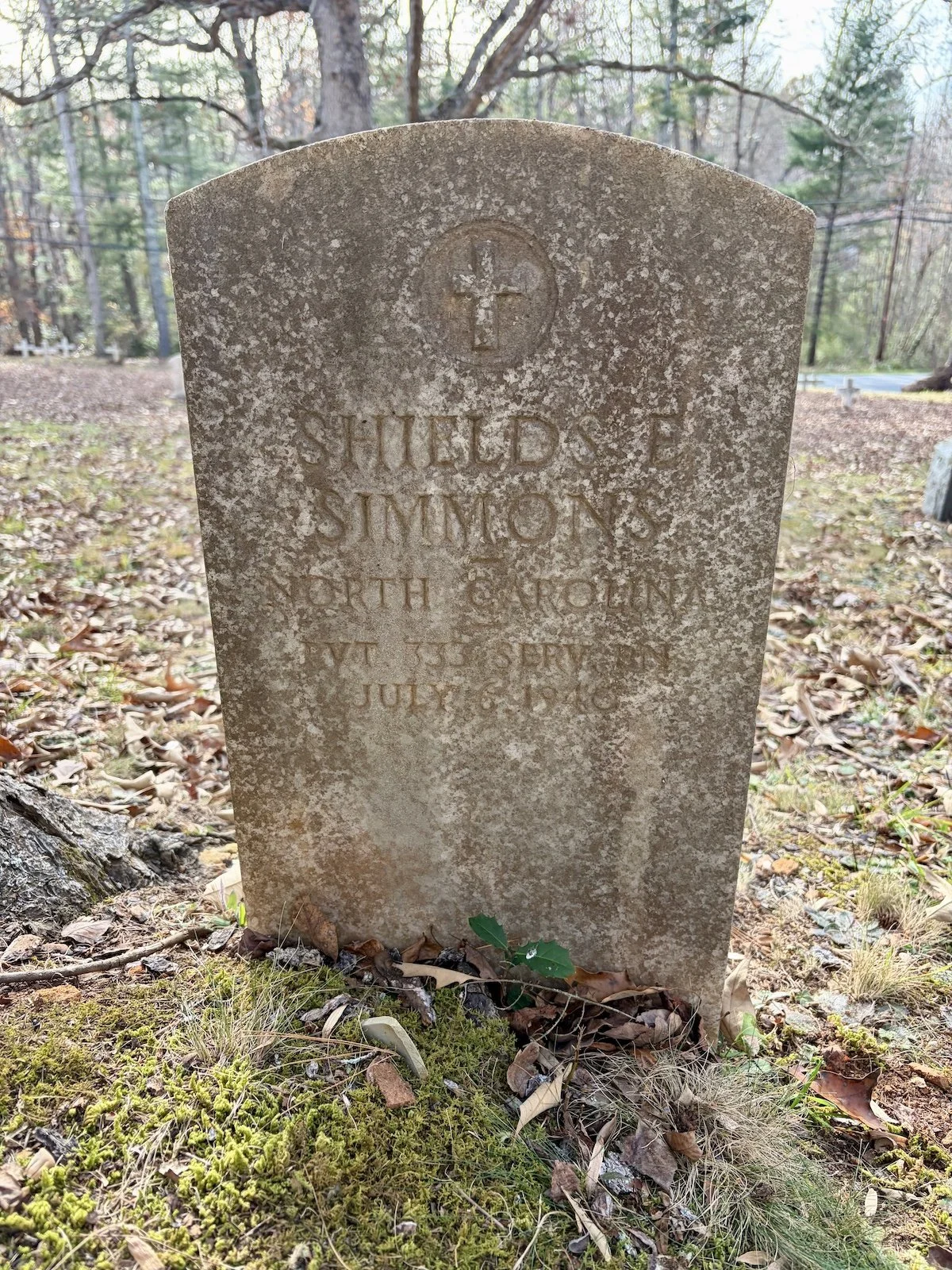
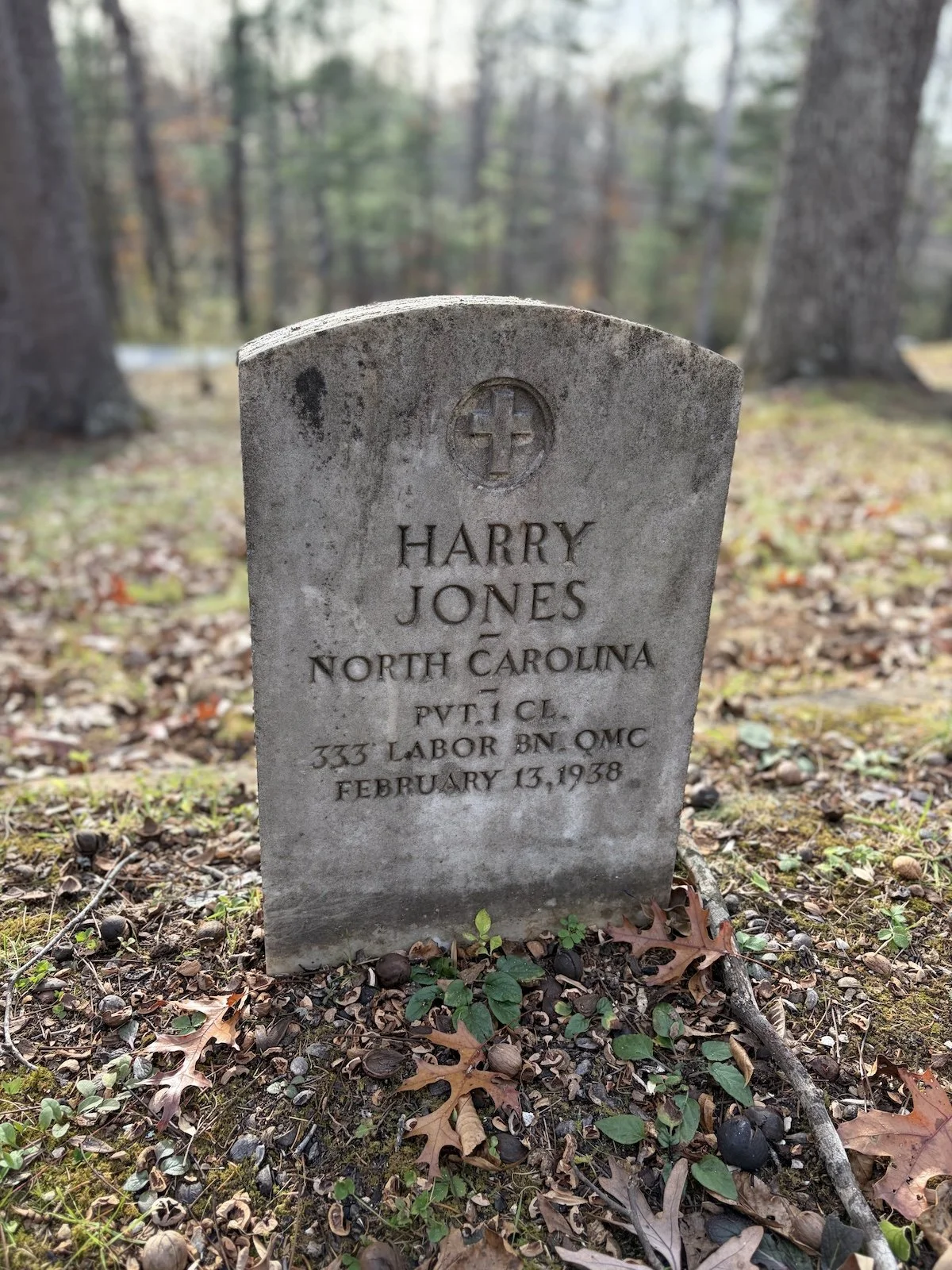
Oakland Cemetery is also the resting place of veterans of the Civil War, World War I, and World War II. Among them are Jackson Holback, who served in the United States Colored Infantry, and others whose gravestones identify their service in infantry, engineering, transportation, and support units.
Their service is particularly significant given the circumstances of their times. Some fought for a country that had denied freedom to their parents or grandparents. Others served while segregation and discrimination remained deeply entrenched in American life.
Yet they answered the call, and their gravestones remind us that the history of military service and sacrifice extends far beyond the names celebrated on public monuments.
The Graves Without Names
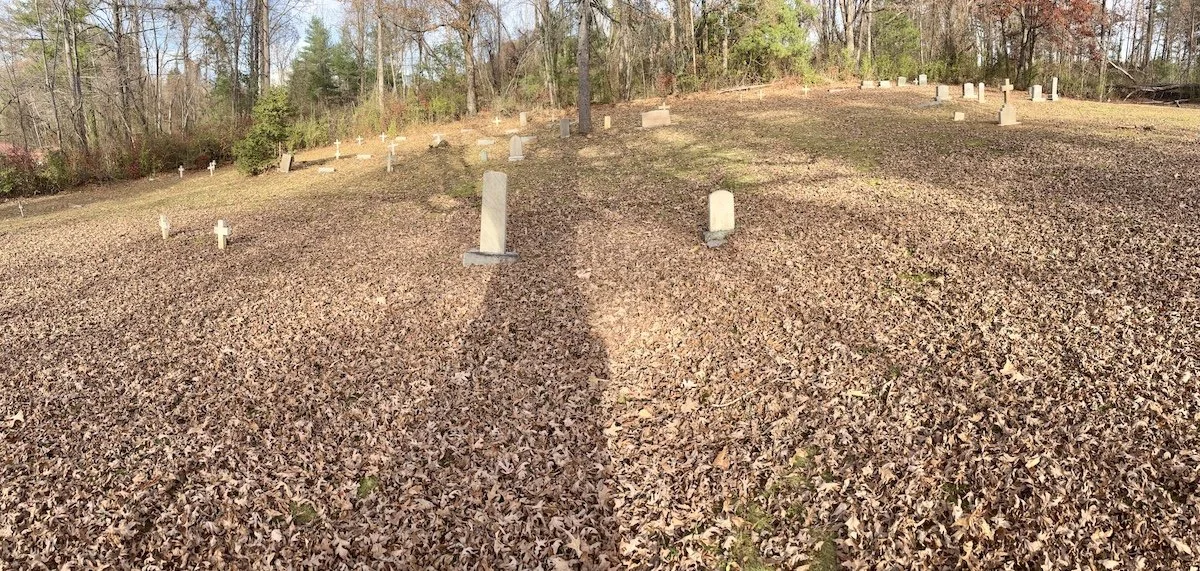
Among the most poignant features of Oakland Cemetery are the graves whose occupants are unknown. Some are marked by simple fieldstones or white crosses. Others are visible only as depressions in the earth, their markers long since disappeared.
The cemetery's published inventory records numerous such places, sometimes with only the words "fieldstone," "open area," or "graves, no markers."
Who were these people? Mothers and fathers, craftsmen and laborers, children who died too young? Did they build Flat Rock's houses and roads, sing in the choir at Mud Creek, tend gardens, or care for neighbors in need?
We may never know their names or stories, but they, too, belonged to this community. They had families, hopes and disappointments, and lives that mattered to those who knew them.
A name carved in stone is one way to preserve a life. The continued care of an unmarked grave is another.
Gone but Not Forgotten
I grew up in a house that overlooked a cemetery. From my bedroom window, I could see acres of gravestones stretching across the landscape. Even as a child, I appreciated that cemeteries are more than places where the dead are buried. They are repositories of stories, reminders of generations who came before us, and silent witnesses to the passage of time.
Oakland Cemetery is all of those things.
I am grateful to the Society of Necessity and the generations of families who have cared for this sacred ground. Grateful to the Henderson County Cemetery Advisory Committee and others working to preserve and document our local cemeteries. And grateful to the historians, descendants, and storytellers who have helped keep these memories alive.
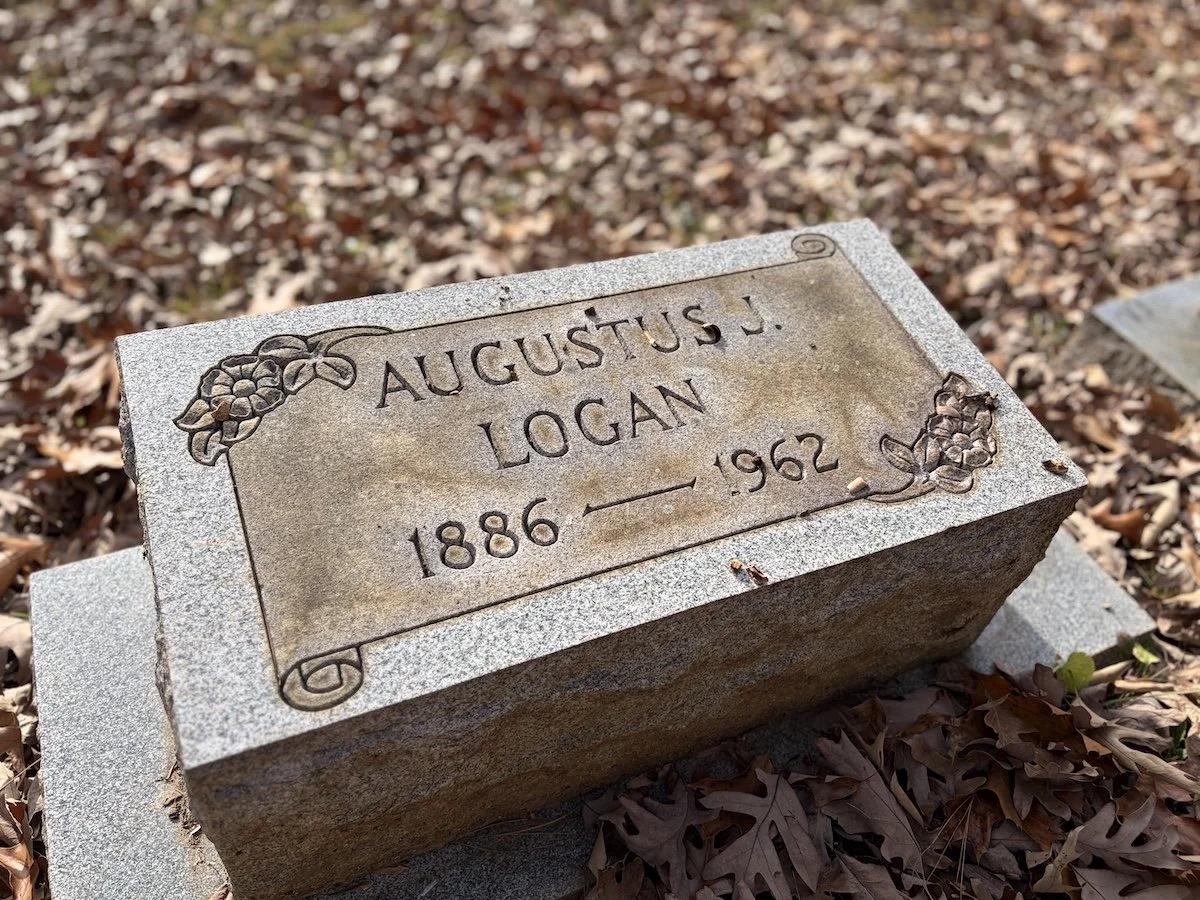
Among the many gravestones at Oakland Cemetery is one belonging to Augustus Logan, born into slavery in 1857. He lived for more than nine decades, witnessing the end of slavery and the emergence of a thriving African American community in East Flat Rock. His wife, Mary, was born into slavery seven years before him.
It is easy to drive past a place like Oakland Cemetery without giving it much thought. But stop for a while, walk among the stones, and consider the lives represented there. You may discover that this quiet little cemetery has a great deal to tell us about courage, perseverance, generosity, and the extraordinary things that ordinary people can accomplish together.
And perhaps no words better capture the spirit of this sacred place than those inscribed on Augustus Logan's gravestone:
Gone but Not Forgotten.
—
(Scroll past gallery images for sources and the Oakland Cemetery Book)
Sources
African American History in Henderson County — Part Two — Historic Flat Rock, Inc., Missy Izard’s article
Society of Necessity, Henry Simmons, Potts family, Markley family, Oakland Cemetery
Black Charlestonians in the Mountains — Linda Parramore Culpepper
Post-Civil War community development, land purchases, Israel Simmons, Jackson Holback, Oakland's founding. The Culpepper paper is especially valuable because it connects individual family histories with land transactions, church records, and the development of East Flat Rock as a distinct African American community.
Oakland Cemetery (Mud Creek Missionary Baptist Church) — Henderson Heritage
Overview of the cemetery, founding families, former enslaved residents, veterans
East Flat Rock Family Celebrates Black Heritage — Pete Zamplas, Hendersonville Times-News, February 25, 2001
George and Louvenia Potts, Fred Potts, Fredrica and Hortense, family recollections
Flat Rock's Society of Necessity Insured the Common Good — Hendersonville Times-News, February 21, 2016
Society of Necessity, burial practices, preservation of Oakland Cemetery
The Society of Necessity — Black Histories
The Sick Committee, burial arrangements, cemetery ownership, cost of burial plots
Oakland Cemetery Book
Highway 176 South, right at East Flat Rock, continue approximately one-half mile, cross railroad tracks. Turn right on Highway 123, (Highland Park Rod), one-fourth mile to the cemetery.
Source: https://www.hendersoncountync.gov/ces/page/henderson-county-north-carolina-cemetery-bookBirths Deaths
Row 1
Henrietta North 1864- 1940
Elizabeth Shelton 10 Mar 1882 - 1 Sept 1941
Sam P. Singletary 18 Jan (d)1934; S.C. Pvt 808 Pioneer Inf
Margaret H. Singletary 1898-1958
Row 2
Sister, Elizabeth Cash 1880 1949
Mother, Nancy Johnson 1857 1949
Lucy Edwards 5 Dec 1895 26 Mar 1967
Lawrence Edwards 4July 1895 30Nov 1948
Lawrence C. Edwards 30 Sept 1919 9 Apr 1956, N.C. Cpl 396, QM Truck Co
Leon Edwards 5Dec 1927 8 July 1985
Julia Jordan 4 Apr 1890
Daniel Jordan 28 Aug 1890 28 Oct 1965
Florilla Alston 1871 1944
**Robert B. Alston 1870 1941
Row 3
2 markers no names
George Williams 19 May 1882 5 Nov 1912
••Amy Potts, w/o 14 (d) Oct 1912 Perry Williams age 63
Leanah 1860 1911 w/o Jacob Goodwin
Femie, d/o J.E. and L.M. Goodwin, w/o L.A. Green; 2 Mar 1887 17 Aug 1909
Field rock
Row 4
Ralph R. Washington 14 Aug 1921 14 Apr 1961, N.C. Sgt 614 Tank, Destroyer Bn WWII
Rev. D. Hunt 28 Feb 1860 12 Sept 1927
Open area
Anna G. Collins 1910 1988
Row 5
Richard Simmons 1886 1944 (Only grave in this row marked)
Row 6
James O. Parks 14Dec 1918 12Feb 1956; N.C. PFC 41 Casual Co WWII
Open area
**Augustus Logan 7Jan 1857 2Mar 1950
**Mary L. w/o Gus Logan 25 Mar 1850 26 Dec 1921
Mary G. Lance 20 Apr 1882 28 Dec 1918; d/o Mary Logan
Harry Jones (d) 13 Feb 1938; N.C. Pvt 1 CL 333, Labor Bn Qmc
Casper Logan Jenkins 3 Oct 1915 – 16 Dec 1940
Row 7
Open area
Johnnie W. Simmons June 1895 - July 1978
2 fieldstones
Sarah w/o Mack Simmons 4 Mar 1865 - 30 June 1908
Row 8
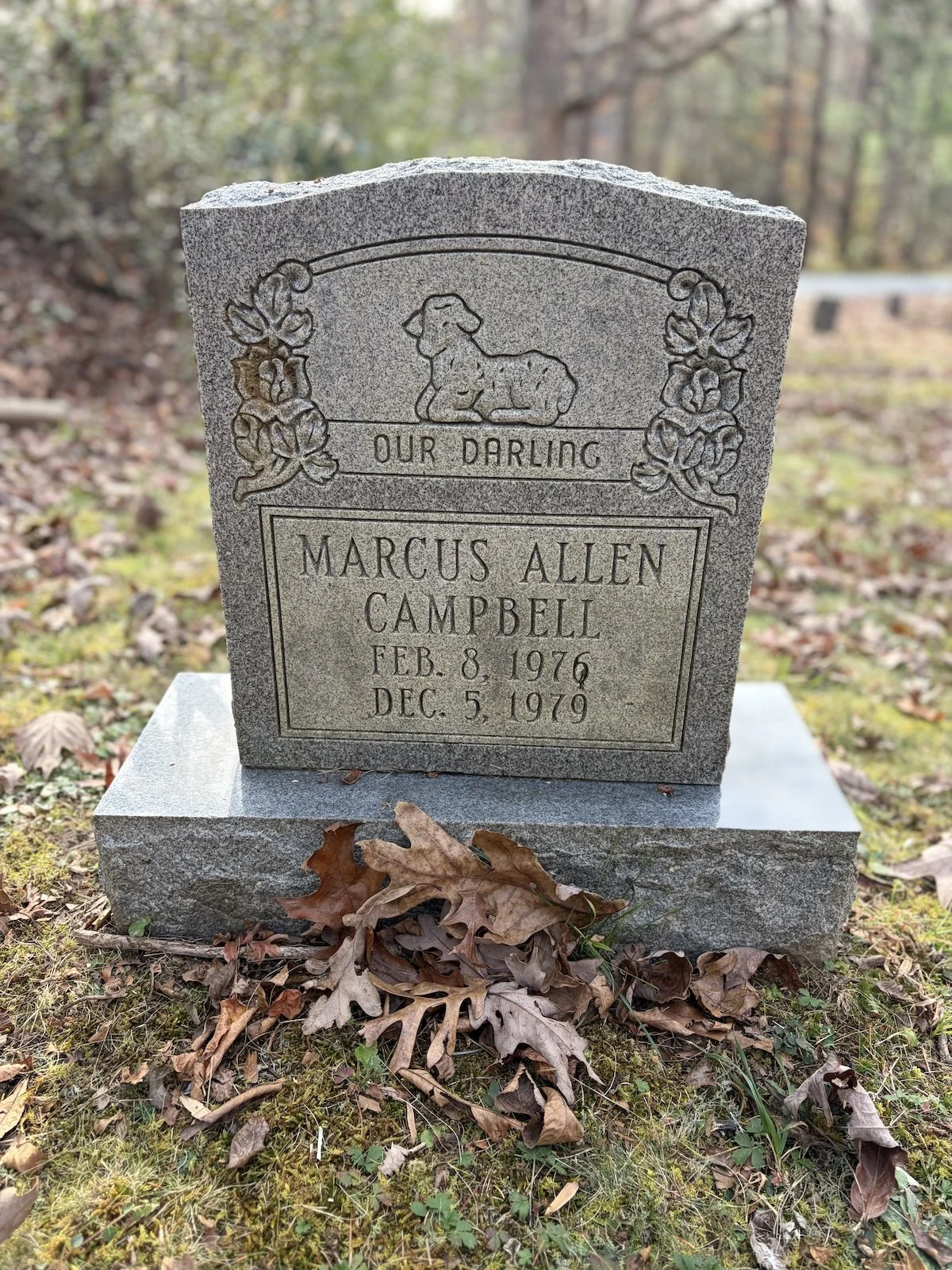
Marcus Allan Campbell 8 Feb 1976 - 5 Dec 1979
Gravestone base
Open area (There are graves here but no markers.)
Row 9
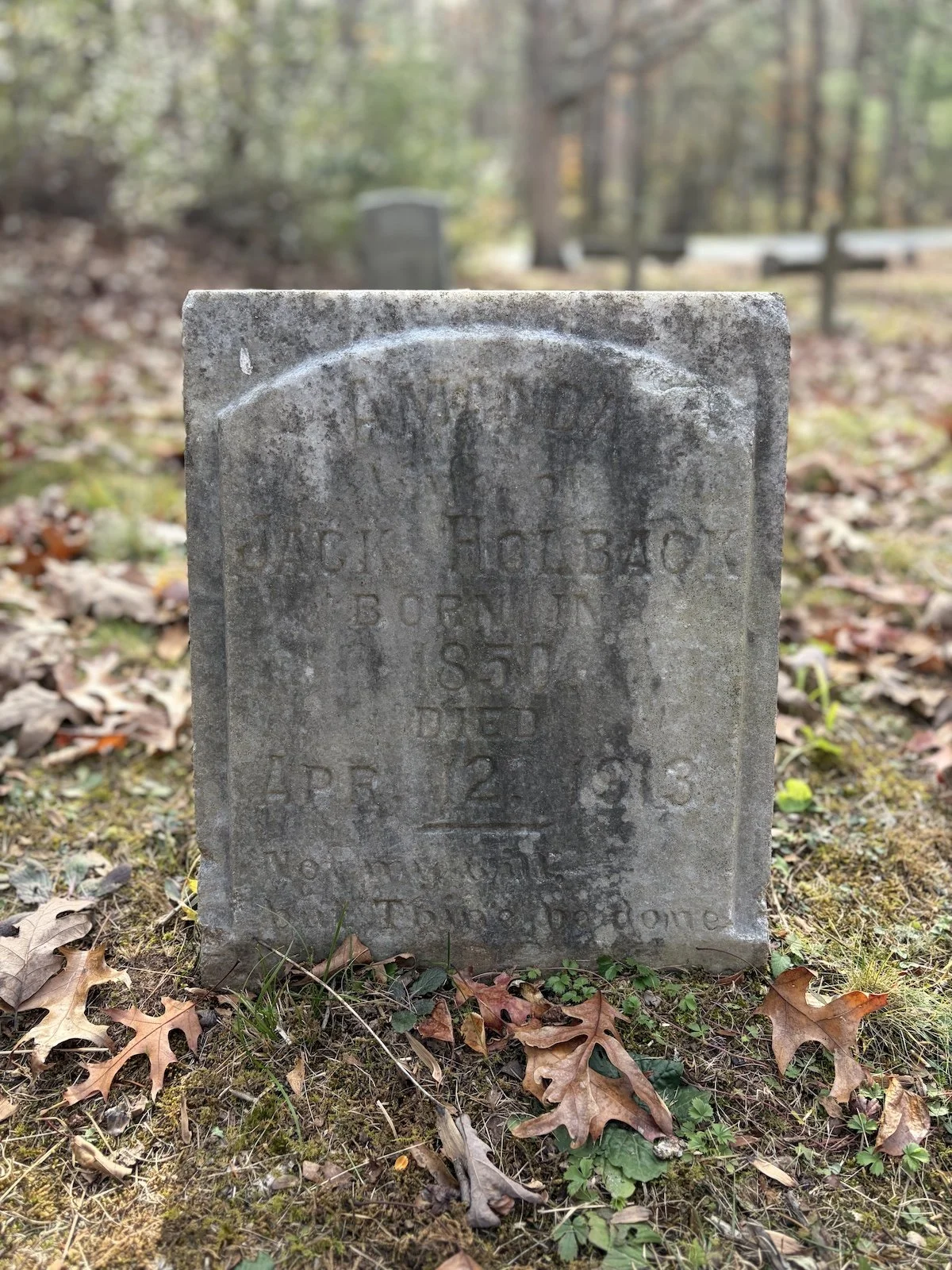
**Amanda w/o Jack Holback 1850 April 12, 1913
Walter W. Walker 1884 1917
Louisa Ashe (D)1907 Born Georgetown, S.C., died Flat Rock, N.C.
Row 10
Sunken place
Fieldstone
Fieldstone
Concrete area (possibly 3 or 4 graves. Only fieldstones)
Row 11
Fieldstone
Herman s/o W.M. and Ellen Jenkins 26 Mar 1904 23 May 1911
6 graves marked with fieldstones
Row 12
William Jenkins N.C. Pvt 545 Engineers
Ellen Jenkins July 1860 21 Jan 1916
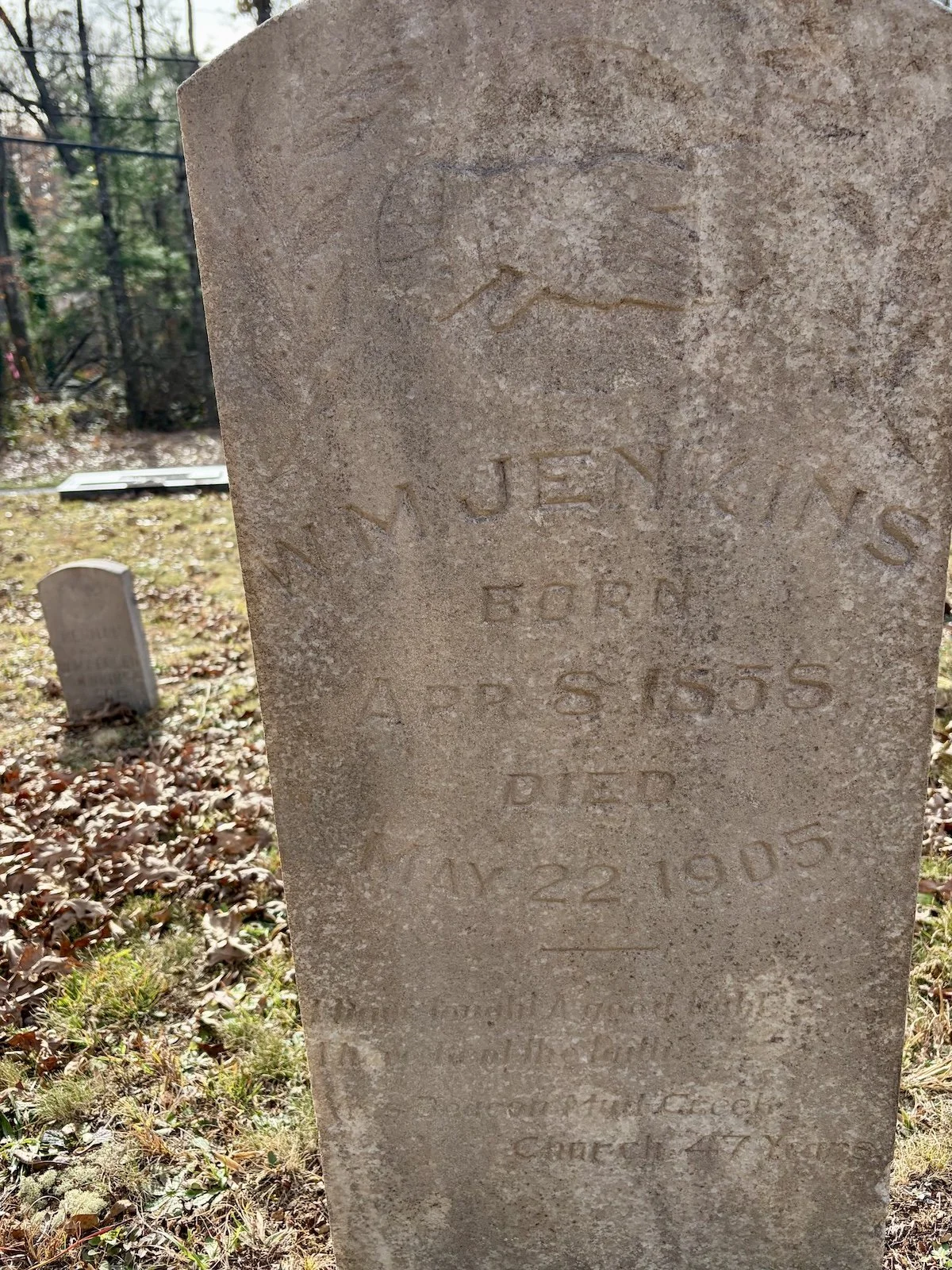
W.M. Jenkins 8 Apr 1858 22 May 1905
2 fieldstones
Row 13
**George L. Potts (Father) 14 Nov1844 - 21 Apr 1925
**Louvenia Potts (Mother) 22 Apr 1846 - 30 Nov 1932
**Fred H. Potts 17 Apr 1885 - 15 Feb 1975
(No other markers, graves could be located here.)
Row 14
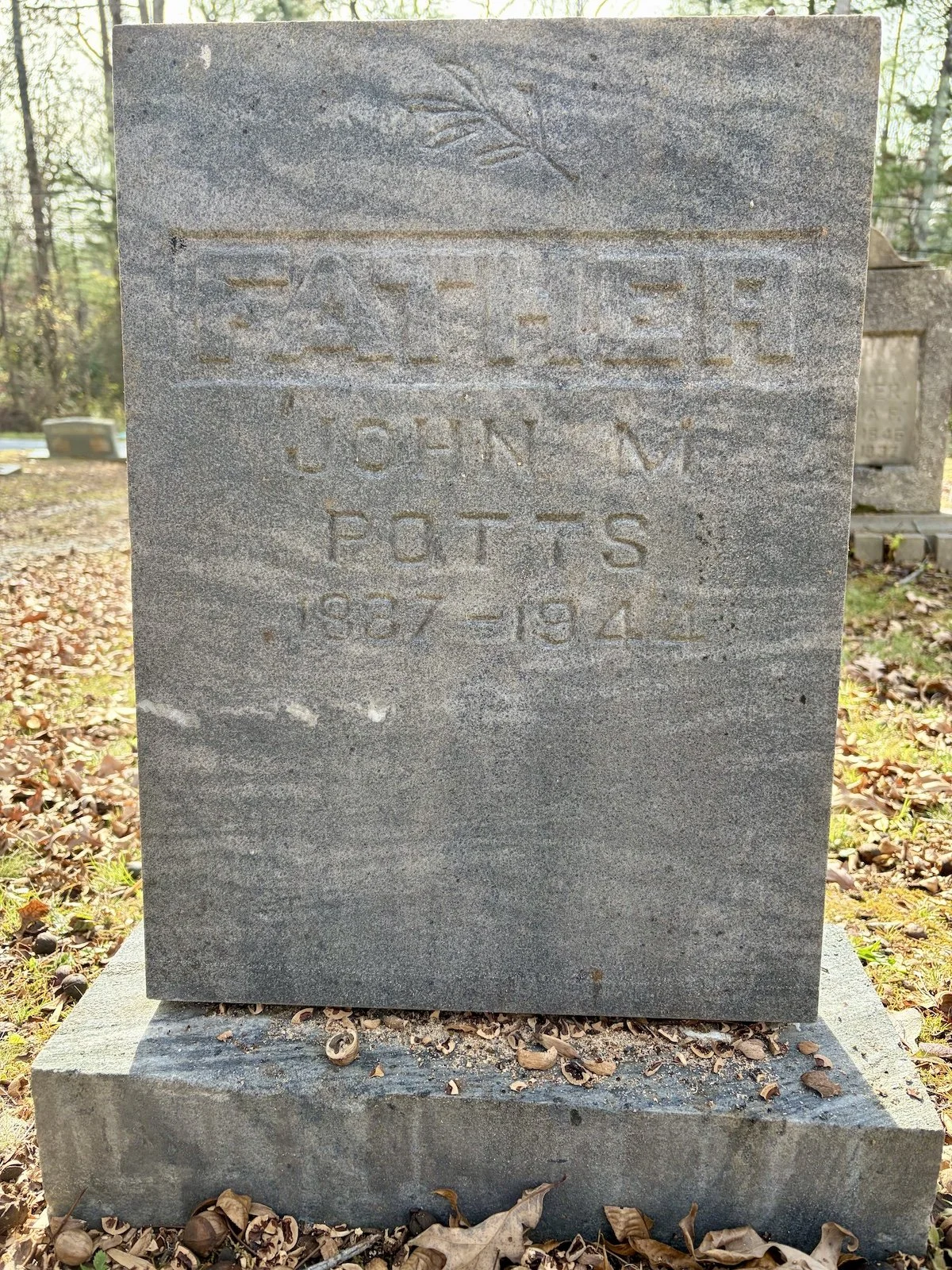
John M. Potts (Father) 1887 1944
Edwin F. Potts 3 Mar 1911 - 2 Nov 1964
Benjamin L. Potts 28 Nov 1878 - 18 Dec 1966
Mattie R. Love 5 Feb 1883 - 27 Feb 1970
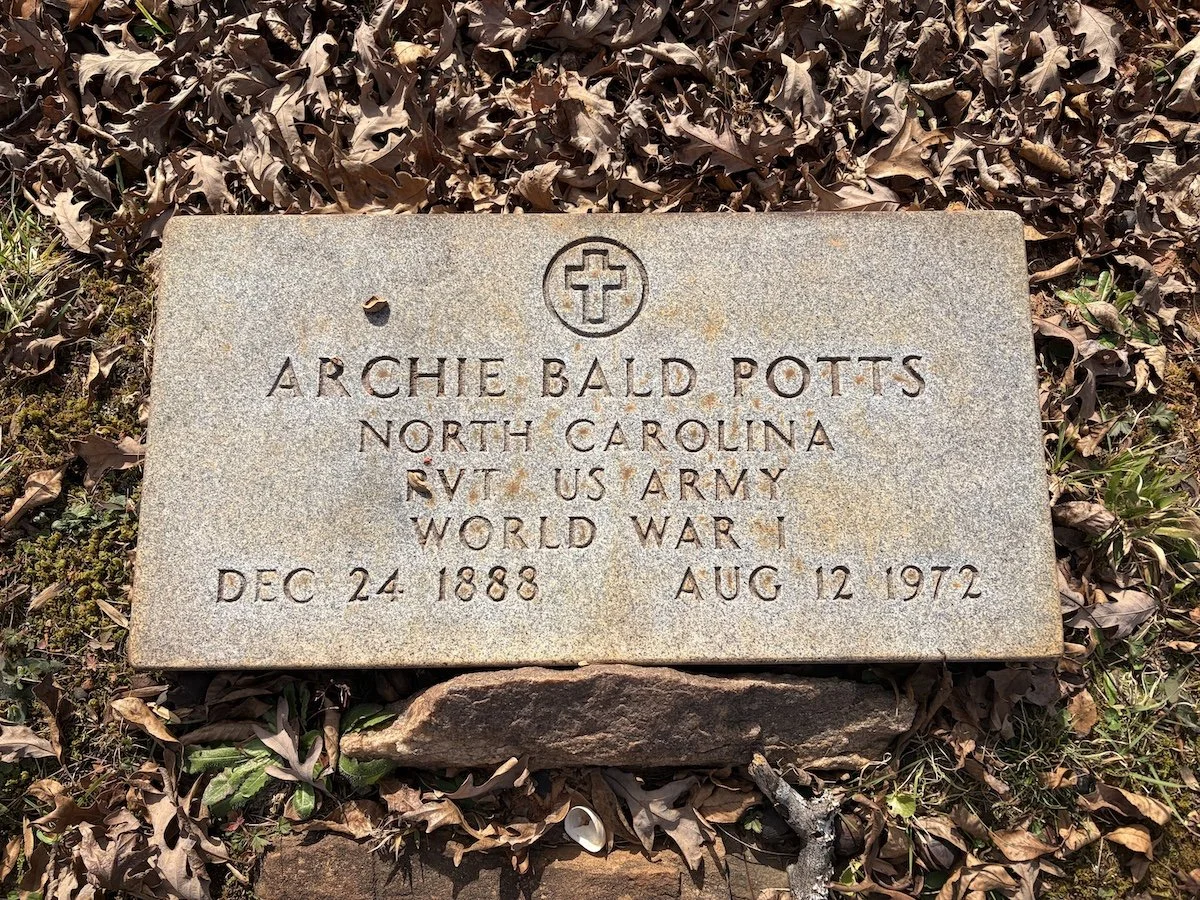
Archie Bald Potts 24 Dec 1888 12 Aug 1972; N.C. Pvt US. Army WWI
Dorothy C. Potts 28 Nov 1897 - 5 Jan 1976
Row 15
Open area
**Israel Simmons 1834 24 Feb 1904
Born Esto S.C., died age 70, He was deacon in church for 28 years
Row 16
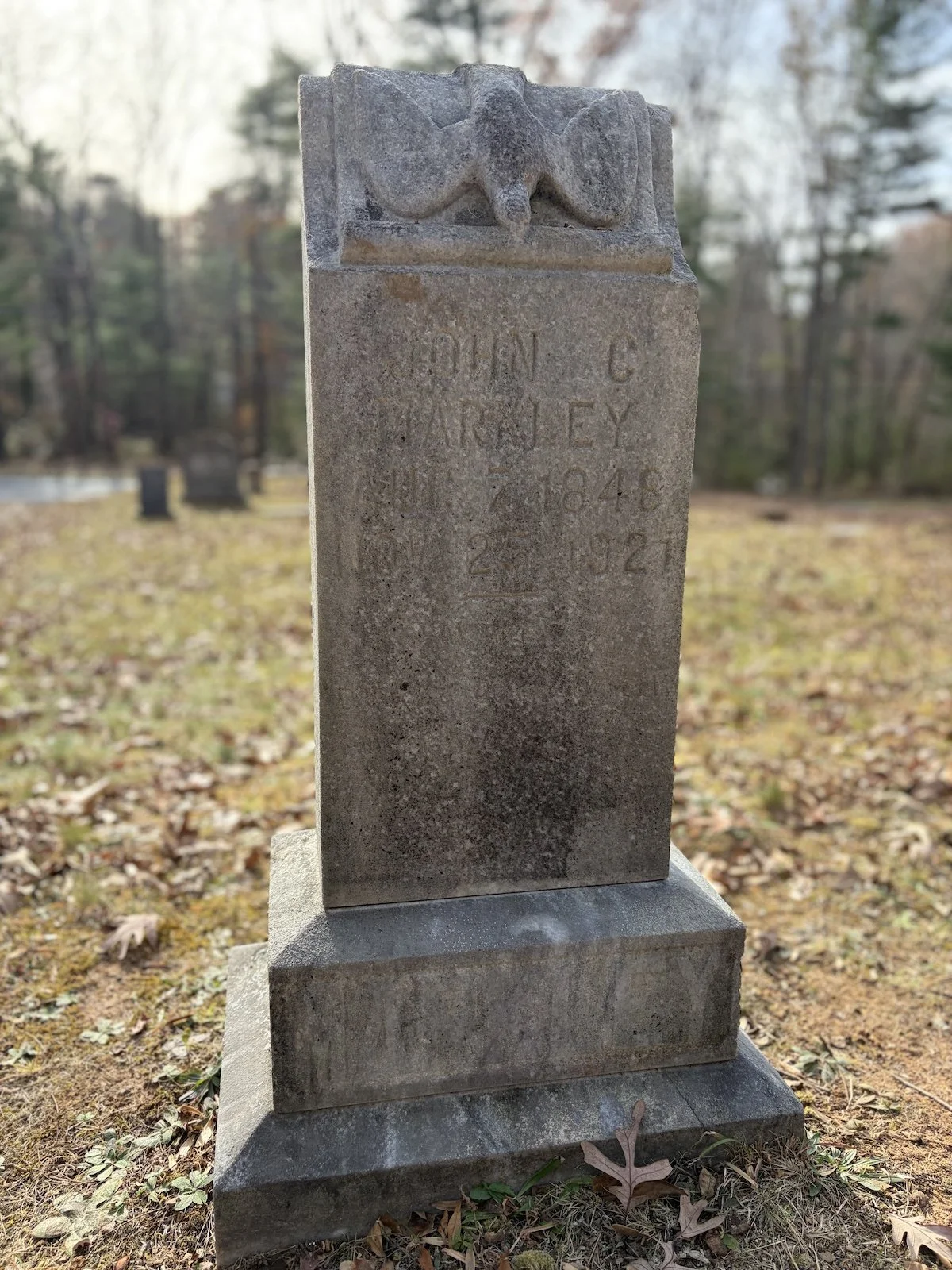
**John C. Markley 7 Aug 1848 - 21 Nov 1921
**Sally D. Markley (midwife) 1854 1959
Henry Markley 8 Apr 1883 - 26 June 1892
Creasman, Mary M. 17 Mar 1890 5 July 1951
Creasman, Robert 31 May 1882 24 Feb 1976
Row 17
**James R. Markley 28 Mar 1887 5 July 1965 “Blacksmith” (back of stone)
Daisy Gaither Markley 19 Nov 1891 27 Dec 1956
Row 18
Hattie Logan Jenkins 7 May 1892 =13 Mar 1975
Carie Bell Logan White 12 Apr 1888 13 May 1969
**Augustus J, Logan 1886 - 1962
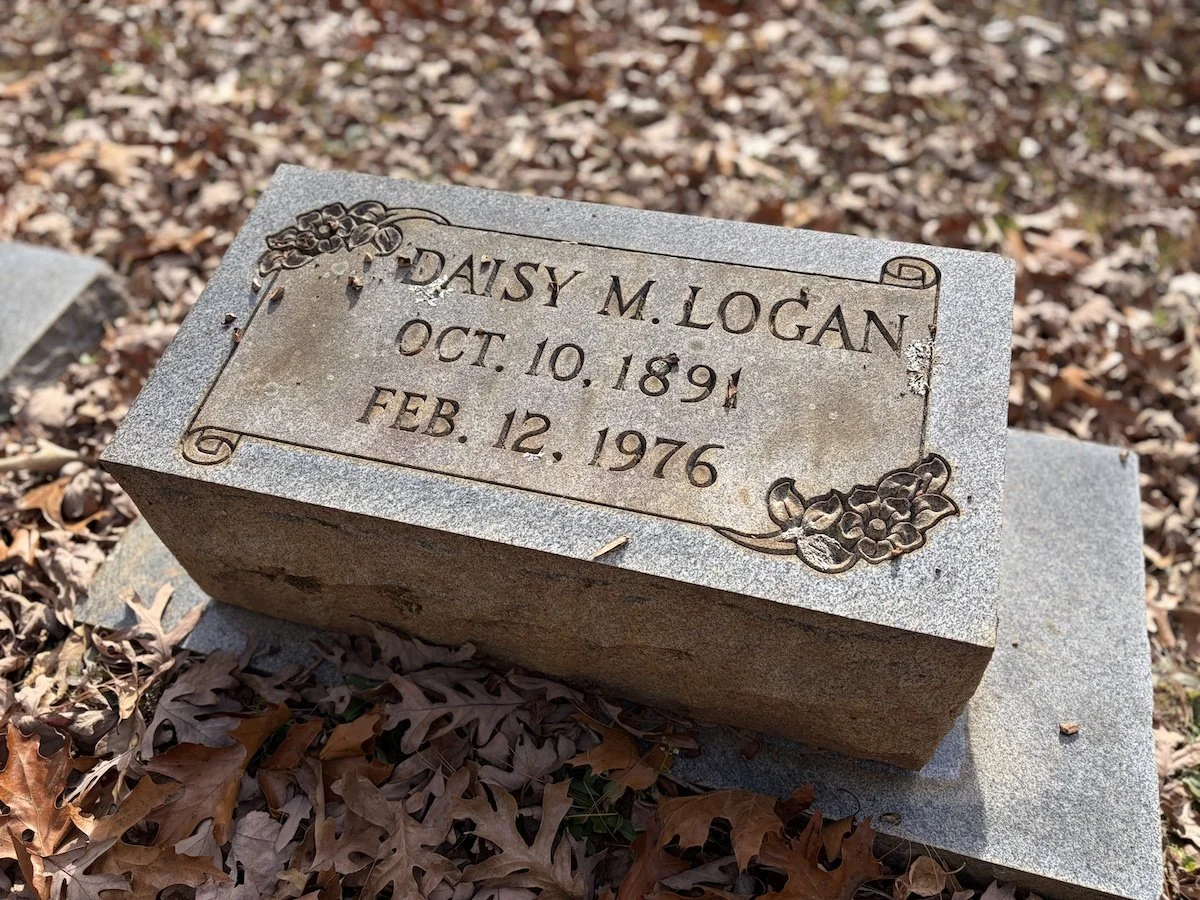
Daisy M. Logan 10 Oct 1891 12 Feb 1976
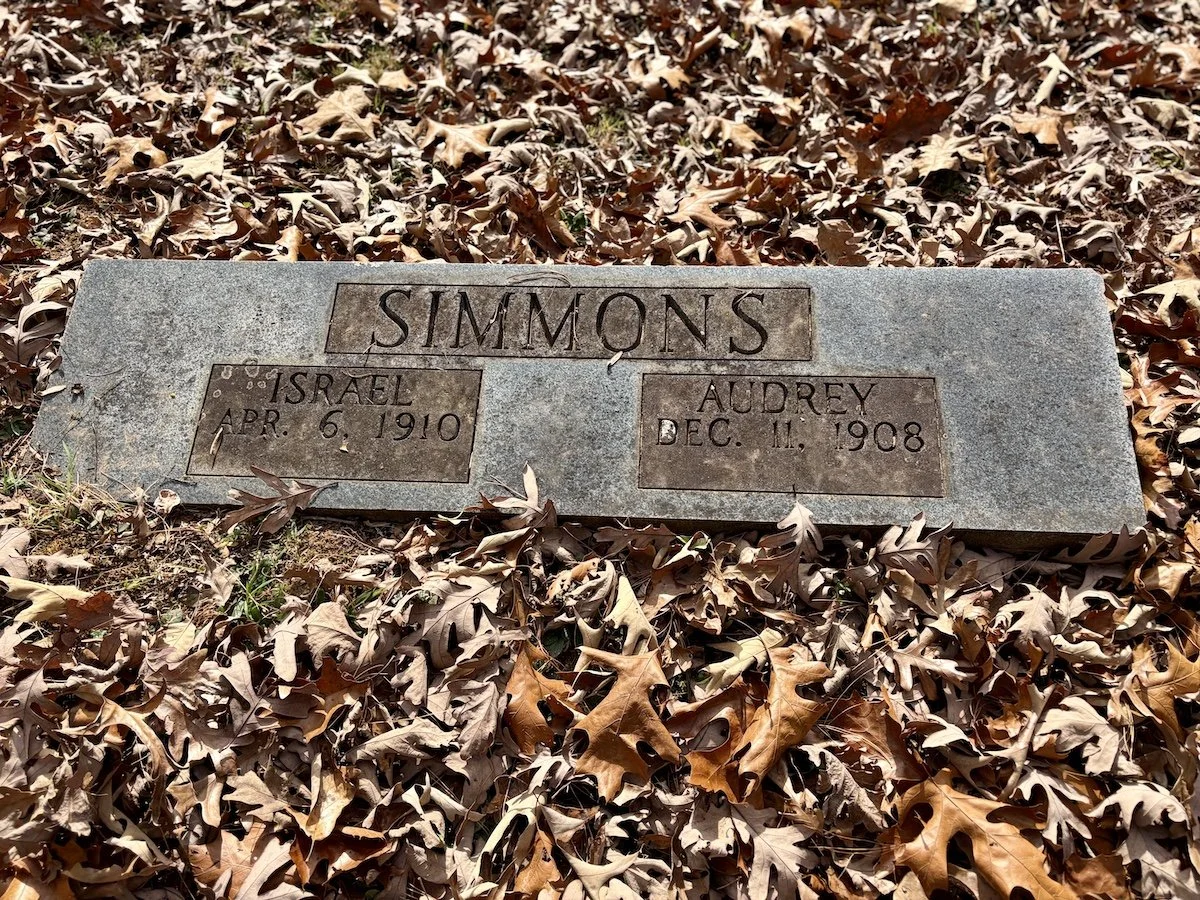
Simmons, Israel (d)6 Apr 1910
Simmons, Audrey (d)11 Dec 1908
Row 19
Marion G. Sams 1923 1987
Blanche A. Williams 1906 1983
Charles Alfred Downs 1934 1974
[10 Apr 1934 25 Feb 1974)
Joseph H. Downs 1900 1986
Roosevelt Edwards 8 July 1908 29 Nov 1960 (Broken Pilgrim Funeral Home Marker)
Rudolph Edwards 1916 198
Row 20 Births Deaths
**Flora w/o J.H. Holbach 15 Feb 1840 6 Dec 1895 55 yr 9 mo 2 da
**Jackson H. Holback 15 Apr 1833 11 May 1915,
K 40th U.S. C I, Helped organize the first Baptist Association for Colored People of this section August 1867, member Mud Creek Church 50 years.
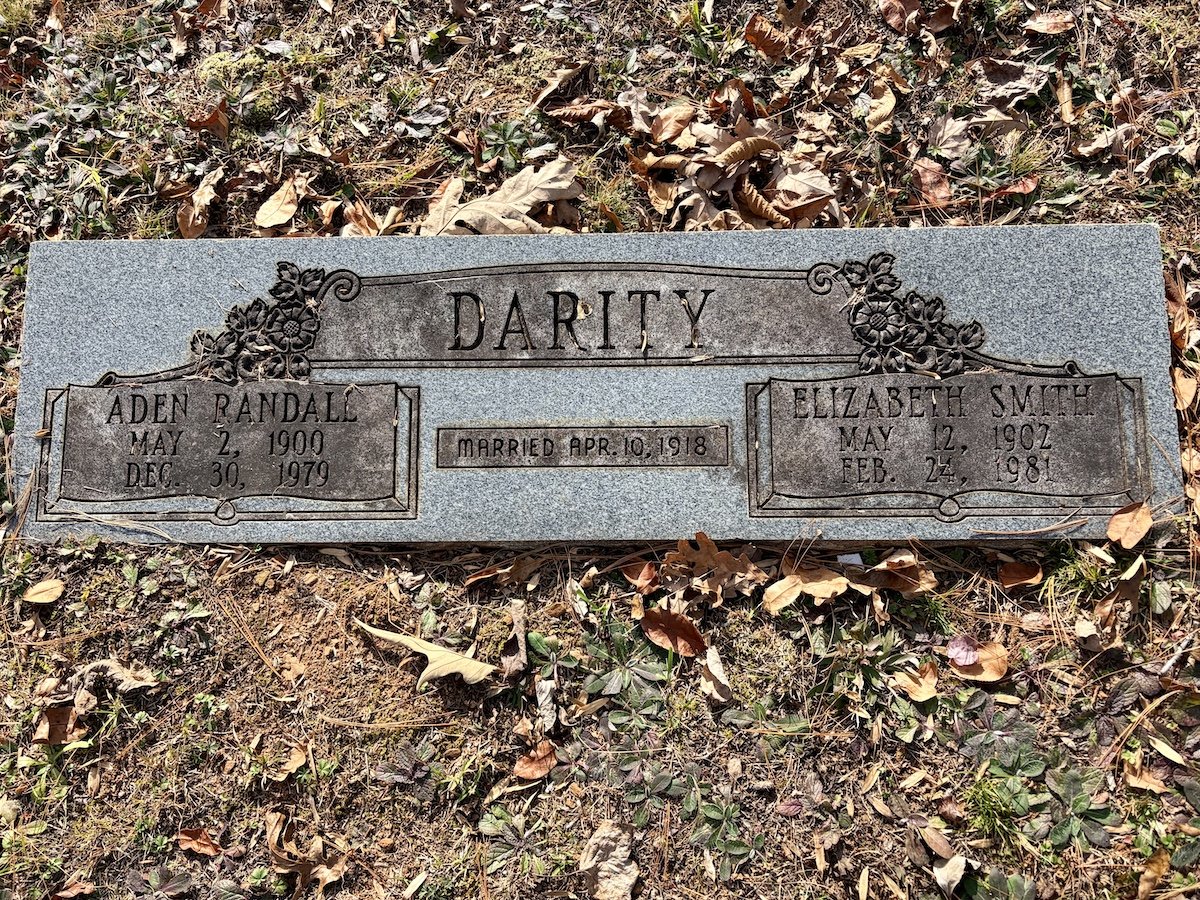
Darity, Aden Randall 2 May 1900-30Dec 1979
Darity, Elizabeth Smith. 12 May 1902 - 24Feb 1981, married Apr 10, 1918
Row 21
**J.G. Markley 8 July 1881 9 Dec 1932, Deacon of Baptist Church
Marker (No name)
Victoria Callahan 1896 1982
Rebecca Darity 15 Apr 1900 - 2 Aug 1952
Henry Emanuel Darity 1 July 1863 - 10 Aug 1938
Lydia Curtain Darity 31 Aug 1871 - 18 Mar 1942
Emma Wilson 1894 1971
Carl Robert Wilson 11 Apr 1915 25 Mar 1970, N.C. Tec 4 4353 QM, Bakery Co WWII
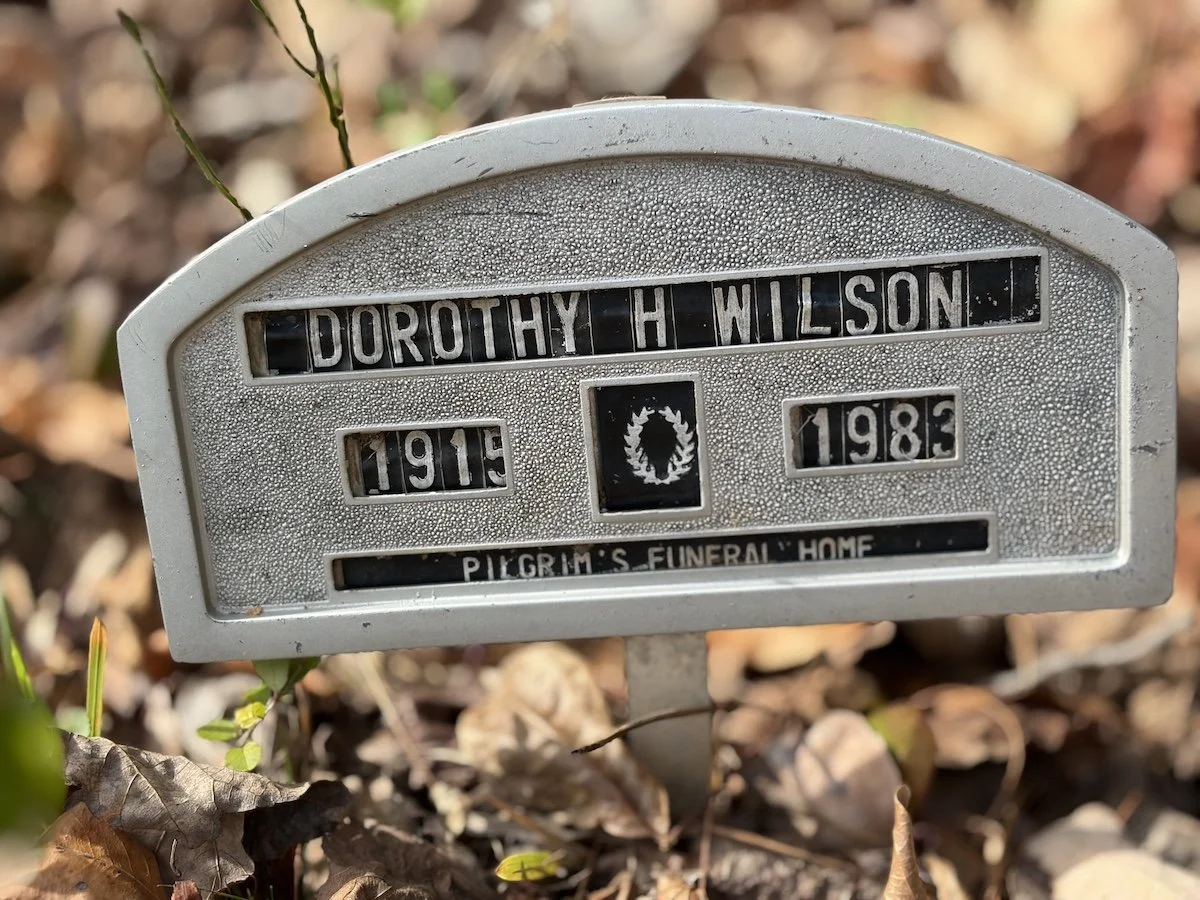
Dorothy H. Wilson 23 May 1915 - 19 Jan 1983
Row 22
**Simmons, Henry S. 16 June 1867 3Dec 1949
**Simmons, Katherine E. 19 Feb 1873. 27 Aug 1953
Unnamed s/o HS and Katy E. Simmons, 15 July 1902
Shields E, Simmons 6 July 1940,. North Carolina, Pvt. 333 Serv Bn
Louis J. Simmons 18 July 1903 23 Apr 1945
Frank F, Simmons 21 Mar 1895 - 15 Oct 1957
(Could be grave at base of tree. No marker.)
Agnes Darity 19 Feb 1899 - 12 Sept 1976
James Otis Gibbs Sr 22 Oct 1905 - 1 Oct 1987
Minnie Darity Gibbs 22 July 1910 - 26 July 1986
Carolyn W. Collins 1948 – 1988
Row 23
Fieldstone
Ollie M. Smith, 1911- 1988
Jannette McKissick Sims, 12 Sept 1913 5 Apr 1933
Isacc G. McKissick. 7 Dec 1915 - 8 Dec 1940
McKissick, Otis R., 1888- 1952
McKissick, Jennie G. 1886-1962
Funeral Home Marker
Daisy H. Simmons 3 Oct1908 - 3Dec 1958
Row 24
Open space, could be graves, no markers
Henry S. Simmons Jr 10 Dec 1911 26 Dec 1965, N.C. S Sgt Co D 24th ,Inf WWII BSM
Mattie Lugenia Washington 8 Oct 1886 11 Apr 1966
Ethel K. Holback 2 Jan 1919 6 Jan 1975 (Footstone says “Wife” )
Julia E. Lewis 1928 1966