Protecting the Places We Love
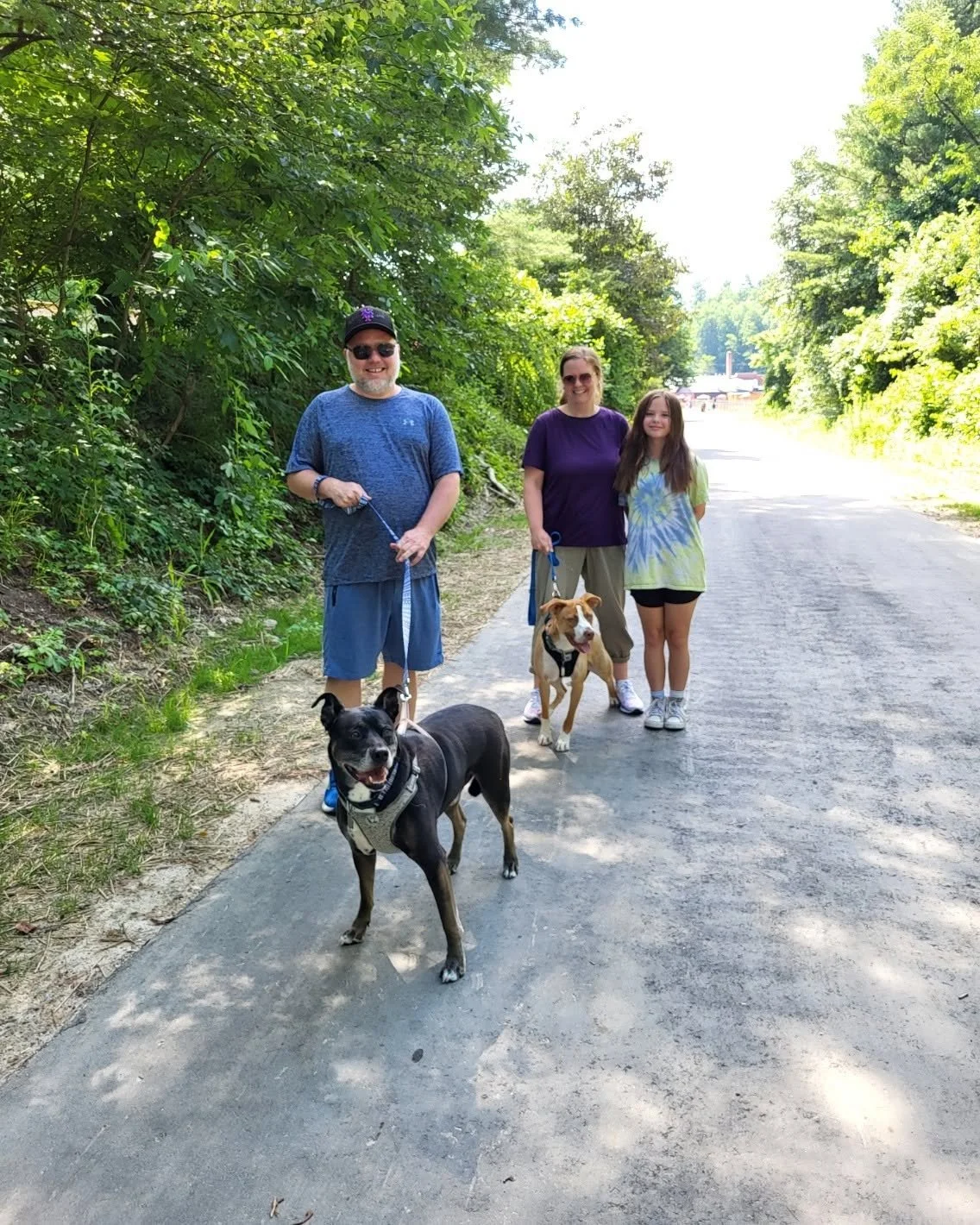
At the entrance to The Park at Flat Rock, a small plaque celebrates Conserving Carolina’s role in helping make one of Flat Rock’s most beloved places possible. Hundreds of people walk past the marker every day. They come to walk the trails, exercise their dogs, watch their children play, practice yoga, share a picnic, or simply sit beside a creek for a while - to rest, rejuvenate and reconnect with the natural world.
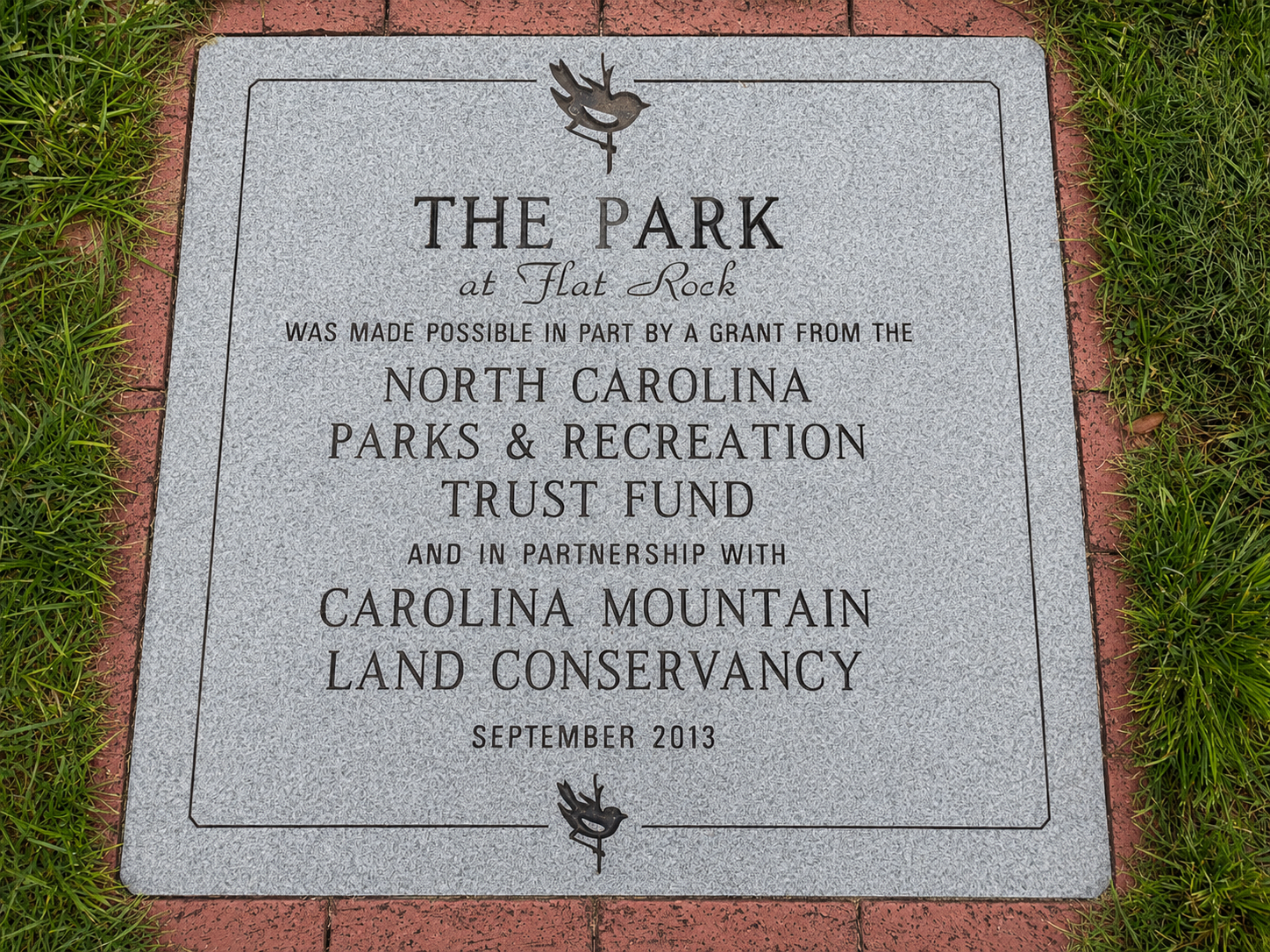
Marker at The Park at Flat Rock recognizing Conserving Carolina’s role in making the park possible (before the name change in 2017).
Most park visitors probably don't realize that the place they have come to enjoy is also an example of how Conserving Carolina has quietly enriched life across Western North Carolina for nearly four decades. The organization’s work can be found in the mountains, forests and farmland it has protected, the rivers and wetlands it has restored, and the parks and trails that invite us outside.
Throughout Western North Carolina, thousands of residents benefit from the work of Conserving Carolina. Few of us, however, understand the scope of the organization’s efforts - or how much they contribute to the places we love and the quality of life we enjoy.
About Conserving Carolina
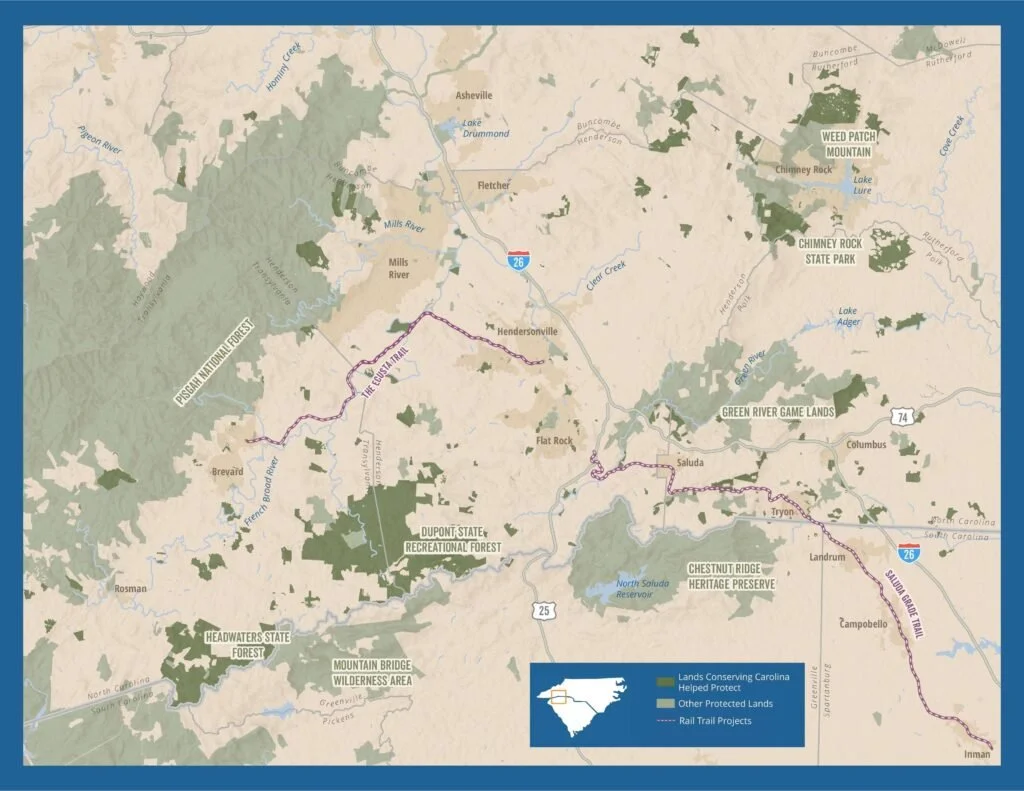
Conserving Carolina is a regional land trust dedicated to protecting the extraordinary natural resources of Western North Carolina and a portion of Upstate South Carolina. Its mission is succinct: “to protect, restore, and inspire appreciation of the natural world.” From its headquarters in Flat Rock, the organization serves Henderson, Polk and Transylvania counties, portions of Rutherford and surrounding counties, and the Landrum area of South Carolina.
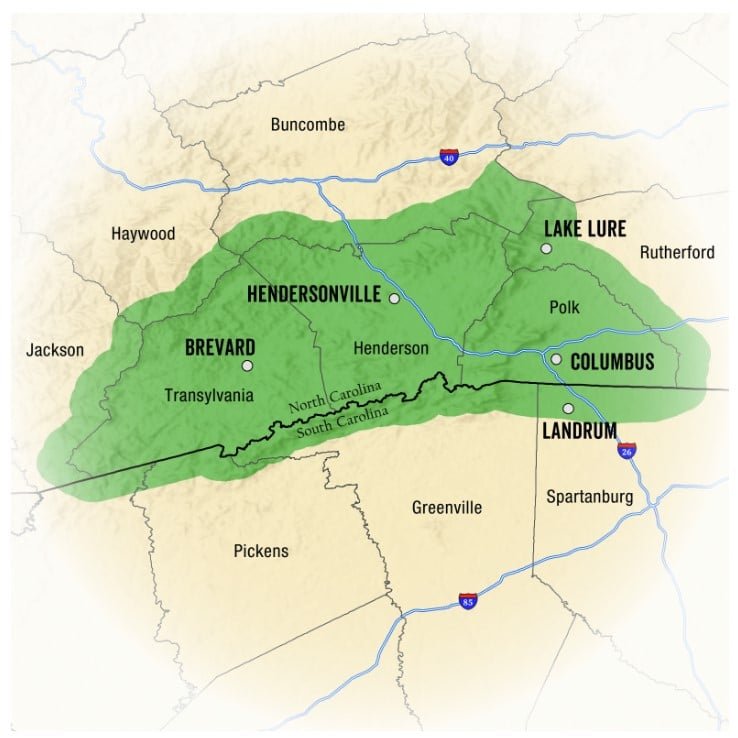
Region served by Conserving Carolina
The organization was formed in 2017 through the merger of two land trusts with deep roots in the region: Pacolet Area Conservancy, founded in 1989, and Carolina Mountain Land Conservancy, which began in Henderson County in 1994. After years of working together on conservation projects, the two organizations combined their resources and expertise to expand their conservation impact. Today, Conserving Carolina has helped protect more than 51,000 acres of mountains, forests, farmland, waterways and other natural areas throughout the region.
Conserving Carolina is part of a much larger land conservation movement. “We're one of around twenty-five local land trusts that operate in the state of North Carolina,” explains Kieran Roe, Executive Director of Conserving Carolina, “and we are one of about 1,700 or so that operate across the United States.”
Few people have had a closer view of Conserving Carolina’s growth than Kieran Roe. Originally from New Jersey, Roe worked for four years with the Land Trust Alliance in Washington, D.C., before coming to Henderson County in 1999 as the first full-time staff member of Carolina Mountain Land Conservancy, one of the organizations that later merged to become Conserving Carolina. Twenty-seven years later, he is still here, having helped grow a small local land trust into one of the region’s leading conservation organizations. Along the way, he has served on numerous conservation and community boards and participated in the 2012 White House Conference on Conservation.
What brought him to Western North Carolina was the land itself. “I became aware of how important this part of the country was in terms of biodiversity, and if you were going to work in conservation, this is a wonderful place to do that kind of thing,” Roe says. For someone raised in suburban New Jersey, the contrast was striking. “For me, Western North Carolina is paradise,” he says with a smile. “Just the bounty of nature here, the wonderful natural places, the biodiversity, all these public lands we get to enjoy and recreate in.
Protecting, Restoring and Connecting
Protecting those natural resources has remained at the heart of Roe's work for the past 27 years - and at the heart of Conserving Carolina's mission. But protecting land doesn’t always mean buying it. Much of the land the organization protects remains privately owned through conservation easements - legal agreements that limit future development while allowing owners to continue to use and enjoy their property. The protection remains with the property even when ownership changes. “So farmland stays farmland, forest land stays forest land, natural areas stay natural,” Roe explains.
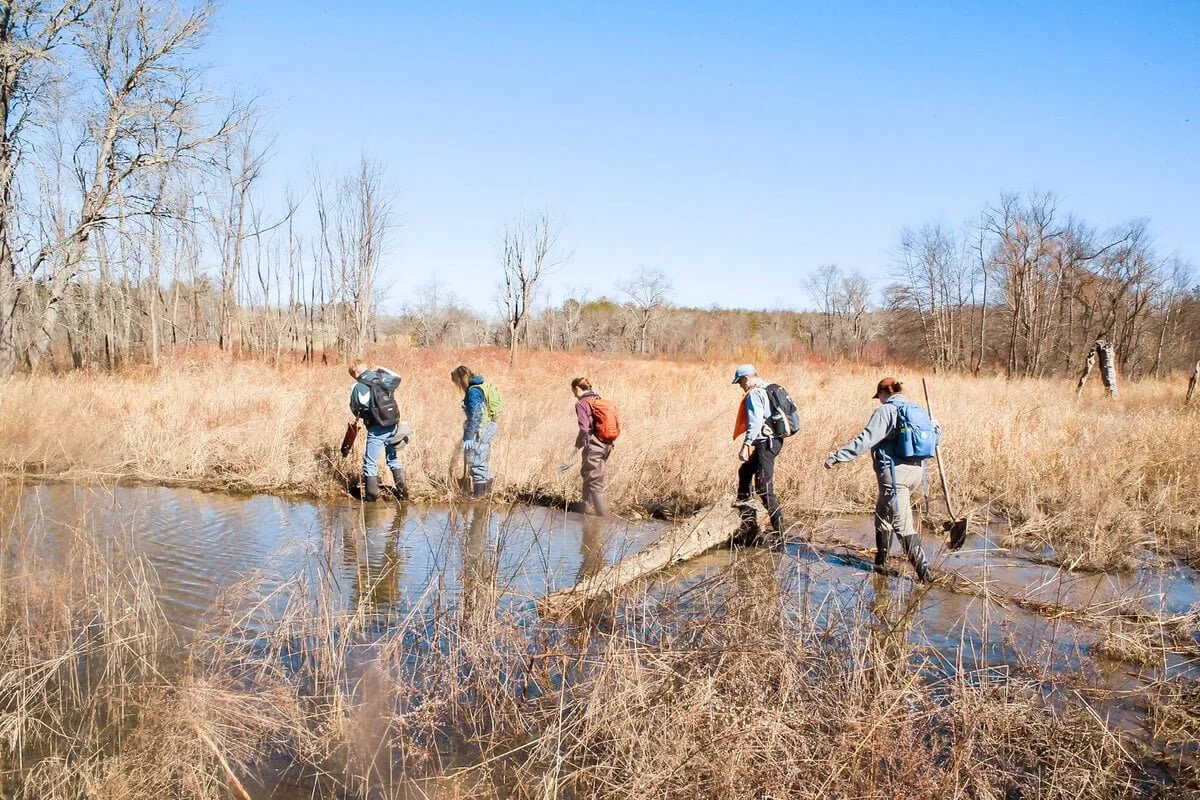
Volunteers at a floodplain restoration site along the French Broad River
In other cases, Conserving Carolina acquires land outright, either to own and manage itself or to eventually transfer to a public agency. That approach has helped create and expand some of the region's most treasured public lands, including DuPont State Recreational Forest and Chimney Rock State Park.
And the same kind of conservation work has left its mark here in Flat Rock. Conserving Carolina played a key role in helping the Village turn the former Highland Lake Golf Club into The Park at Flat Rock, using its grant-writing expertise to secure a $500,000 state grant toward the purchase. In addition, a conservation easement adjoining the Carl Sandburg Home National Historic Site protects part of the viewshed from the Glassy Mountain overlook, while Conserving Carolina has also helped protect King Creek Bog, part of an increasingly rare mountain habitat. “Mountain bogs are among the most biodiverse habitats we have,” Roe says, noting that several are concentrated in the Upper French Broad and Mud Creek watersheds.
But sometimes protecting what remains isn’t enough. Conserving Carolina also works to repair what has already been damaged. “With restoration, you go a step further and make the land better than it was when we began,” says Rose Jenkins Lane, Conserving Carolina’s Communications and Marketing Director.
Along the Upper French Broad River, the organization is restoring floodplains, streams and wetlands that have lost much of their natural ability to absorb water and support wildlife. The benefits, Lane says, include improved habitat, cleaner water, greater flood protection and opportunities for recreation. The value of that work became particularly apparent during Hurricane Helene. “The restorations we did pre-Helene performed really well and demonstrated the value of this work.”
Some of that restoration work is happening close to Flat Rock. At Dodd Meadows in East Flat Rock, Conserving Carolina restored a floodplain and created trails beside the Habitat for Humanity community. Just down the road at Blue Ridge Community College, restoration along Bat Fork is improving stream health and flood control while creating a natural area for the campus. And a new state planning grant will allow the organization to explore restoration opportunities along Mud Creek, bringing that work even closer to Flat Rock.
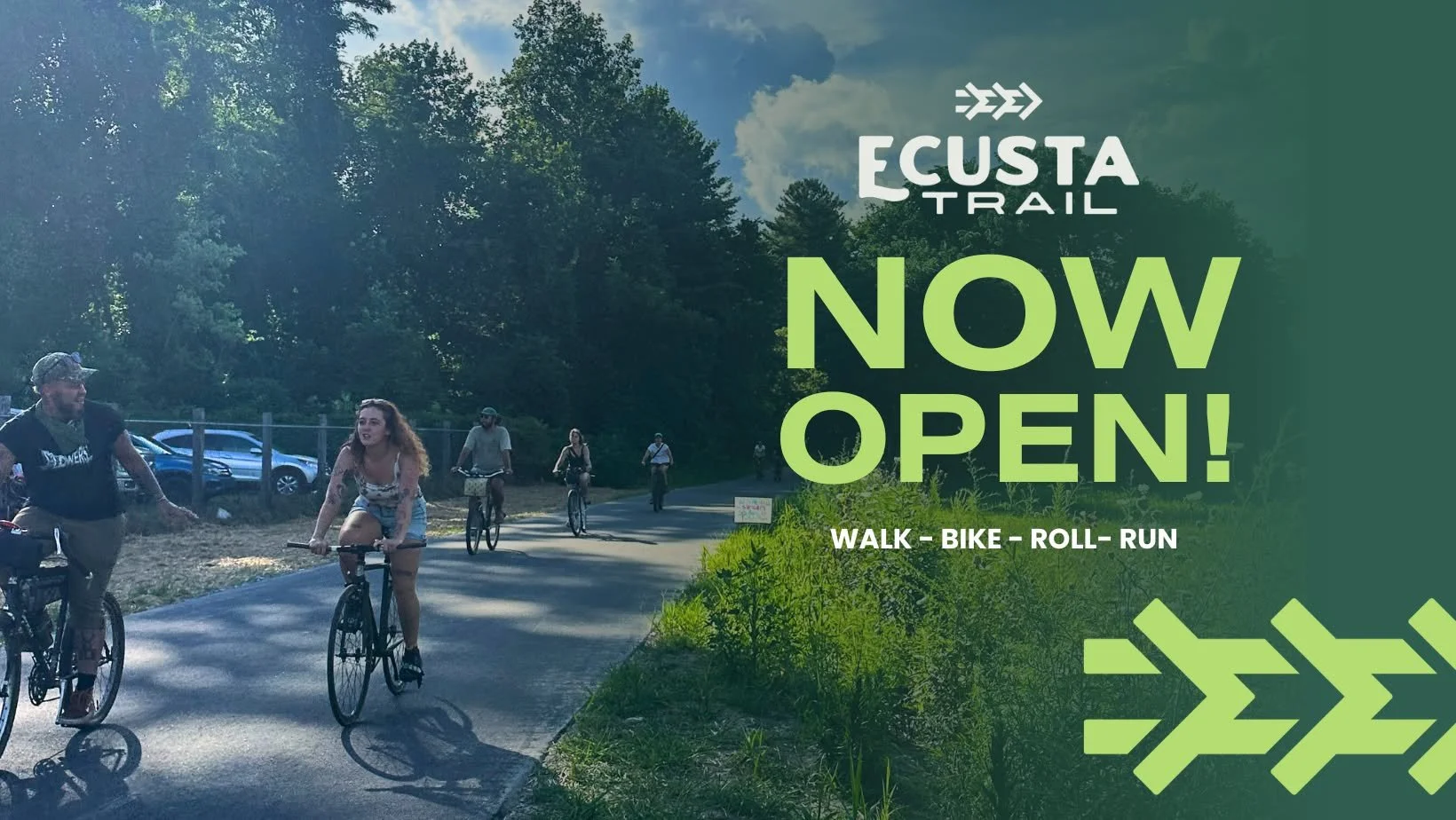
Conserving Carolina was instrumental in making the Ecusta Trail a reality
Protecting and restoring natural places is one part of Conserving Carolina's work. Helping people experience them is another. Conserving Carolina acquired Bell Park in Saluda and worked with Henderson County to create trails and public access. Conserving Carolina’s role in the Ecusta Trail was even more fundamental: a subsidiary of Conserving Carolina purchased the 19-mile former railroad corridor and partnered with Friends of the Ecusta Trail to raise private funds needed to match public grants.
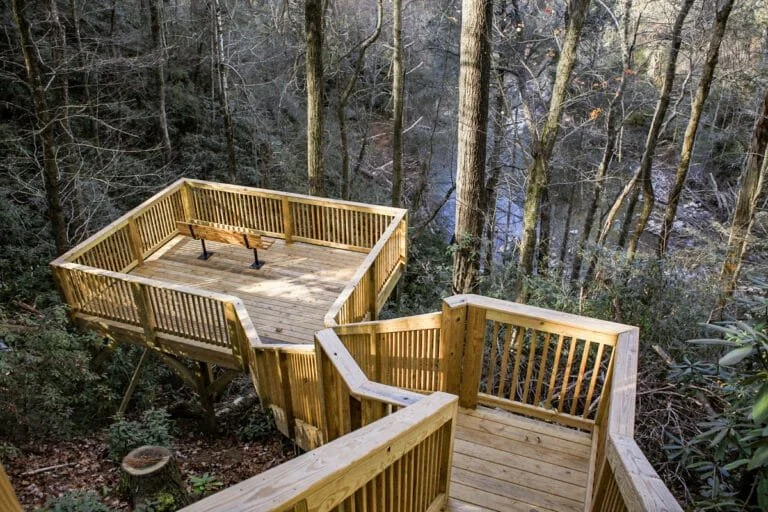
These projects reflect a growing emphasis on creating parks, trails and greenways where people can walk, run, bike and simply spend time outdoors.
Taken together, these efforts illustrate a much broader definition of conservation. Sometimes it means protecting a beautiful place exactly as it is. Sometimes it means restoring a damaged place to what it can become. And sometimes it means creating a way for people to step into that place and experience it for themselves.
Getting Involved
Conserving Carolina offers many ways for people to become part of its work. Volunteers help maintain native and pollinator gardens, remove invasive species, restore wildlife habitat, build trails and assist with events. No special expertise is required. “Everybody is welcome,” Lane says, noting that volunteers range widely in age and experience and that retirees make an especially valuable contribution.
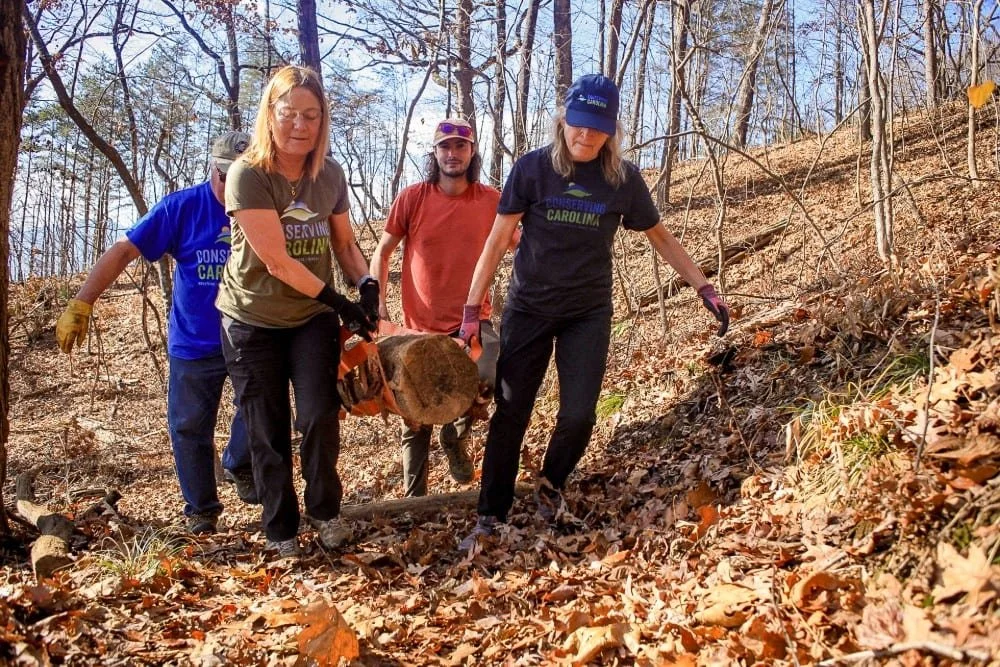
Volunteers helping with trail construction and maintenance
Others participate simply by getting outdoors. Conserving Carolina’s hiking and outdoor challenges encourage people to explore protected lands through hiking, walking, biking and other activities, while educational programs help children and adults learn more about the natural world. “The goal of the hiking challenge,” Lane explains, “is to get people to experience some new trails and have a more meaningful connection with the work of conservation in their own life.”
People can also become advocates for conservation. One current example is Conserving Carolina’s support for the upcoming Henderson County bond referendum, which would provide $25 million for land conservation, with a strong emphasis on preserving farmland. Ultimately, all these forms of involvement are connected. “Our hope is that as people experience how wonderful these places are and learn more about how they were protected, that they’ll want to be involved… as members, as volunteers, as advocates,” Lane says.
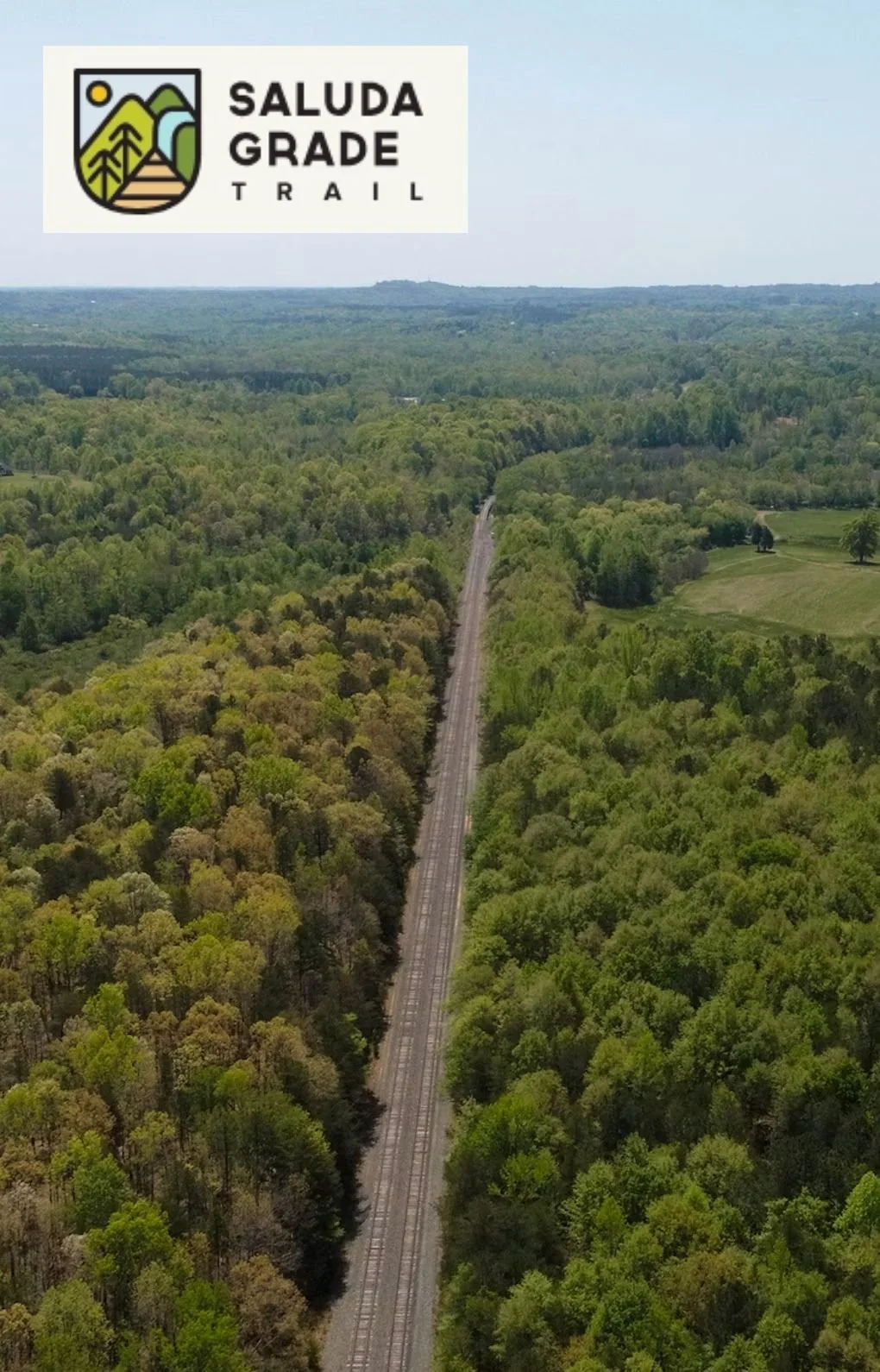
Looking to the future, one of Conserving Carolina’s most ambitious projects is the Saluda Grade Trail, which will transform a former Norfolk Southern rail corridor into a 31.5-mile rail trail stretching from Inman, South Carolina, through Campobello, Landrum, Tryon and Saluda to Zirconia, just south of Flat Rock. Conserving Carolina joined with partners in South Carolina to purchase the corridor and is now working with local governments and other organizations to raise funding and help develop the North Carolina sections of the trail. For Conserving Carolina, the project represents another way to combine conservation with public access - preserving an important corridor while creating a new place to enjoy the natural beauty of our region.
Why Conservation Matters to All of Us
The benefits of Conserving Carolina's work extend well beyond the acres it protects. Conserved forests, farms and natural areas preserve the beauty and character of Western North Carolina while protecting wildlife habitat and biodiversity. Restored streams, wetlands and floodplains improve water quality and can reduce the impact of flooding. Parks, greenways and trails give people places to walk, run, bike, play, gather - or simply sit quietly beside a creek.
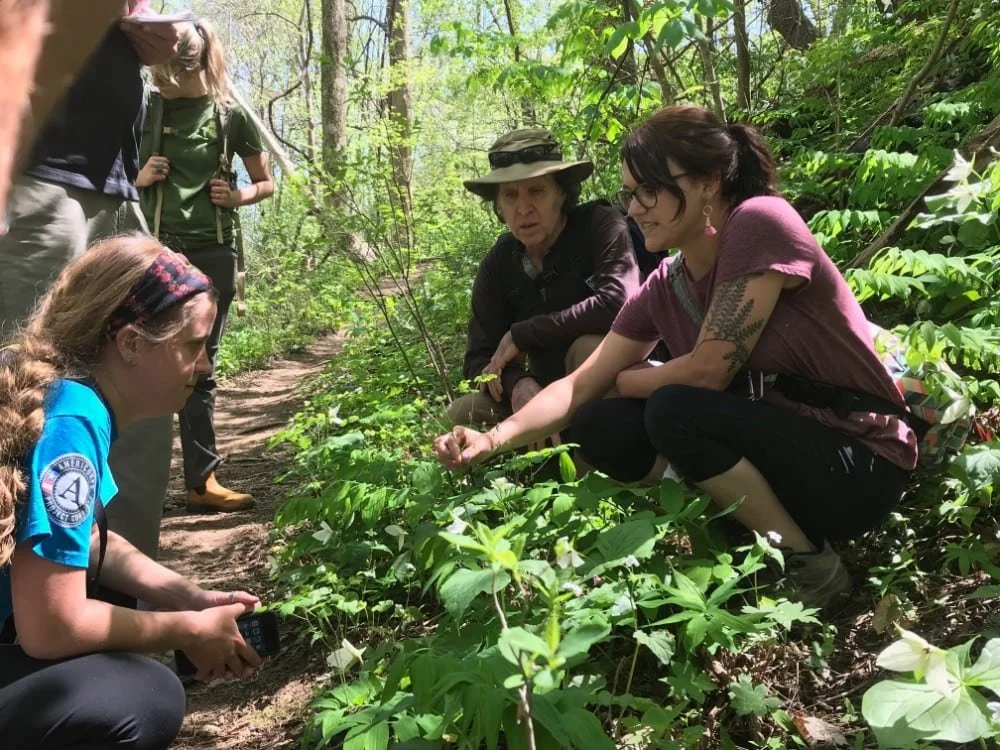
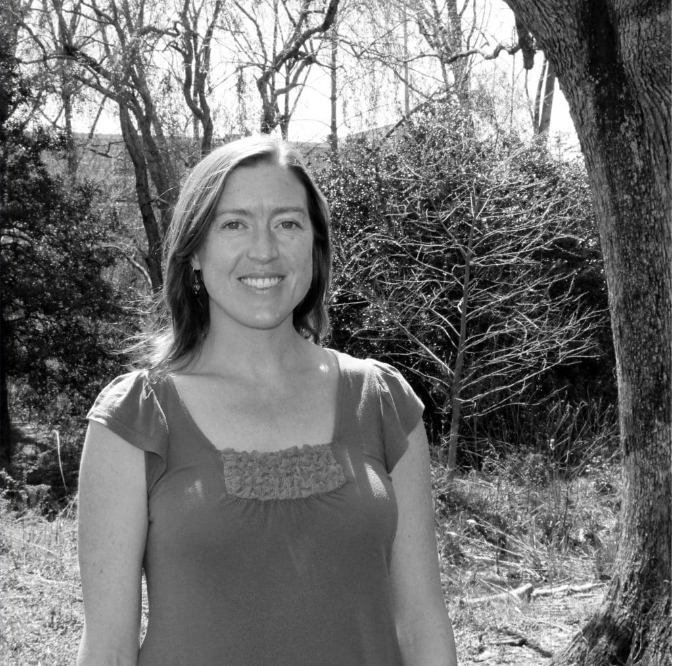
Botanist and AmeriCorps member Amy Powell leads a Conserving Carolina wildflower hike.
The benefits are economic as well. Protecting the natural beauty of our region also helps sustain an economy built in part around tourism and outdoor recreation. “People love it here,” Lane says. “They love the beauty. They love the mountains. That is a big part of how people make a living in our region.”
But Lane believes the benefits are also deeply personal. Spending time in nature, she says, contributes to physical and emotional health, provides opportunities for learning and even spiritual experience. “There are just so many ways that being in nature makes us better human beings.”
Perhaps the most lasting measure of Conserving Carolina's impact, however, will be found in the things that don’t change - the forests that remain forests, the farms that remain farms, and the mountains and natural areas that remain protected long after those who conserved them are gone.
“What we do in local land conservation, it's all about the permanence of conservation,” Roe explains. “Every conservation easement we do, every land we add to public ownership, will be permanently protecting that natural resource. It's great to know that our kids, our grandkids and beyond, will benefit from that work that we're doing today.”
—
Learn more about Conserving Caroliona at https://conservingcarolina.org/
Watch PBS Video about Conserving Carolina river restoration projects here.