The Other Side of the Door
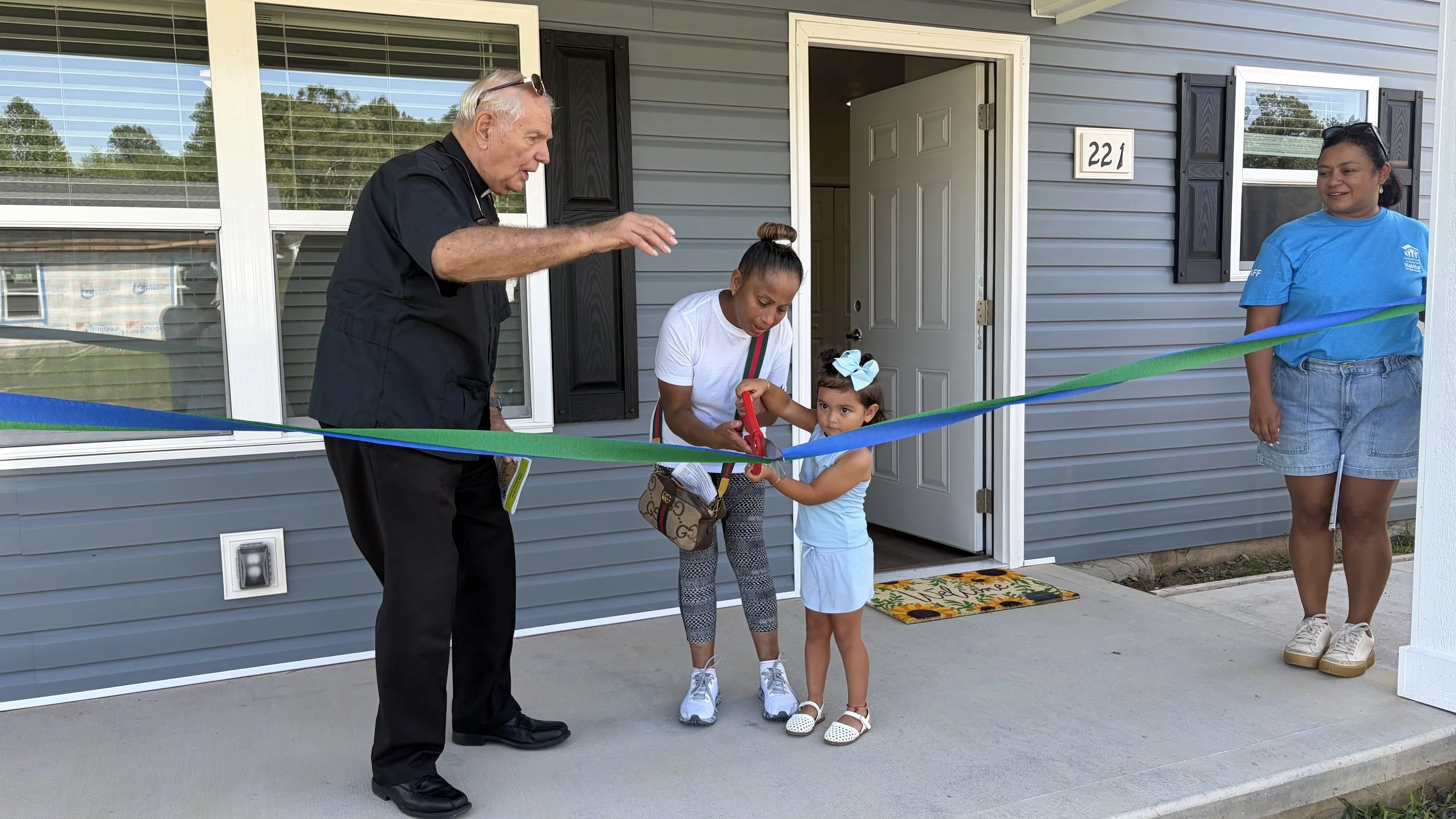
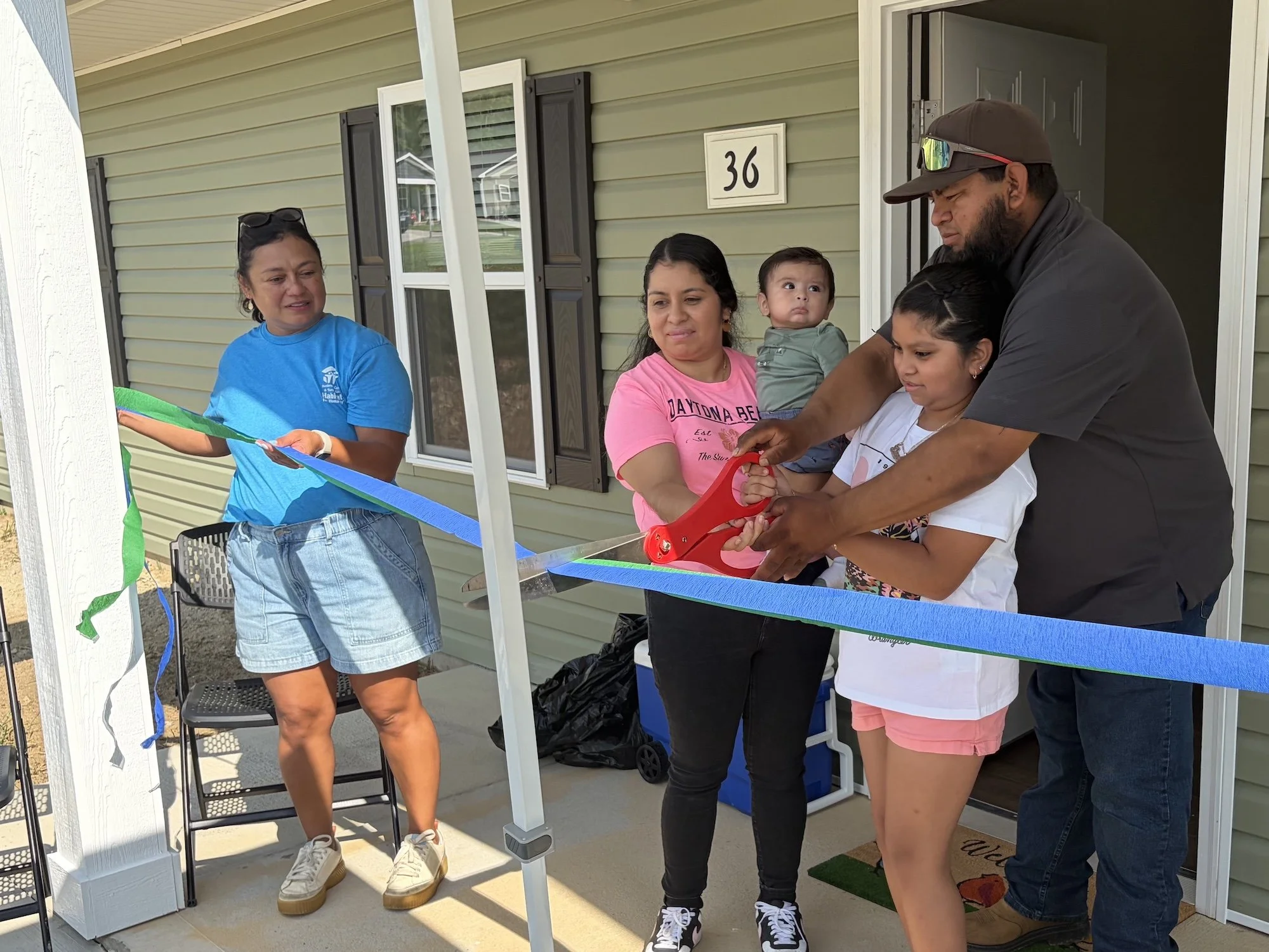
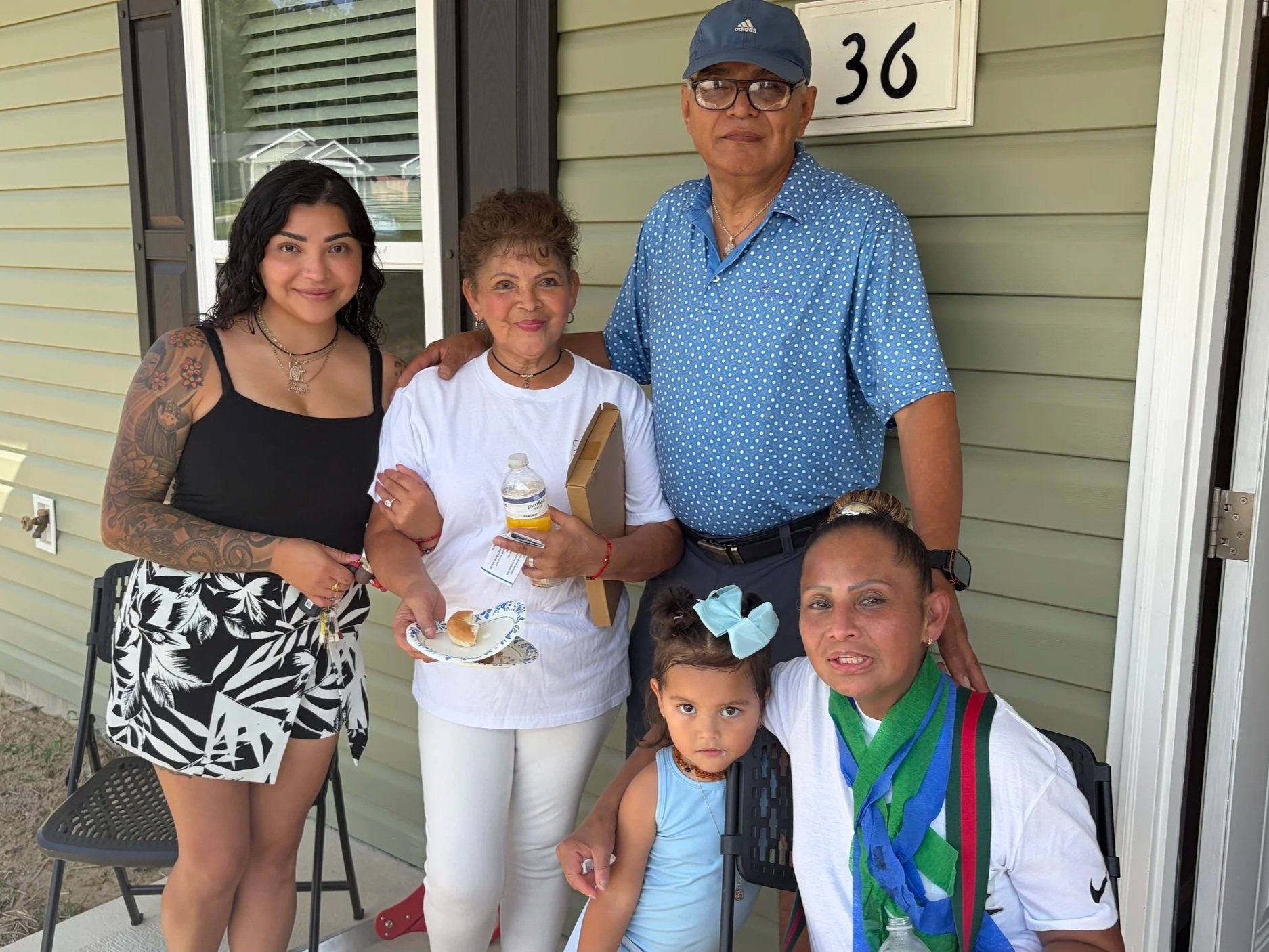
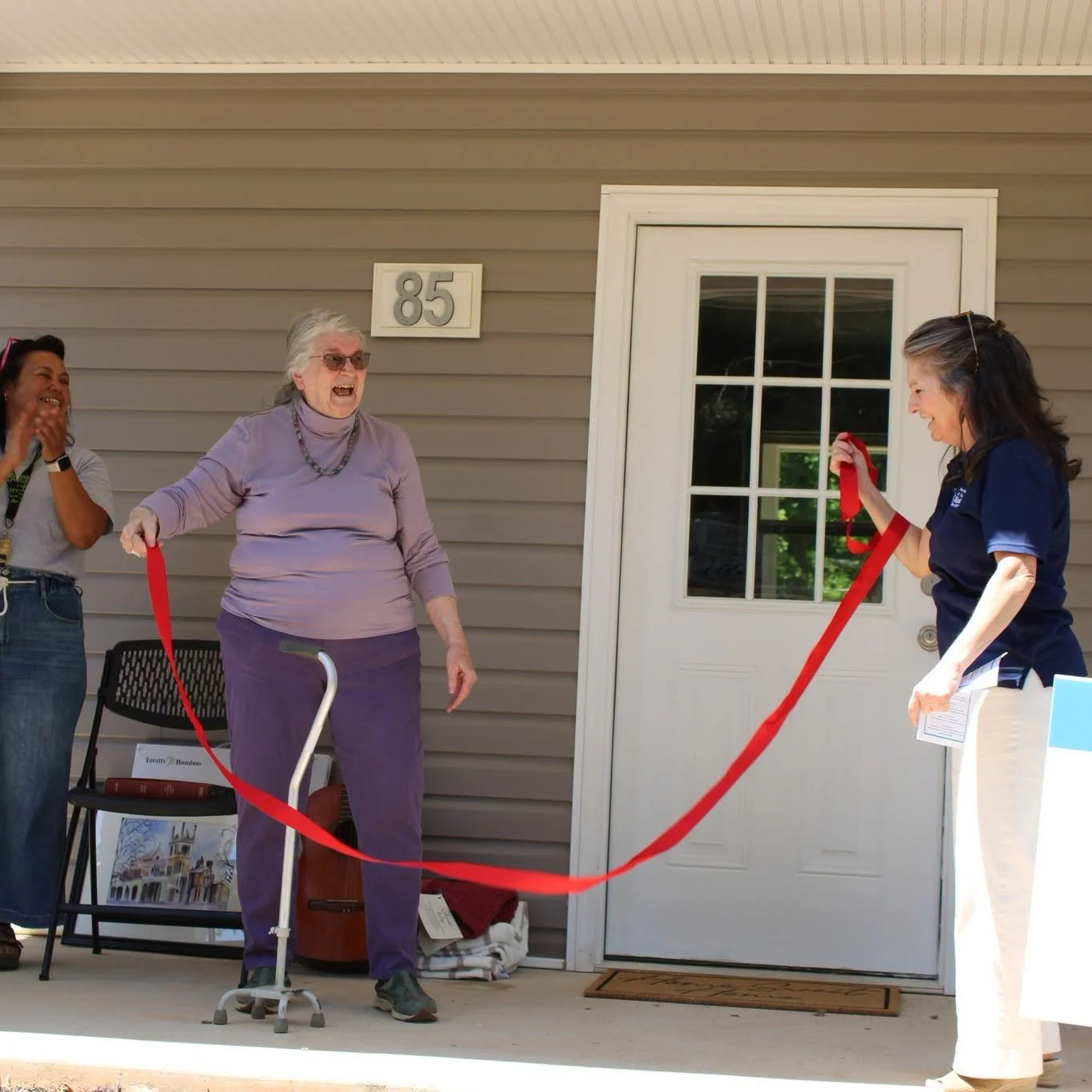
Mireya Chipol and her niece cut the ribbon to Mireya’s new home.
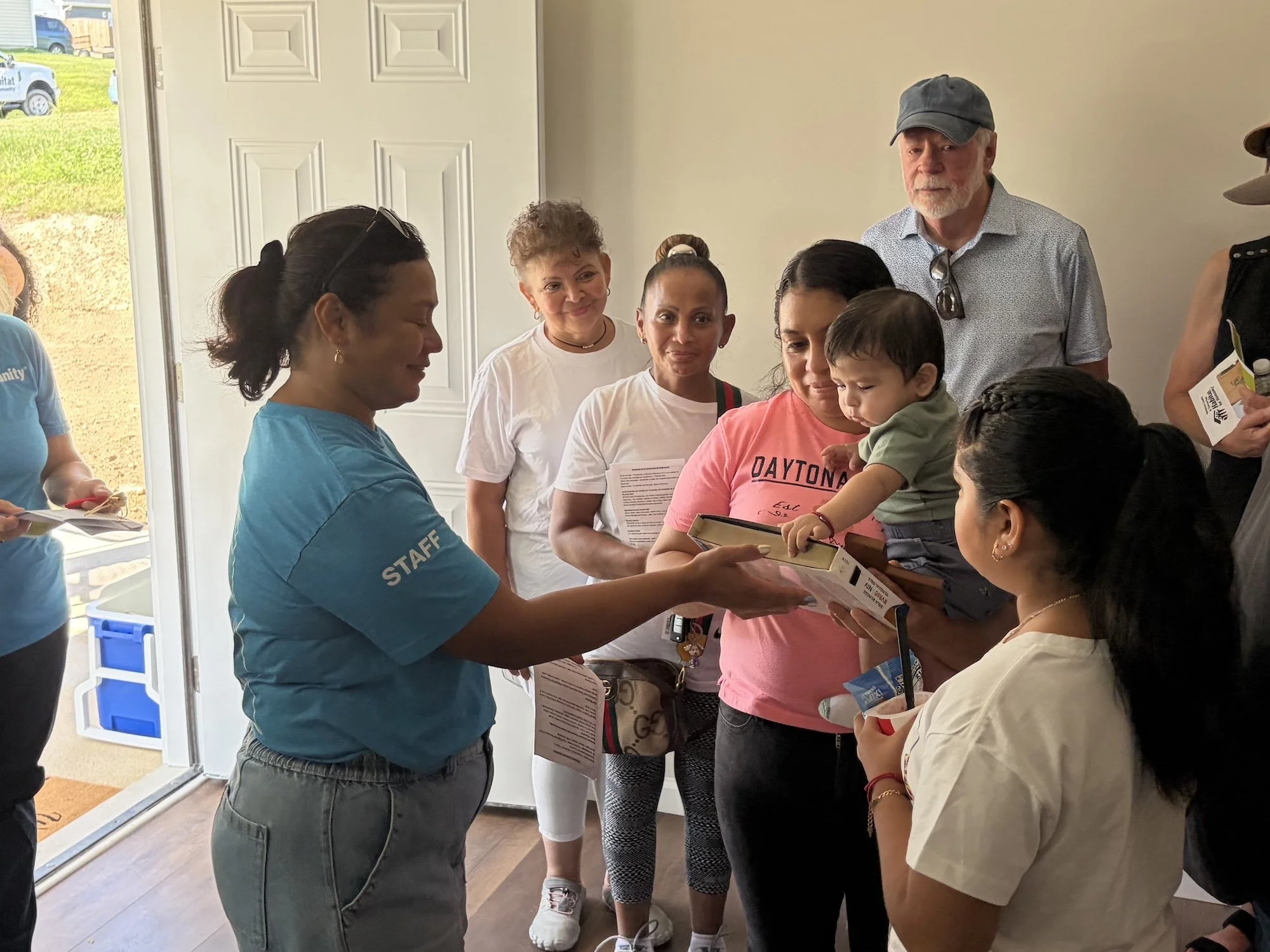
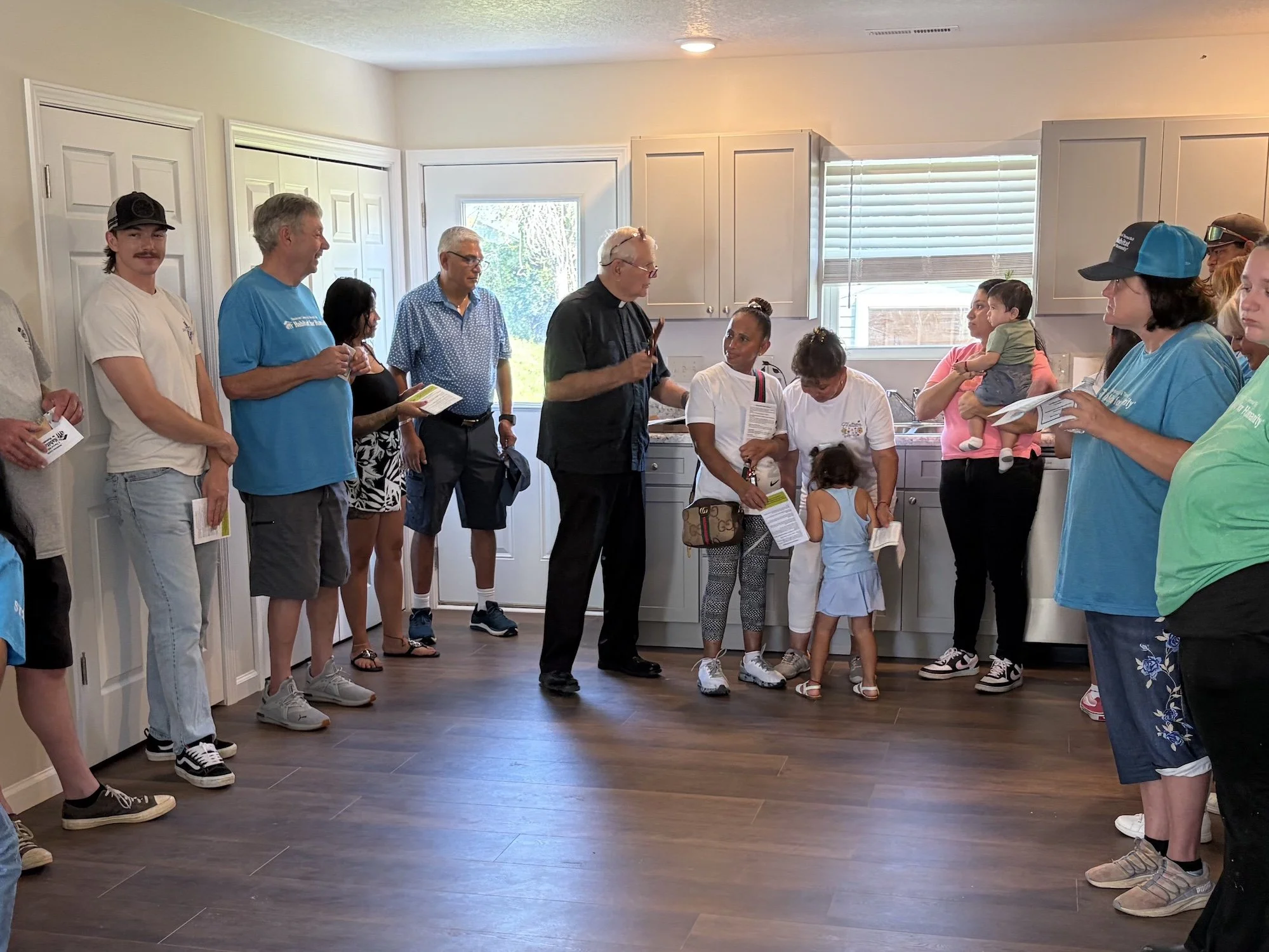
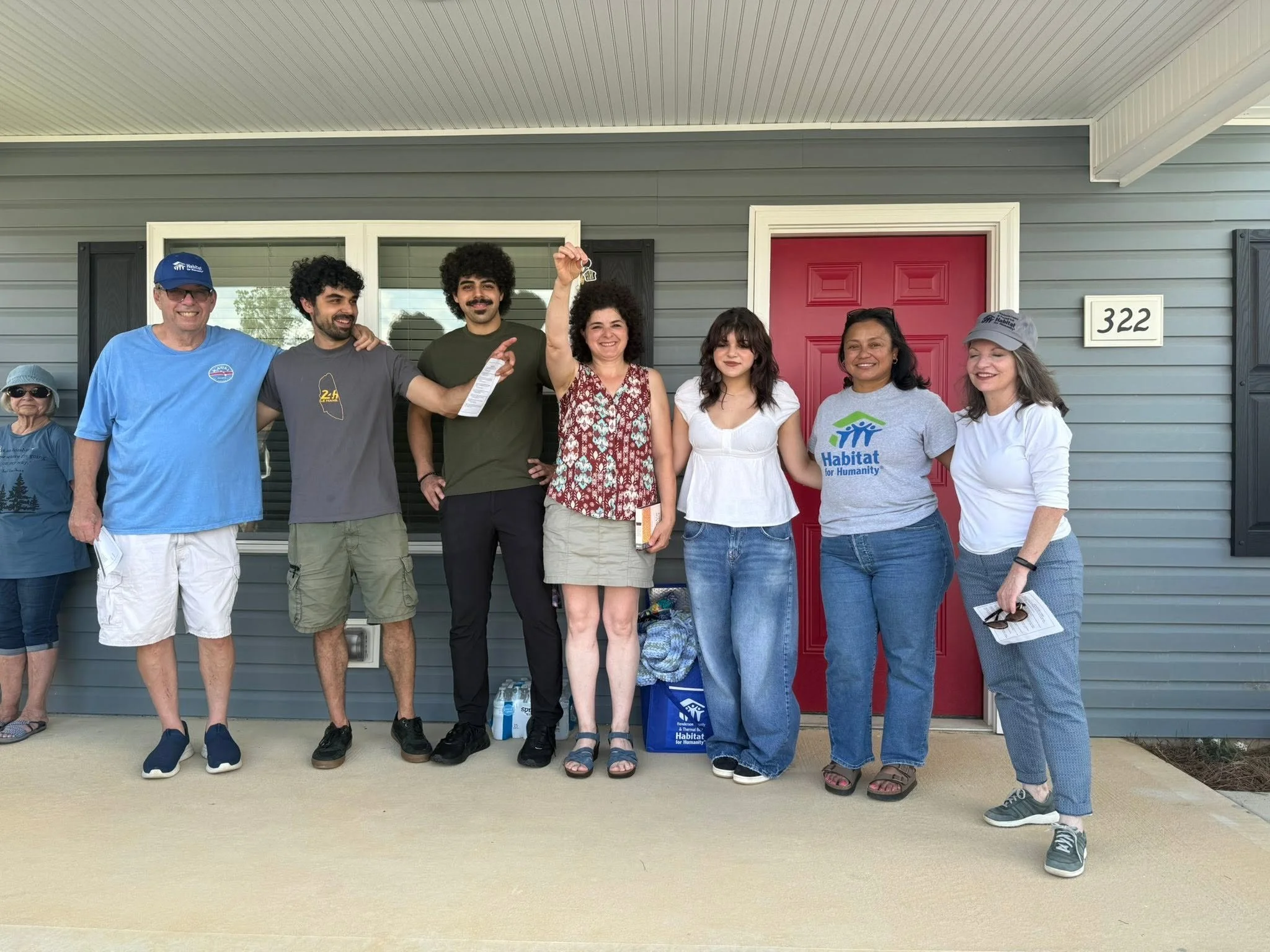
On a warm, bright Saturday morning in East Flat Rock, Mireya Chipol stood inside her new home and cried. Around her, Habitat for Humanity staff and volunteers had gathered in the Dodd Meadows community to celebrate the dedication of two new homes. Mireya’s family gathered by her side, and as Father Tom Buechele offered a blessing for the home, the significance of the moment seemed to overwhelm her.
Between the tears, Mireya shared her emotions about the moment. “I am very excited and so happy because I have my new house,” Mireya said. “I’ve done my work, and now it is real. I feel it is an accomplishment. I am the happiest woman.”
Indeed, there was plenty to be proud of. Mireya had made her way through Habitat’s extensive application process, signed her partnership agreement last October, completed homeowner education and invested hundreds of hours of “sweat equity” in the Habitat program. Now the work, the waiting and the hope had become something tangible. A key to a home of her own.
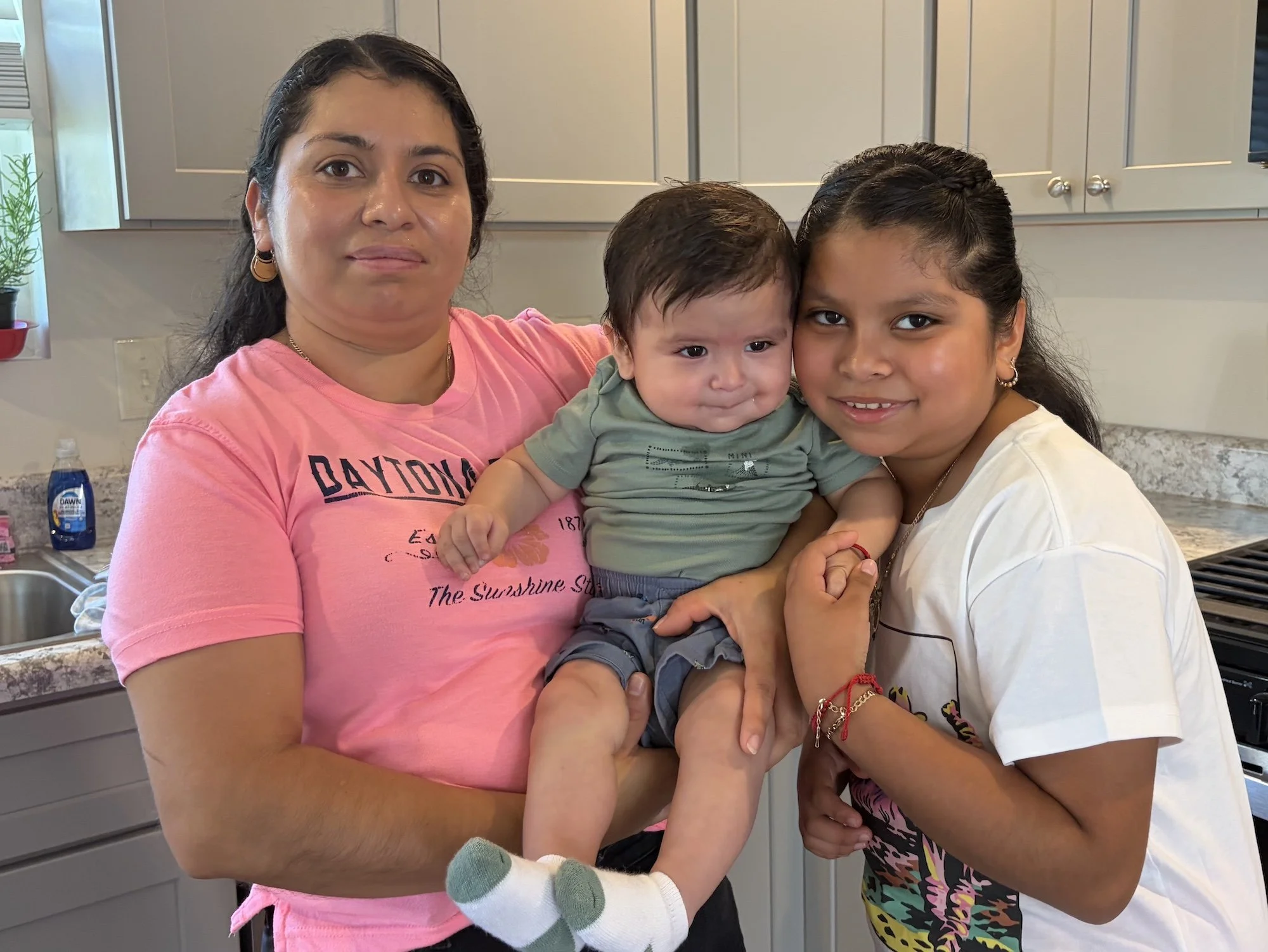
Nearby, Maria Vega was celebrating the same milestone with her eight-year-old daughter, Luna, and eight-month-old son, Yael, at her side. Maria and Mireya had signed their Habitat partnership agreements on the same day. On Saturday morning, their journeys brought them to two new front doors just a short distance apart.
For both women, opening those doors meant much more than moving into new houses. It meant discovering what might now be possible on the other side.
--
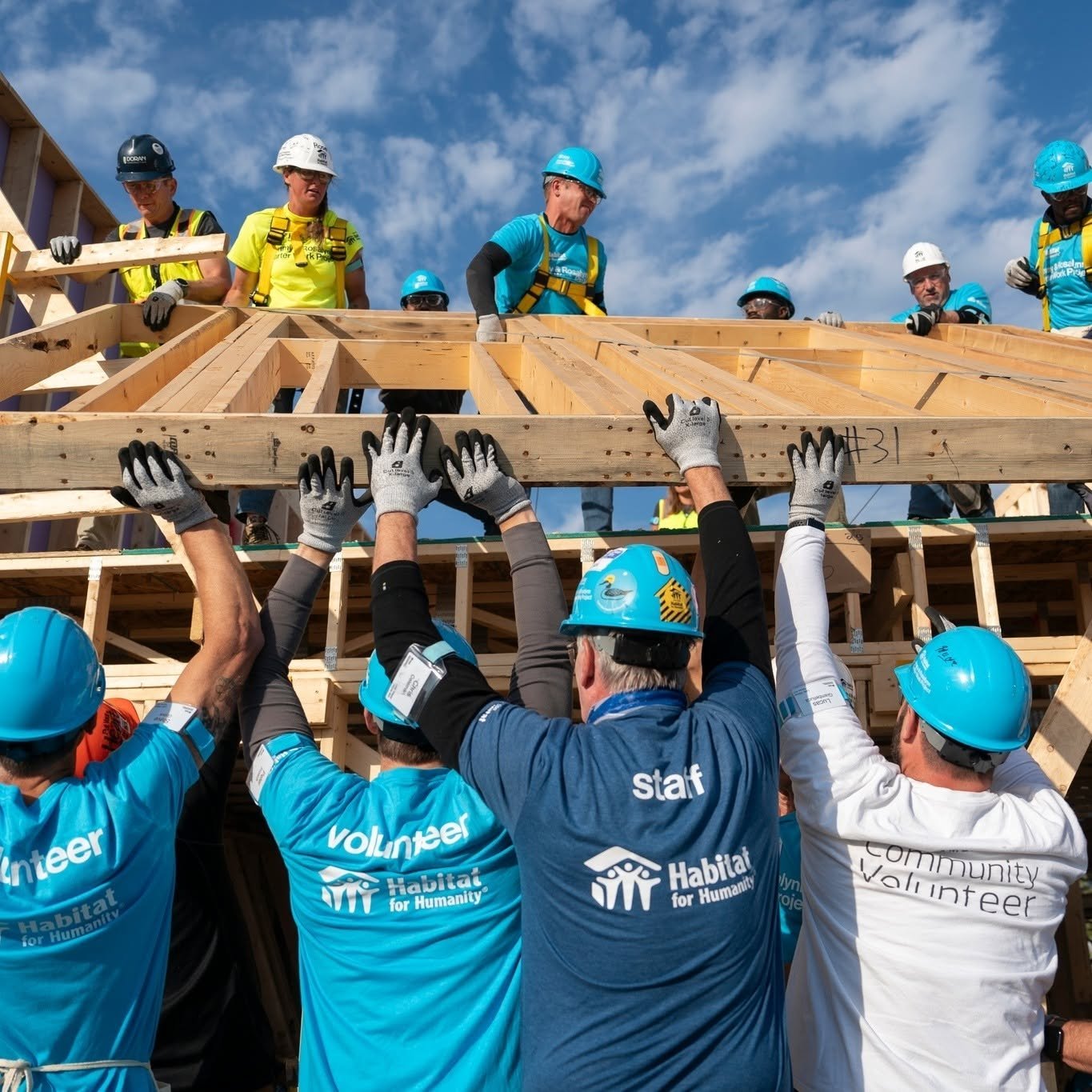
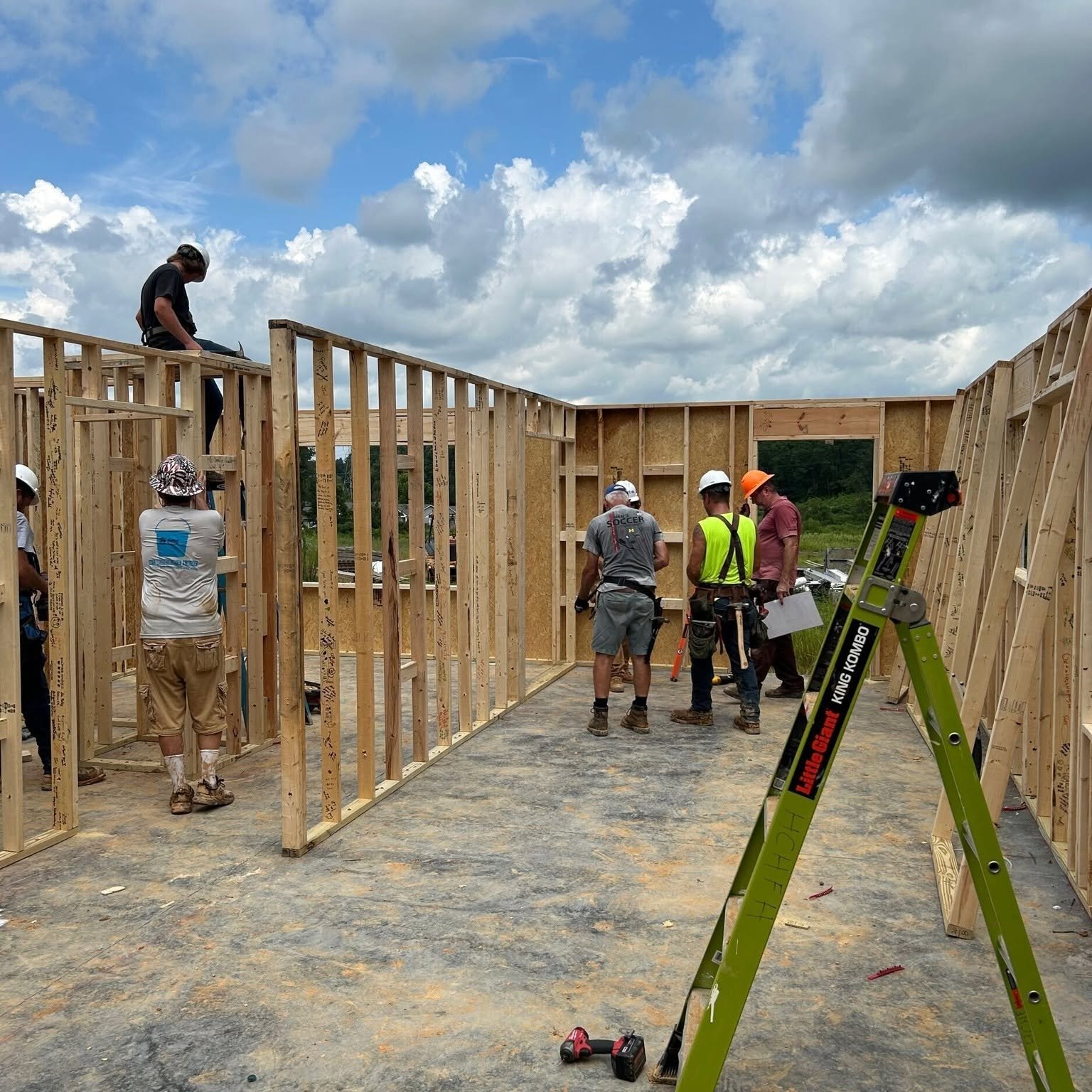
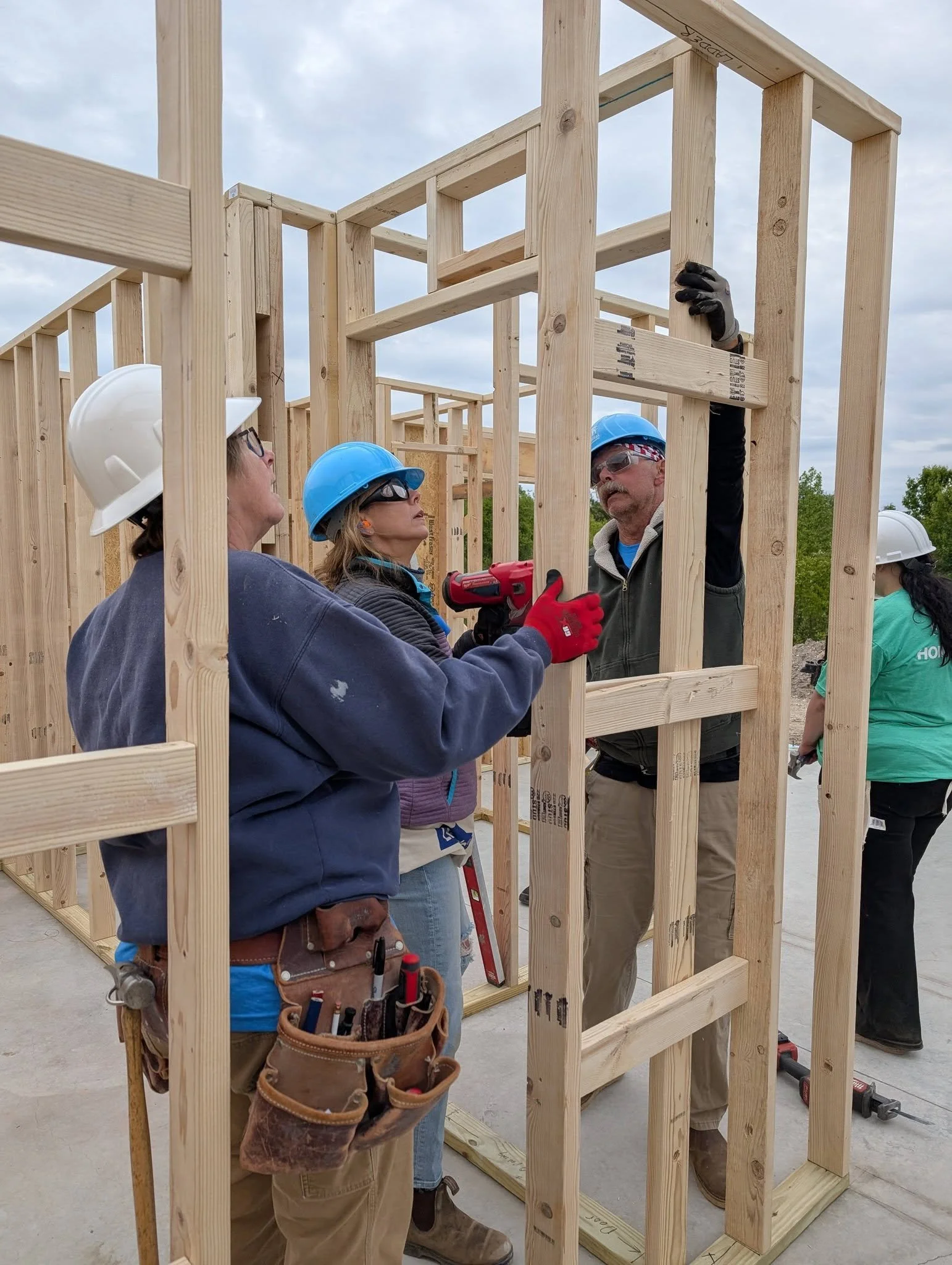
Habitat volunteers raising the walls of new home.
Maria and Mireya’s homes are two small pieces of a much larger Habitat for Humanity presence in our community.
Henderson County Habitat for Humanity was established in 1989 and later merged with the Thermal Belt affiliate, extending its reach into Polk County and Landrum, South Carolina. Today, Henderson County & Thermal Belt Habitat for Humanity is a substantial local operation, with over 40 full- and part-time employees, administrative offices in Hendersonville and Columbus, four ReStore locations, and an extensive network of volunteers.
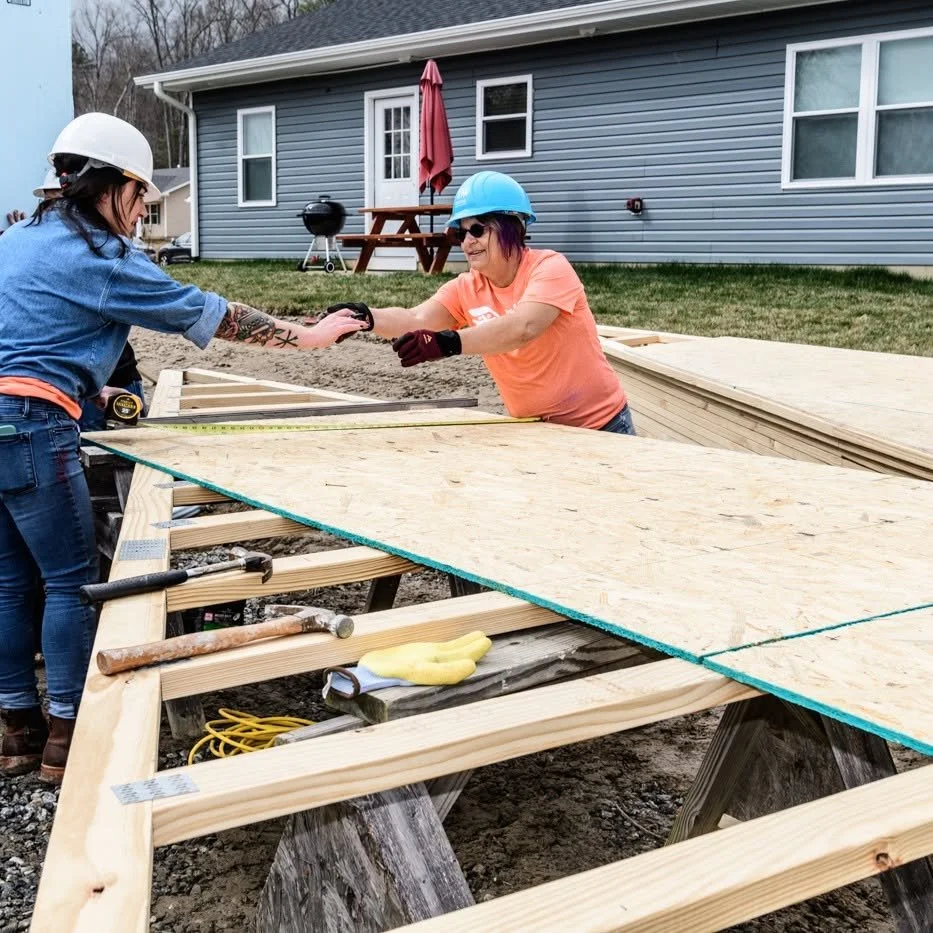
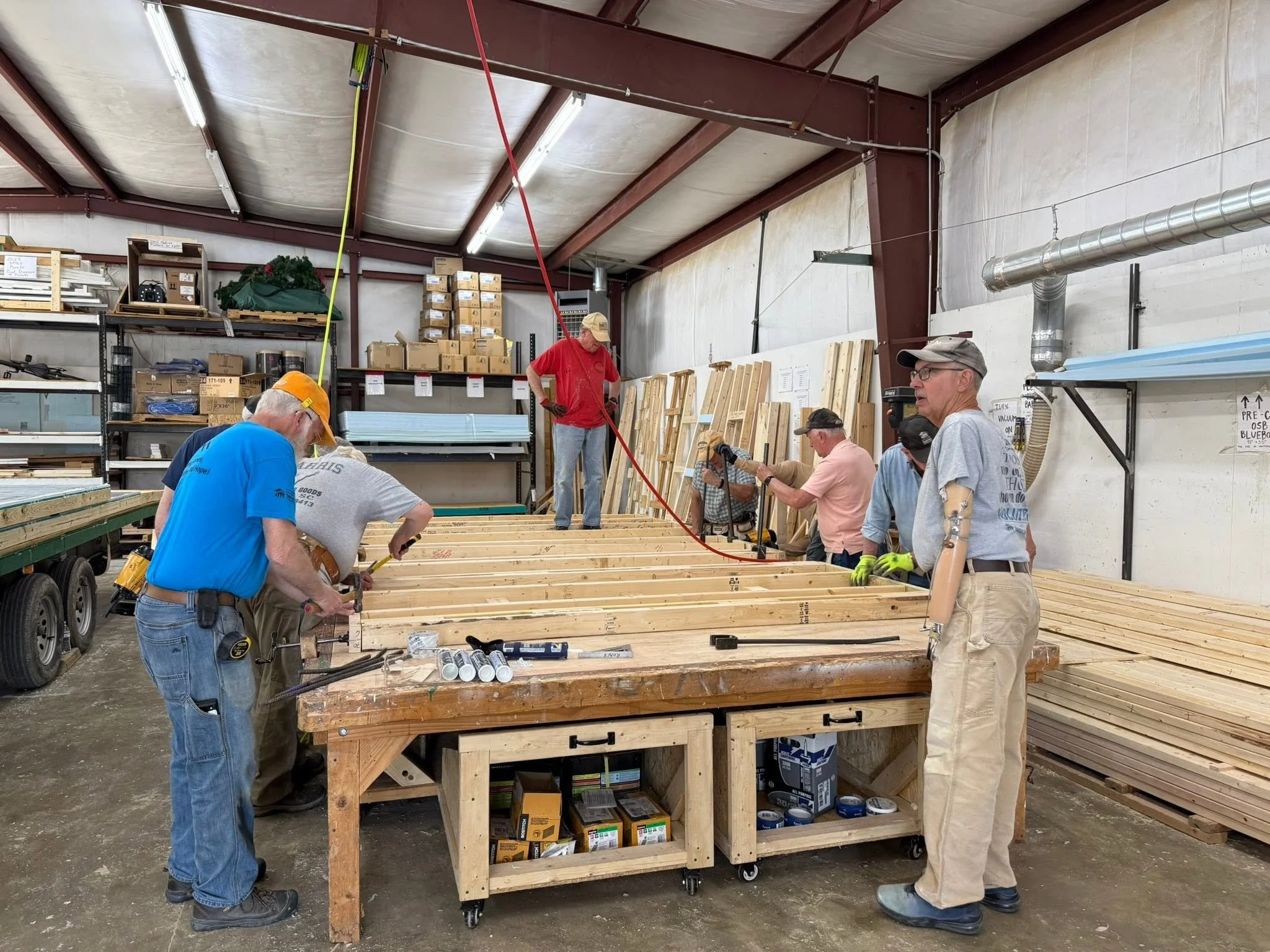
Volunteers are essential to the work of Habitat and many of them show up week after week as part of dedicated framing, electrical, construction and other crews. Volunteers also come through churches, businesses, civic organizations and community groups, sometimes for a single workday and sometimes repeatedly through the years. In 2024 alone, more than 1,000 volunteers contributed in excess of 11,000 hours to Habitat’s work in the region.
And the results of these efforts are visible across our community. Habitat has built more than 315 homes in partnership with local families. Dodd Meadows, where Maria and Mireya will make their new lives, has grown to nearly 90 homes, with a community center, walking path and community garden. Habitat recently acquired another 7½ acres adjoining the development, ensuring that its work in East Flat Rock will continue for years to come.
But building new homes is only part of the mission. Habitat also repairs existing homes for lower-income homeowners, rehabilitates properties that can be returned to affordable homeownership, provides homeowner education, and has helped rebuild homes damaged by Tropical Storm Helene.
Taken together, Habitat’s impact can be measured not simply in houses, but in families. Hundreds of local households have been provided with safer places to live, greater financial stability, and a solid foundation that can last for generations.
--
Emily Fernald is relatively new to Henderson County & Thermal Belt Habitat for Humanity, having joined the organization in February as Vice President of Programs. But she is hardly new to Habitat. Her involvement stretches back more than 20 years, beginning as a volunteer, continuing as an AmeriCorps service member and eventually becoming a career. In late May, Emily was named the local affiliate’s new President and CEO. Her years of experience with Habitat have given her a close-up view of a Habitat model that is not always fully understood.
For Emily, Habitat’s work is best understood as a partnership with homeowners.
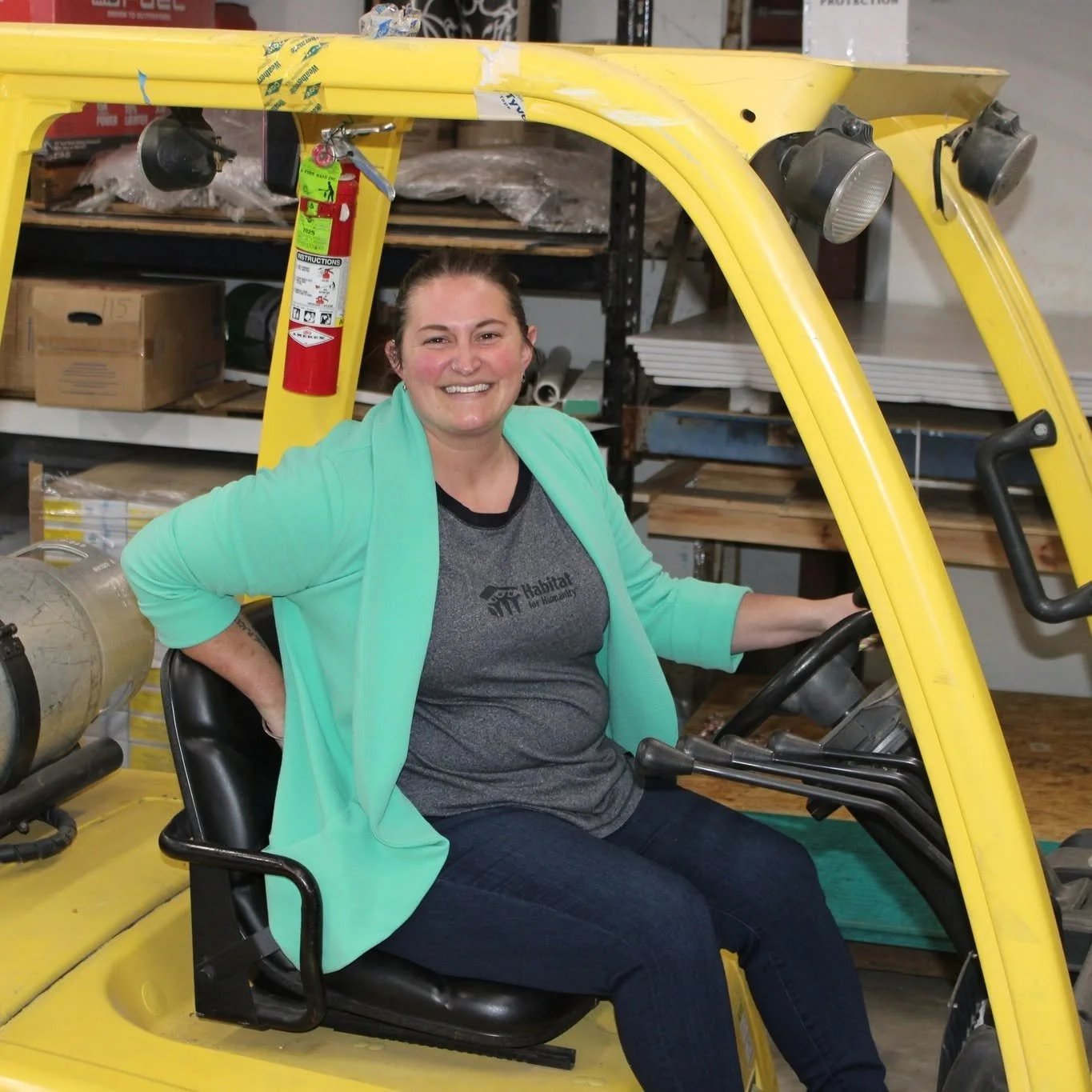
Emily Fernald, President and CEO of Henderson County & Thermal Belt Habitat for Humanity
Prospective homeowners enter through a rolling application process and must meet income and credit guidelines. Habitat looks at three primary criteria: a demonstrated need for better housing, the ability to afford the mortgage, and a willingness to become an active partner in the process. “The way we look at it, it’s a partnership,” Emily said. “We are going into this joint venture together. We want to make sure that they’re both educated and truly invested in the process.”
For Habitat, the definition of “need” can take many forms. A family may be living in an overcrowded apartment. Housing costs may consume an unsustainable portion of household income. Their house or major appliances may be in disrepair, or the neighborhood itself may not be safe.
And applicants don't necessarily need to apply with flawless credit. “We are not looking for perfect first-time homebuyers necessarily,” Emily said. Habitat can work with prospective homeowners who need time and guidance to improve their credit and become mortgage-ready. Those who are accepted then begin a process designed to prepare them not simply to buy a house, but to succeed as homeowners.
That process includes 300 hours of “sweat equity.” At least 100 hours are spent on construction, while other hours include homebuyer education and homeowner-maintenance workshops. Future homeowners may learn how their windows are installed, how to make basic repairs or even how to install a toilet.
Those lessons matter, Emily said, particularly for someone who may never have had a homeowner as a role model. “They learn that they can do a lot of household projects for themselves,” she said. Learning how a house works and having the confidence to maintain it can save money over time, while also giving new homeowners a greater sense of ownership and self-reliance.
Habitat also works to ensure that the mortgage remains genuinely affordable. The organization structures its financing so the first mortgage consumes no more than 30 percent of the homeowner’s income. This financial target, however, has become increasingly difficult as home prices outpace income growth. Most of the families Habitat currently serves fall between 40 and 60 percent of area median income, requiring increasingly substantial subsidies to bridge the gap between what a house costs and what a family can afford.
Ultimately, the true value of a Habitat home can extend far beyond the day someone receives the keys. Emily estimates that more than 85 percent of Habitat partnerships are successful and that roughly 90 percent or more of homeowners remain in their homes permanently. Some eventually pass those homes on to their children.
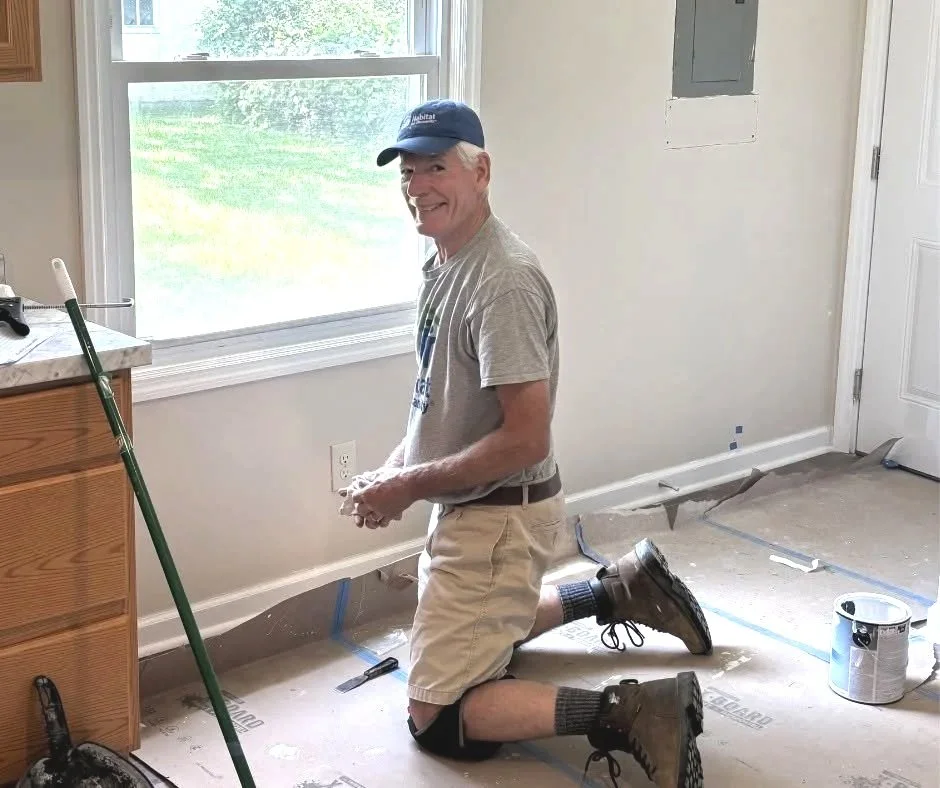
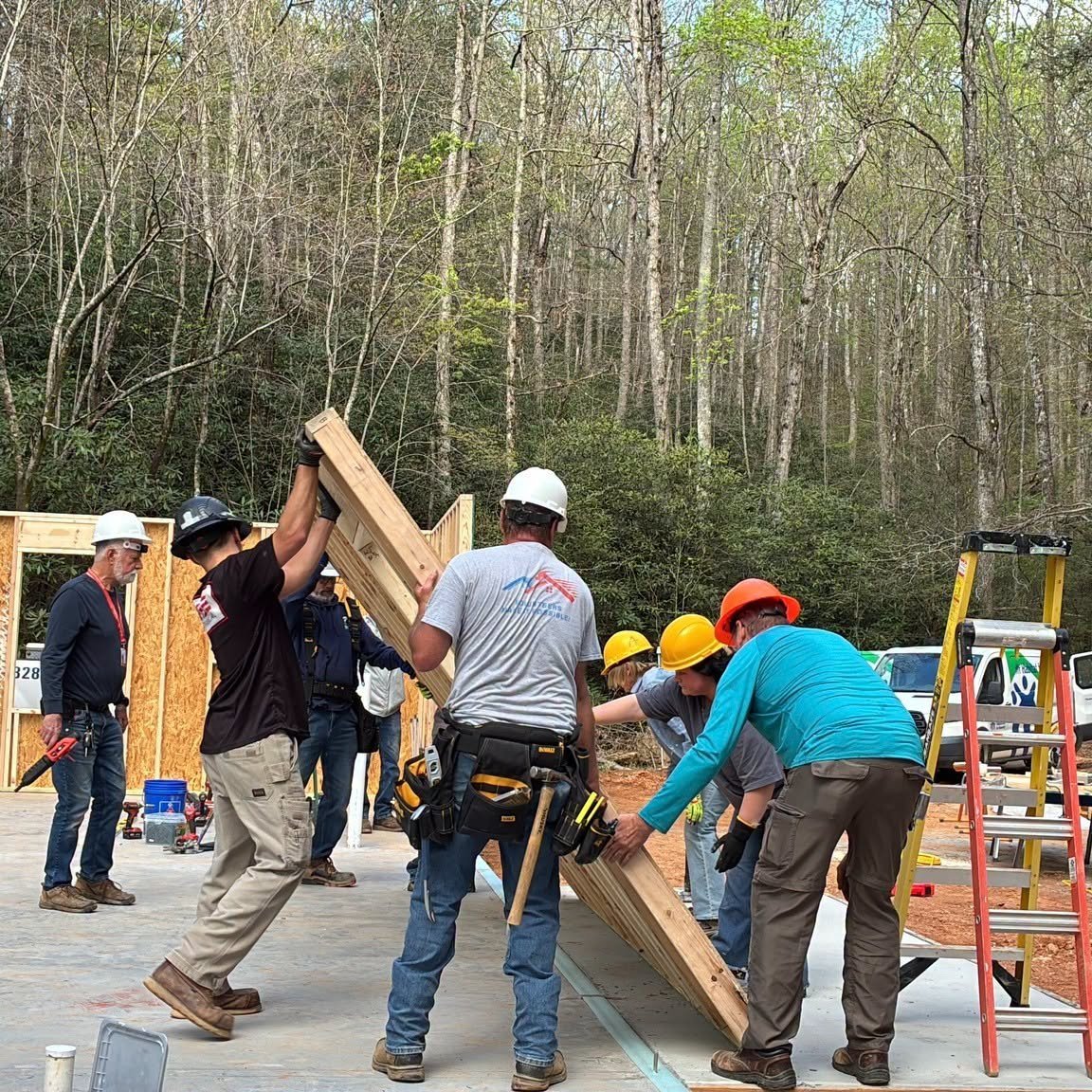
Habitat volunteer and Flat Rock resident, Walt Pusey helps rebuild a home damaged by Hurricane Helene.
For Emily, the most important measure of Habitat’s work spans generations. “I think the biggest impact is that generational component,” she said. “Just the ability to provide that stability for children, for family members, to have a place to celebrate your holidays, to have a place for your kids to come home to, and to understand that this is their home. I think that has a very different connotation than a rental unit or an apartment.” Over time, homeownership can also provide an asset that builds wealth and gives the next generation a stronger financial foundation.
And then there are the less tangible things. The benefits can be something as ordinary as knowing you are free to paint a wall or put up a fence. “It seems so minimal,” Emily said, “but to people who have never had that opportunity, it’s huge.”
That is why Emily measures Habitat’s impact differently than simply counting the number of houses it completes in a year. Ten new homes may not sound like a solution to a daunting affordable-housing problem. But each one changes the circumstances of a family - and potentially the trajectory of the children growing up there.
New homes, home repairs, storm rebuilds and homeowner education all create what Emily sees as a ripple effect. One family gains stability. Children grow up in a secure home. Equity builds. And, over time, the benefits can extend into another generation.
—-
Just around the corner from Mireya’s new home, it was Maria Vega’s turn.
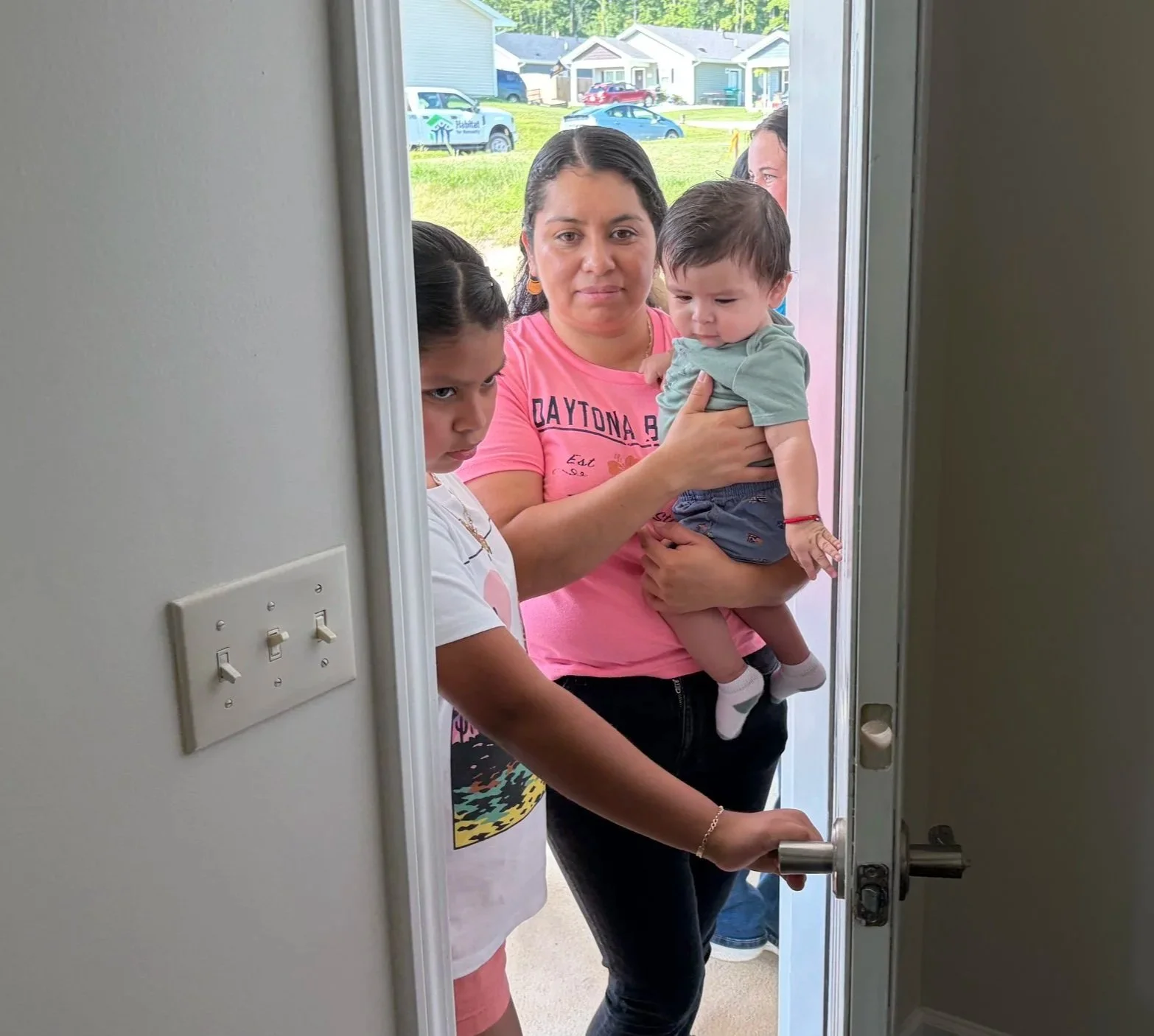
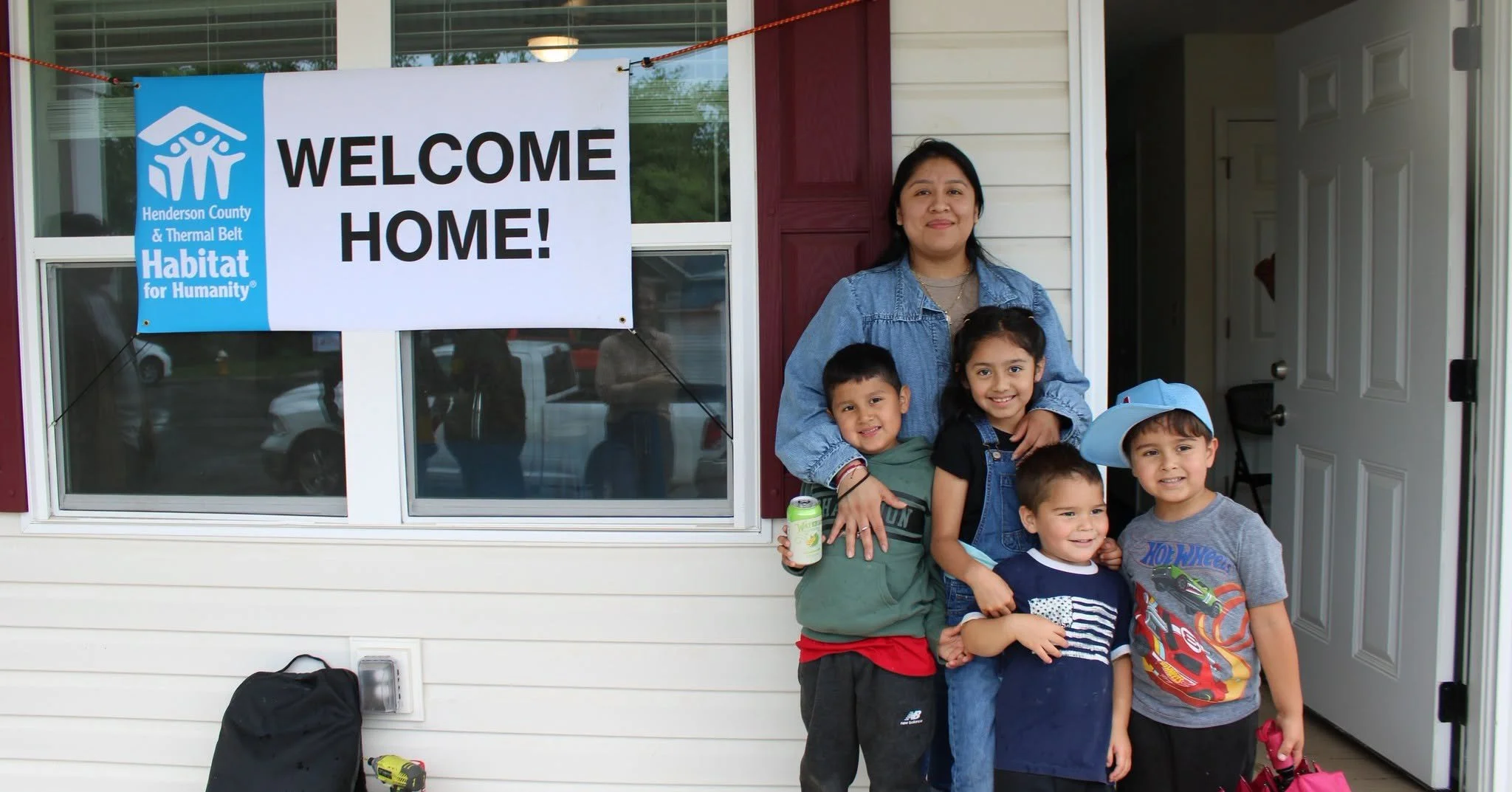
Maria and her children open the door to their new home.
Maria received the key to her new home with eight-month-old Yael in her arms and eight-year-old Luna beside her. Around them were many of the people who had helped make the moment possible. More than 200 volunteers contributed over 800 hours to the construction of Maria’s house, work that Habitat valued at approximately $26,000 toward making the home more affordable.
But for Maria, the value of the house is measured differently. “Very happy, because I finally did it!” she said. “My kids and I are finally going to be in a stable home where no one can kick us out. My kids are going to be very secure. Very safe.”
During the dedication, Father Tom Buechele offered a blessing for what might happen within Maria’s new home: “May this home be a place of abiding comfort and calm in the midst of the storms and trials of life. May this home be a place of fond memories and deep satisfaction.”
For Maria, Luna and Yael, those memories can begin now. There will be first steps and school mornings. Birthdays and holidays. Meals around the table and ordinary evenings together.
On Saturday morning, Habitat gave Maria a key. But what that key opens is much larger than a front door. It opens onto the stability Maria has worked for, the security she wants for her children, and the possibility of a future they can build together.
And now, at last, that future is on the other side of her new front door.