From Zirconia to Belgium to Highland Lake
From Zirconia to Belgium to Highland Lake
The Remarkable Journey of Kerry Lindsey
Few people realize that the story of Highland Lake Inn did not begin with hospitality. It began with goats.
And rice cakes.
Long before the Lindsey family transformed a rundown church camp into one of Western North Carolina's most distinctive destinations, they were quietly building one of the country's pioneering natural foods companies. Starting from a small workshop on Sleepy Gap Road in Arden, Kerry Lindsey – with the assistance of his three younger siblings who helped after school - designed machinery, manufactured rice cakes, and helped introduce an unfamiliar health food to grocery stores across America. Fourteen years later, they sold the company to Quaker Oats. The proceeds from that sale would make possible everything that followed at Highland Lake.
But that story really begins even earlier - on a small homestead in Zirconia, where Bob and Treska Lindsey raised four children to build rather than buy, to solve problems with their hands, and to see possibility where others saw obstacles.
Zirconia Days
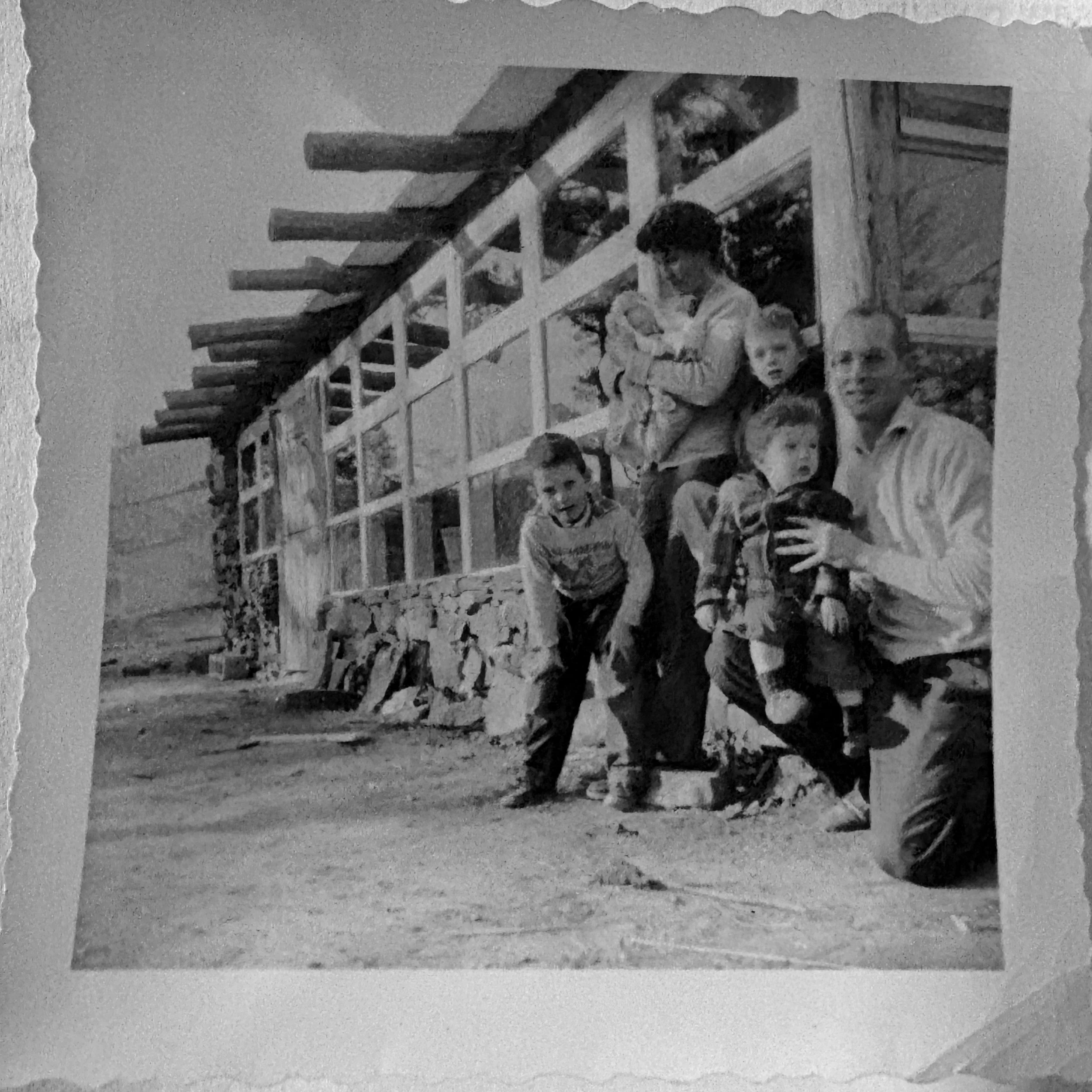
Bob and Treska Lindsey with their four children - Kerry, Larc, Abe, and Toone - at their home in Zirconia.
Long before there were rice cakes—or Highland Lake Inn—there were Bob and Treska Lindsey. Bob grew up in Buffalo, New York. After serving in Europe during World War II, he stayed overseas, traveling with little more than a camera and an adventurous spirit. In Belgium, he met a young woman named Treska Gavaert, an artist, gardener, and storyteller who shared his curiosity about the world and his love of growing things. They married in 1950.
According to family lore, one encounter from Bob's travels would shape the course of their lives. A Russian sailor offered what sounded like simple advice: "For every child that comes in the family, get a new goat.” Whether practical wisdom or gentle humor, Bob took it seriously. Soon after, Bob, Treska, and their infant son Kerry sailed for America aboard the Queen Elizabeth. They bought a $60 Ford, pointed it toward the mountains of Western North Carolina, and eventually settled on a small piece of land in Zirconia.
Before long, Bob acquired the family's first goat, just as the Russian sailor had advised. One of his early stops was neighboring Connemara, where Lilian Sandburg encouraged the young couple's decision to settle nearby. She reportedly remarked that "Zirconia" sounded so much lovelier than nearby "Tuxedo," stretching out the word with a playful "Tux-ee-do." The Lindseys needed no further encouragement. Zirconia would become home.
There, they built a home much as generations before them had done. The stone came from nearby fields. The timbers were cut by hand. For years, there was no indoor plumbing. They raised goats, chickens, and vegetables. They baked bread, made goat cheese, and preserved food from the garden. Christmas gifts were crafted rather than purchased. If something broke, it was repaired. If something was needed, the first question was rarely "Where can we buy it?" but "How can we make it?"
Kerry never considered it unusual. "Our folks built that house from the ground up," he recalled. "They grew all their own food—goats, chickens, vegetables. We made gifts for the holidays. We built treehouses. Dad taught us how to lay stone. That was just the way we grew up."
Years later, the family was surprised to learn that government census records placed them below the poverty line. It came as news to the Lindseys. They had never measured wealth that way. Their table was full, their imaginations were encouraged, and every day offered another opportunity to learn how something worked—or how it might be made better.
Growing Up Lindsey
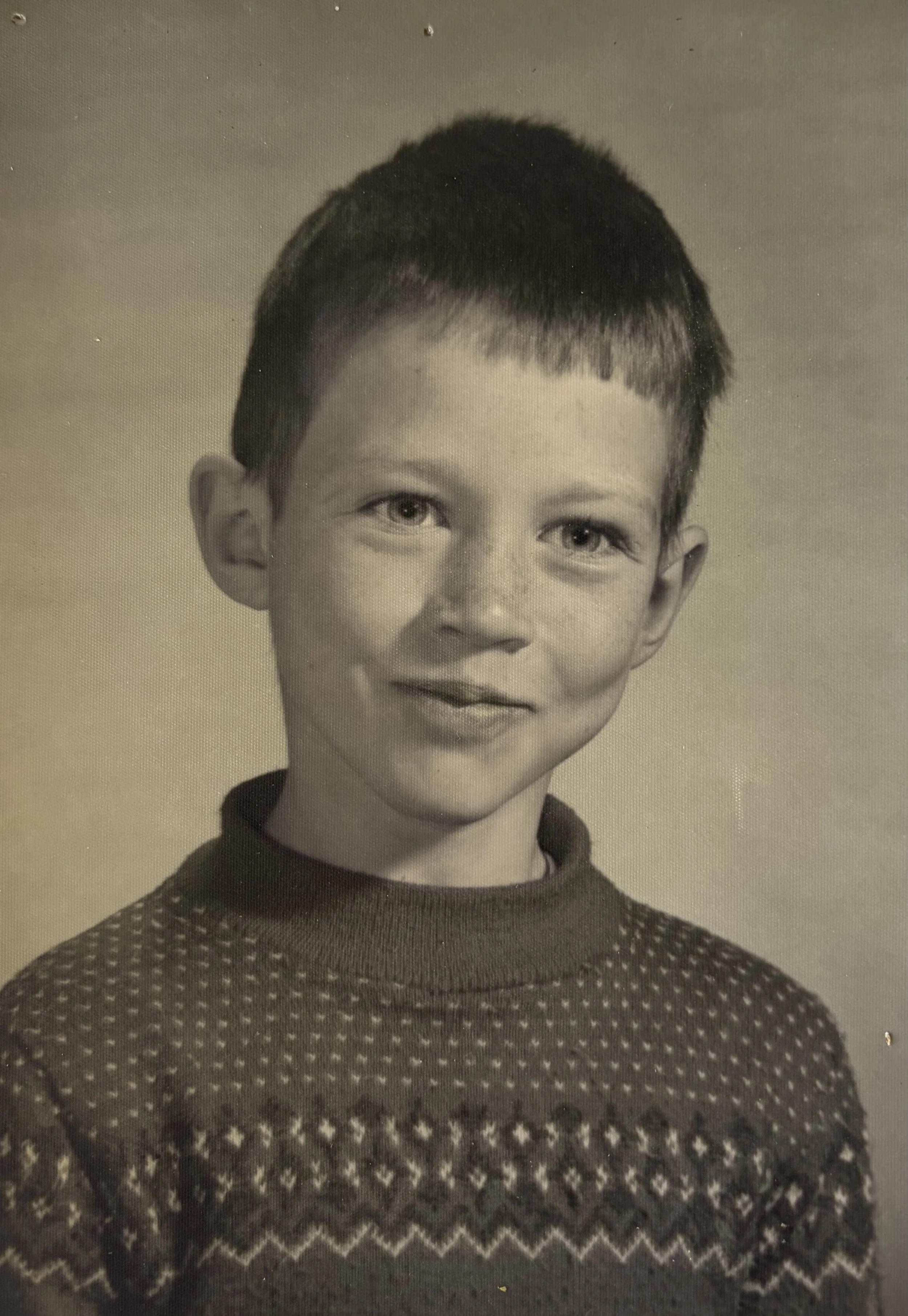
The Lindsey children grew up in a world where making things was simply part of everyday life.
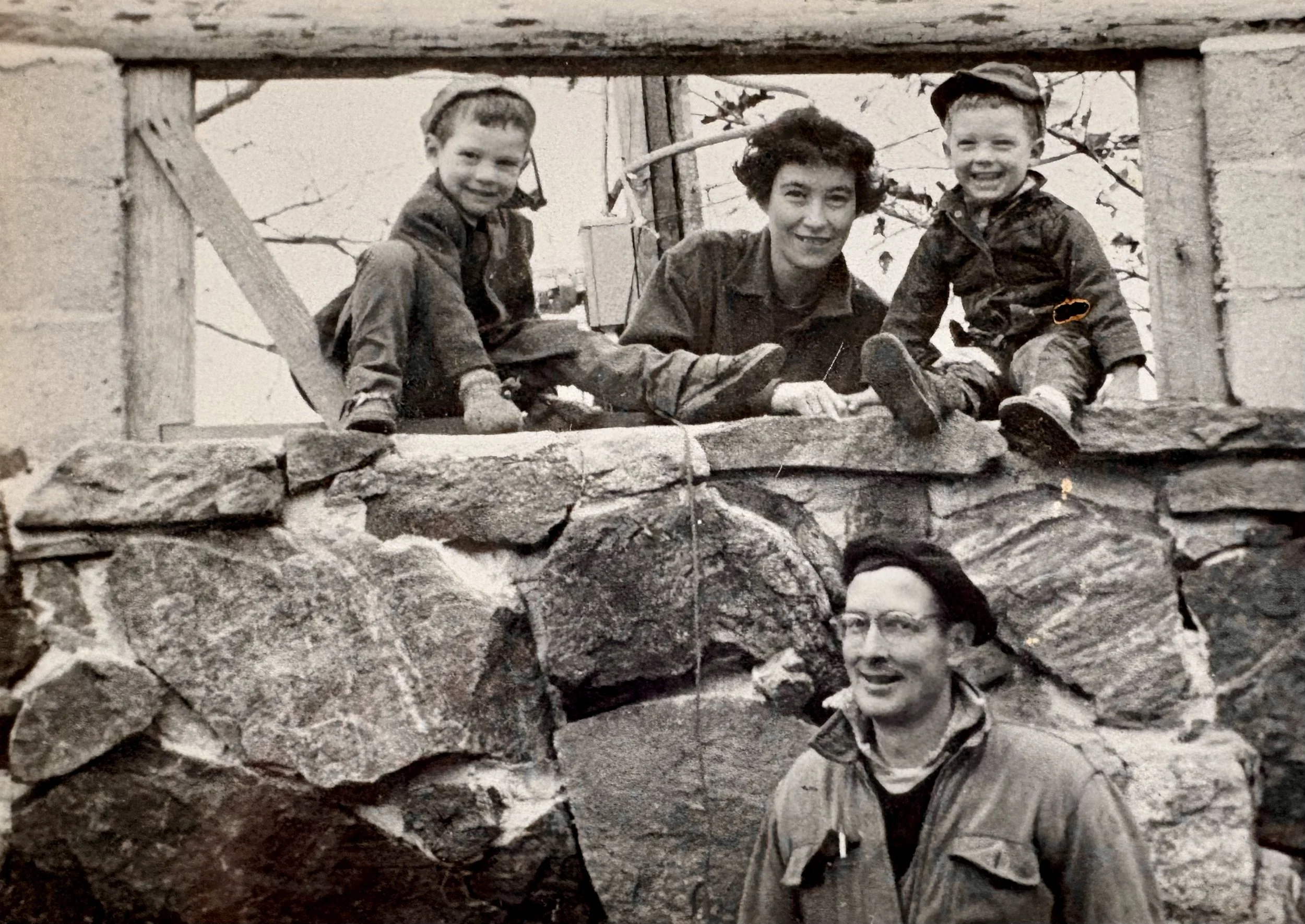
Kerry and his brother Larc with their parents.
"Our folks built our house from the ground up," Kerry recalled. "Dad showed us how to lay rock. We built treehouses. I built a little log cabin. It was just the way we grew up." New projects were rarely purchased; they were imagined, designed, and built. Looking back, Kerry realizes he was learning far more than carpentry or mechanics. Kerry discovered how much he enjoyed figuring out how things worked every bit as much as using them.
One teacher recognized that instinct early. As a student, Kerry entered a science fair with a homemade experiment intended to prove that electricity was created by friction. The theory was wrong, and just before the presentation, he quietly improvised enough to make it appear successful. His physics teacher, Dean Ward, wasn't fooled. But instead of embarrassing his student or correcting him publicly, Ward invited Kerry to his home after school. There, the teacher introduced him to the workings of an electric motor.
Years later, Kerry would come to appreciate something even more important than the lesson in physics. Dean Ward had looked beyond a failed science project and seen the curiosity behind it. Instead of rewarding the right answer, he encouraged the impulse to build, question, and understand how things worked. It was exactly the kind of encouragement that would shape the rest of Kerry Lindsey's life. After graduating from high school, Kerry wasn't entirely sure where life would lead. Like many young adults, he tried a little of everything.
He worked as a short-order cook at the Asheville airport, discovering an early appreciation for hospitality. He spent time in construction, manufacturing, and at Taylor Instrument, Space Homes, Highland Hospital, and Shoney's, absorbing new skills wherever he landed. Each job added another layer to an education that was taking place as much outside the classroom as inside it.
Kerry enrolled at UNC Asheville intending to study physics. It seemed like the natural next step for someone who loved building things and understanding how they worked. The reality was something quite different. "When I was at East," he recalled, "my physics teacher, Mr. Croft, had brake drums sitting in the classroom. Physics was real stuff." At UNC Asheville, however, he quickly found himself immersed in quantum physics. "It made no sense to me at all."
He laughs about it now, but the disappointment revealed something important. "I went into it because I was passionate about making things." The theories interested him, but what truly captivated him was seeing an idea become something tangible—whether an electric motor, a machine, or a building. He was less interested in explaining how the universe worked than in asking a simpler question: How can this work better?
That question would soon carry him far beyond the classroom. Kerry left school, converted an old school bus into a makeshift hippie camper, and spent six weeks wandering the Southeast with friends, playing accordion, making music, and seeing the country. It was an unlikely interlude, but one that preceded the opportunity that would change the course of his life.
An invitation from Belgium was waiting. His uncle, Omer Gavaert - the inventor of one of the world's first mechanized rice cake machines - was ready to take on an apprentice.
Belgium
Treska's brother, Omer Gavaert, had become a pioneer in Europe's emerging natural foods movement. In Belgium, he helped build one of the continent's leading macrobiotic food companies, developed a line of sourdough breads, and invented one of the world's first mechanized rice cake machines. The simple hand-operated process he had observed in Japan had been transformed into an automated manufacturing system.
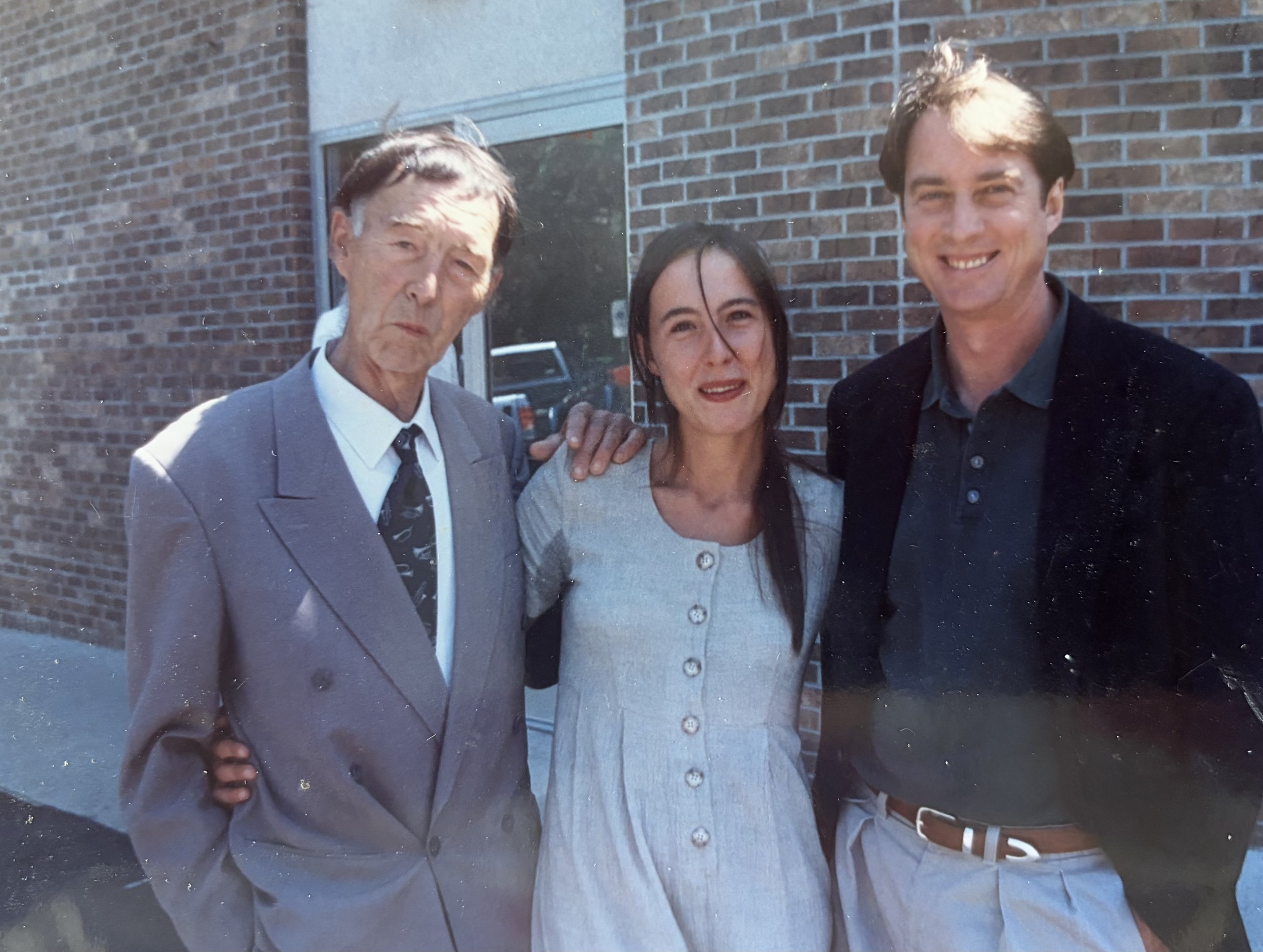
Kerry with his Uncle Omer and cousin, Sarah.
For Kerry, it was an extraordinary opportunity. After a brief visit following high school, he returned to Belgium in 1970 for what became a year-long apprenticeship. He admits the experience was marked by homesickness, but it also immersed him in a world unlike anything he had known.
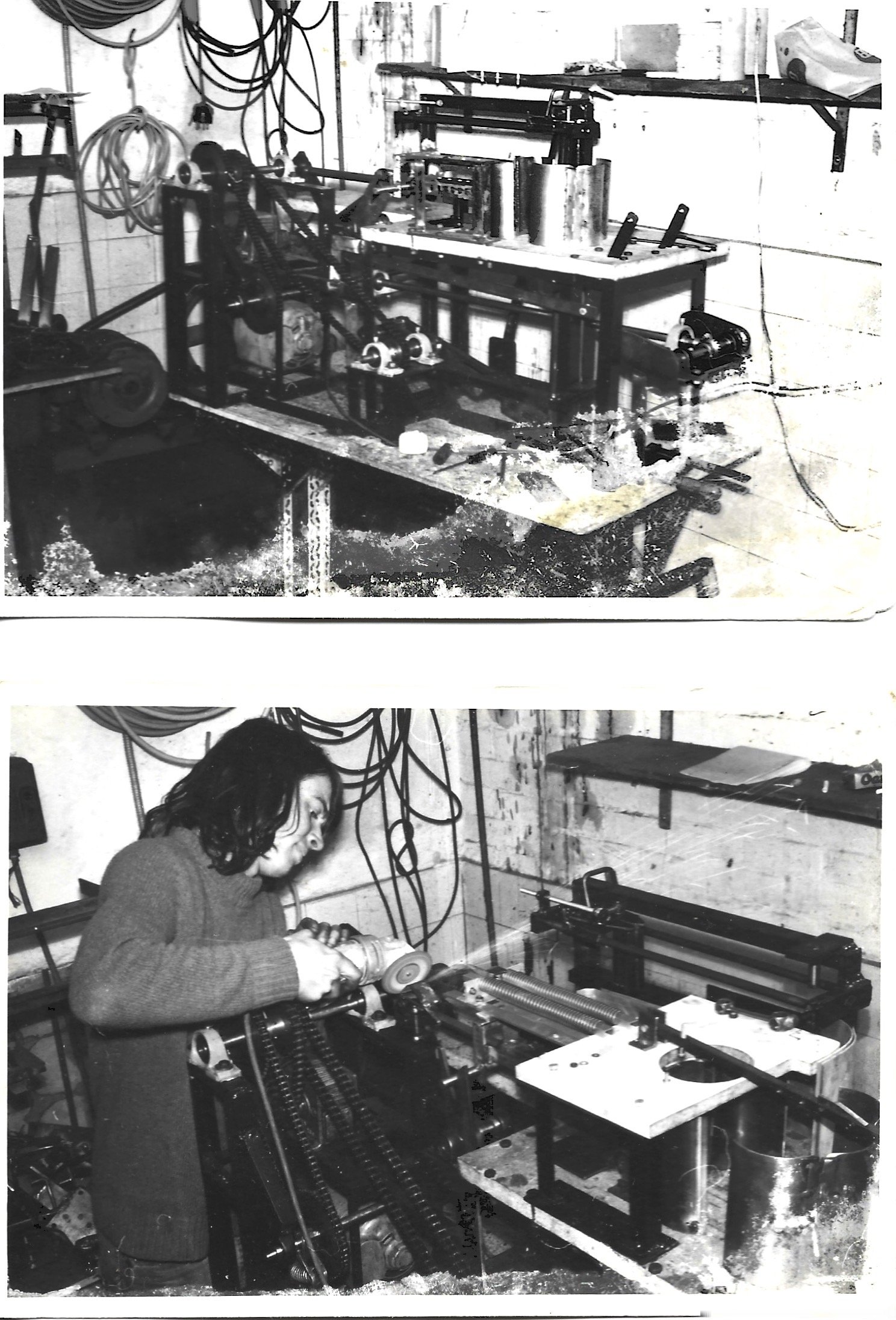
His first assignment had little to do with food. Instead, Omer insisted he learn to become a machinist. Working alongside his cousin Johan, Kerry learned precision machining, metal fabrication, welding, and machine assembly. Only after mastering those skills did he move on to the factory floor, where he learned every step of the rice cake business - from operating the machines and mixing the rice to packaging and shipping the finished product.
Watching workers stack rice cakes by hand and slide them into plastic bags one package at a time, Kerry found himself thinking less about how the system worked than how it could work better. "I looked at all that and went, There's got to be an easier way to do this."
With Omer's encouragement, he began experimenting. The older man gave his young apprentice remarkable freedom, allowing him to visit machine supply houses, buy motors, gearboxes, chains, sensors, and pneumatic cylinders, and spend his spare time building prototypes. Some ideas failed. Others transformed the production line.
It was the moment when the lessons learned in a stone house in Zirconia - the habit of making things, fixing things, and believing almost any problem could be solved - finally found their purpose.
Bringing Rice Cakes to America
Kerry returned to North Carolina in the spring of 1971 with far more than memories of Belgium. At a time when whole grains and natural foods were just beginning to enter the American conversation, rice cakes represented a simple, minimally processed alternative to bread and snack foods.
Kerry’s Belgian grandmother provided the seed money - a $5,000 gift - that allowed him to purchase a lathe, a welder, and the first few rice cake machines from his uncle's factory. Production began in a small shed behind Bob and Treska's home in Arden - where they had moved to in 1966. Kerry lived upstairs in the expanded shed so he could keep the machines running on second shift.
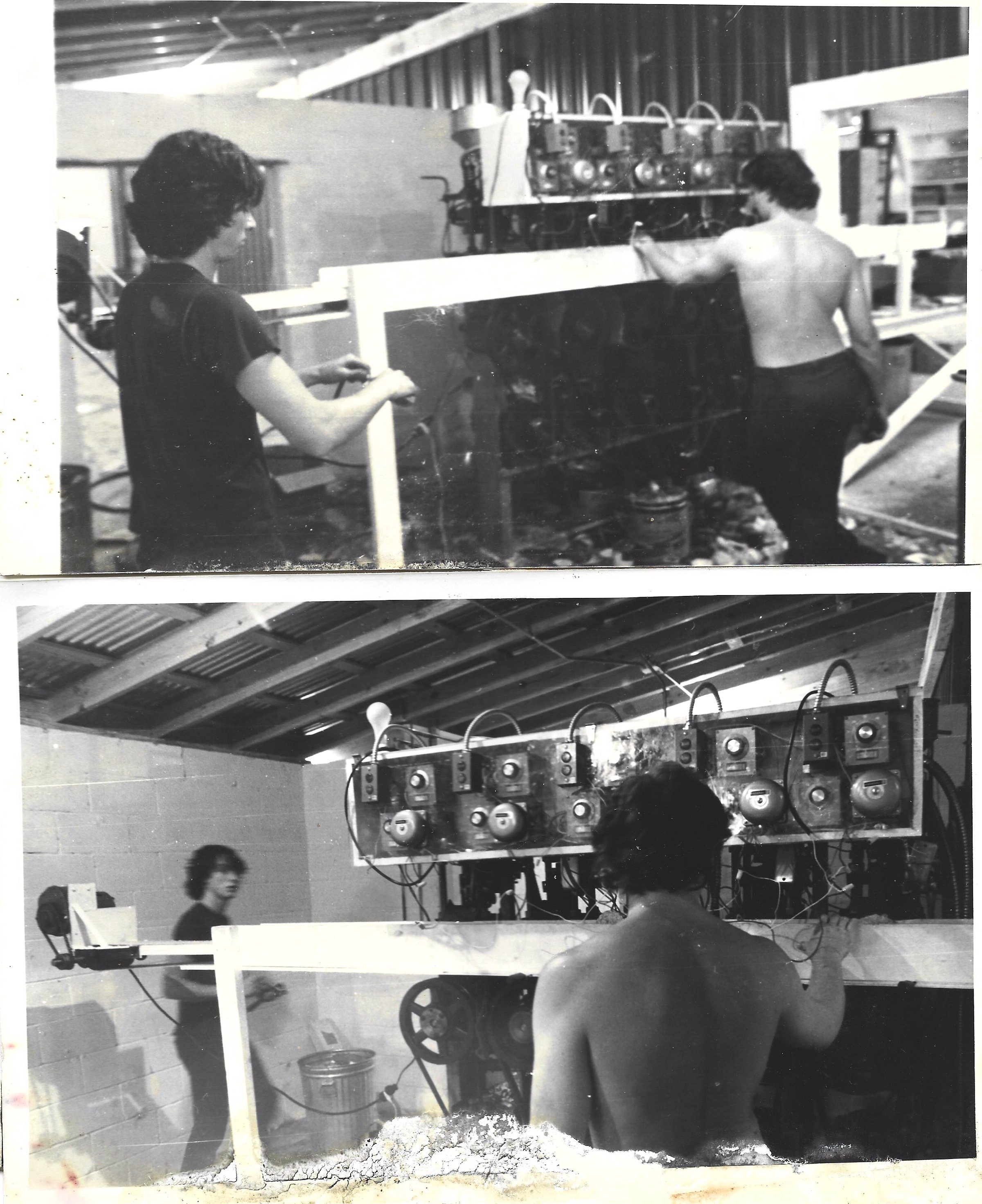
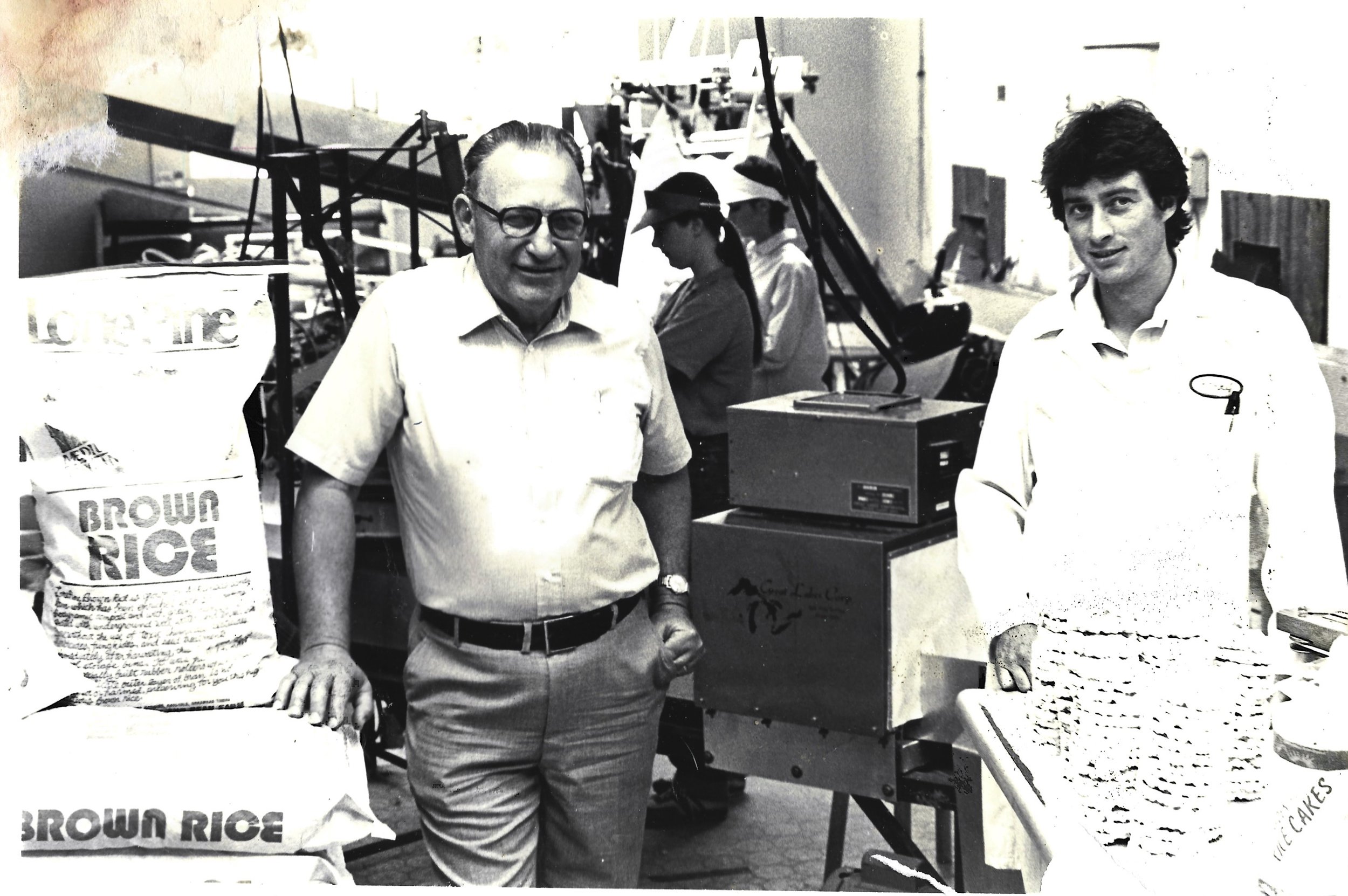
Kerry and Larc operating the rice cake machines
The obvious challenge was producing rice cakes. The less obvious challenge was everything else. The machines Omer had developed could pop the cakes, but nearly every other step still depended on human hands. Workers stacked the cakes one by one, slid paper labels behind them, pulled plastic bags over each stack, twisted the tops shut, and prepared them for shipping.
Instead of accepting the process as it existed, he began redesigning it. He developed automatic ejection systems so cakes no longer jammed inside the presses. He built conveyors to move the finished product. He devised mechanical stackers, automated rice mixing systems, and pneumatic bagging machines that gently pushed stacks of rice cakes into waiting bags before sending them down the line for sealing.
"I'd look at a $50,000 packaging machine," Kerry recalled, "and think, we only have to do a few a minute. I'd just scale something down - a lot simpler and a lot slower - but that's all we needed." Every improvement made production a little faster, a little more reliable, and a little less dependent on manual labor. It wasn't simply thrift. Kerry genuinely enjoyed the challenge. Every conveyor, stacker, and bagging machine presented another puzzle to solve. He rarely saw a piece of equipment without wondering how it might be made simpler, more reliable, or more efficient. Engineering, for him, wasn't a profession. It was simply the way his mind worked.
Arden Rice Cakes
What began as an experiment in a backyard shed soon outgrew its humble beginnings. The business outgrew the shed after about four years. Kerry found a parcel of land on Pond Rd. in Asheville and built a new manufacturing facility there. A few years later, Bob and Treska mortgaged their house to provide capital as the company grew and Kerry continued adding to the building. The larger manufacturing facility provided room not only for additional rice cake machines but also for a machine shop where they could fabricate and refine their own equipment.
A true family enterprise, Kerry’s siblings helped the company grow. Larc handled production. Abe was in charge of shipping. Sister Toone dealt with sales and customer service. Even Bob and Treska Lindsey were involved - creating the brochures and artwork to market the company. Together, the Lindseys transformed the business from a family enterprise into one of the country's pioneering natural food companies.
Five rice cake machines became dozens. Eventually, fifty-five machines operated in multiple production lines, each incorporating improvements Kerry had designed to make the process more efficient and reliable. Equipment that once required workers at every station now ran with a fraction of the labor, thanks to a steady stream of conveyors, sensors, pneumatic controls, automated stackers, and packaging systems built in-house. As production increased, so did demand.
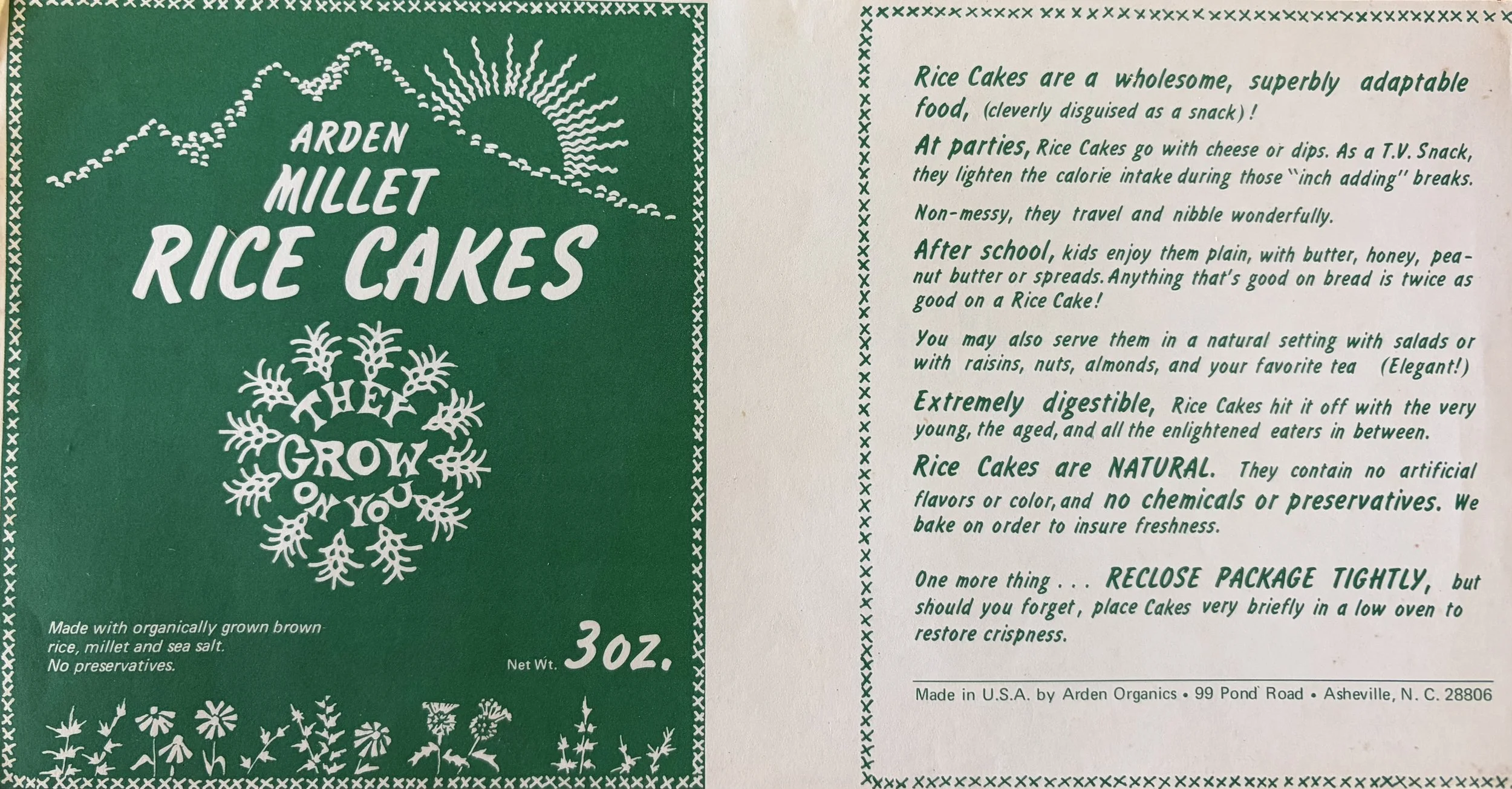
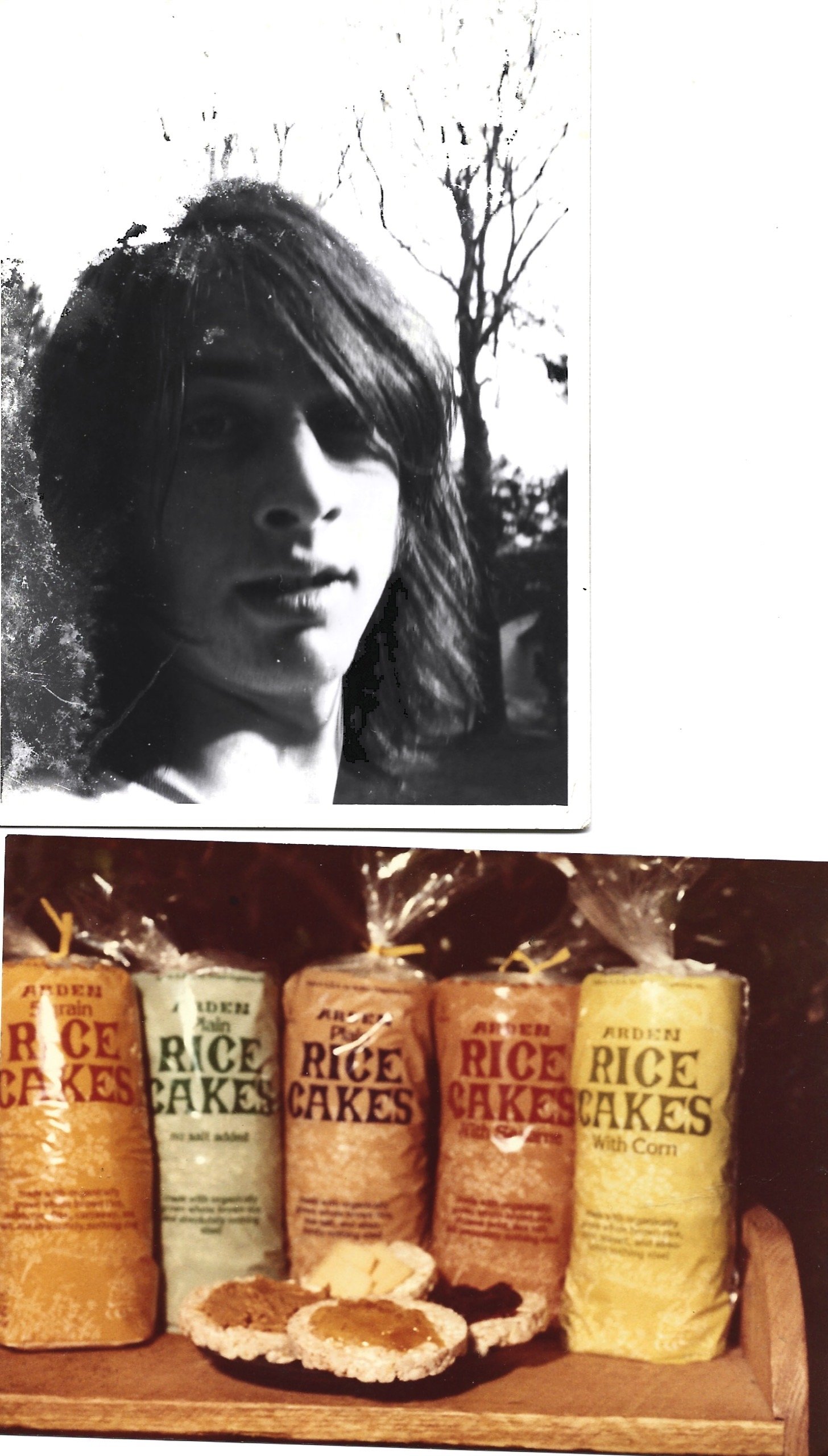
Label for Arden Rice Cakes
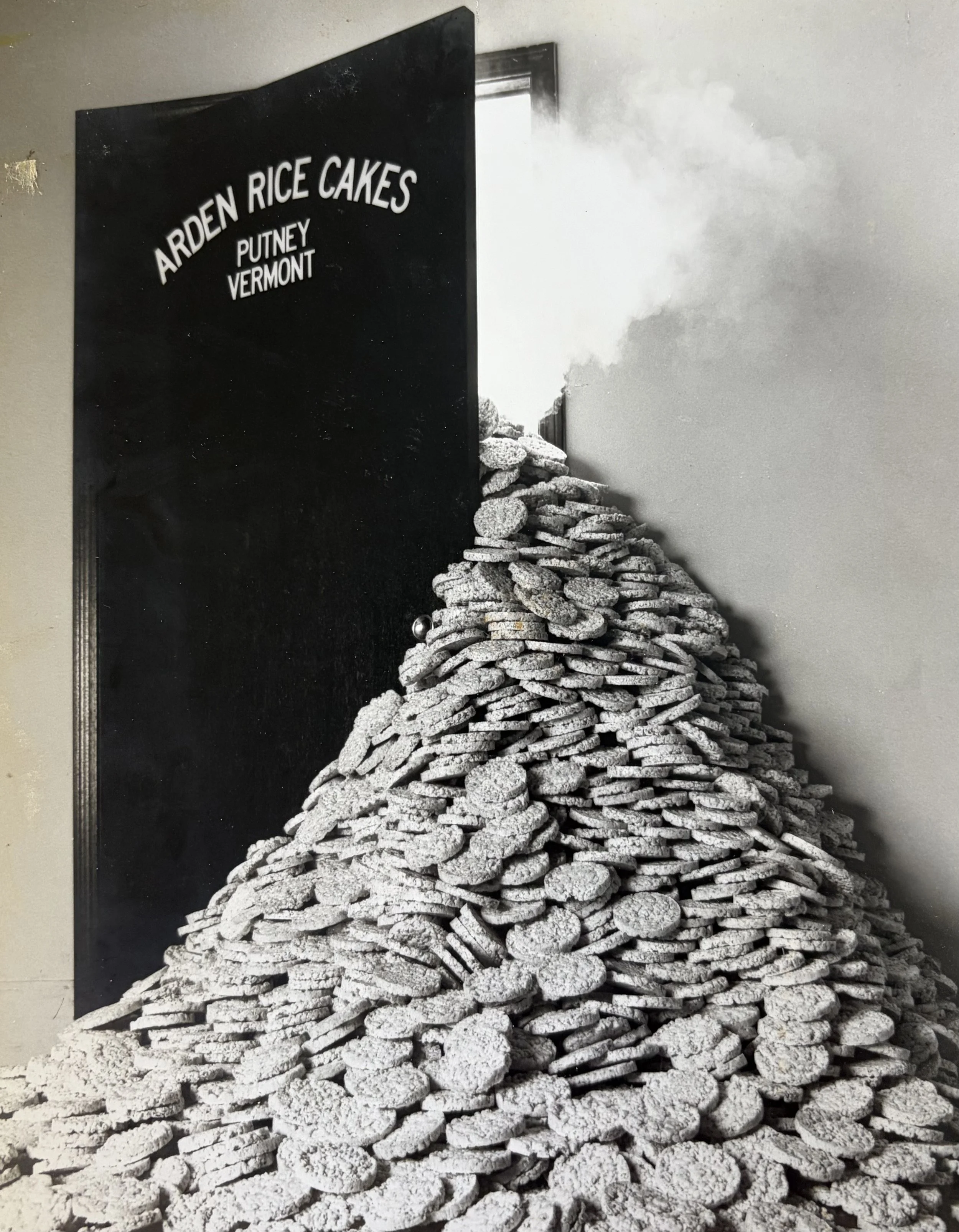
Arden Rice Cakes soon moved beyond health food stores into supermarkets across the country. By 1982, the company was distributing its products in all fifty states and Canada, with annual sales approaching $2 million. Demand was especially strong in the Northeast, prompting the Lindsey brothers to purchase a former college gymnasium in Putney, Vermont, and convert it into a second manufacturing plant.
Abe Lindsey relocated to Vermont to manage the new operation, while production capacity more than doubled. "The largest demand is in the Northeast and New England," Larc Lindsey explained at the time. "The new plant will allow us to make and distribute the cakes there. Natural foods are growing like crazy."
The company's success eventually attracted the attention of one of America's largest food manufacturers.
By 1986, Arden Rice Cakes had become one of the nation's leading natural food companies. Quaker Oats recognized what the Lindsey siblings had built and purchased Arden Organics, bringing the family's fourteen-year journey in the rice cake business to a close. What Kerry had built had become important enough that one of America's largest food companies decided not to compete with them - but to buy them.
The Next Chapter
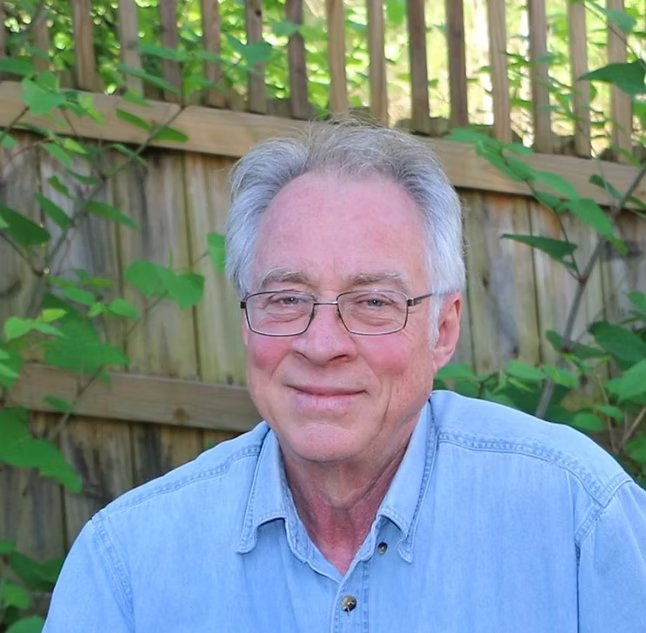
Kerry Lindsey today
For many entrepreneurs, that might have been the finish line. It wasn't for Kerry. Instead of stepping away from work, he began looking for a new challenge. And he found it just a few miles away in Flat Rock, where an aging church camp known as Our Lady of the Hills sat quietly overlooking Highland Lake. The property was worn and largely forgotten. Most people saw a collection of aging buildings in need of extensive repairs.
Kerry saw what it could become.
Years later, he would joke that he had been "foolish enough to project a dream onto it" - a dream of genuine hospitality, gardens overflowing with fresh vegetables, food grown with care, and a place where guests could slow down, reconnect with nature, and restore themselves.
With time, Kerry brought his mom and dad to live on the property. Larc became the founding chef of what is now Season’s Restaurant. Kerry developed the Highland Lake Village neighborhood and soon saw the need for a deeper sense of community in people’s lives. The Lindseys’ goats became the centerpiece of the Garden Hamlet community. Kerry honored his mother by building Treska’s event space and kitchen, which hosts community events throughout the year.
Looking back, it's clear the rice cake company had never been the destination. It had simply provided the means to pursue a much larger dream.
Over the next four decades, Kerry Lindsey would transform that forgotten church camp into Highland Lake Inn and, from there, continue imagining gardens, neighborhoods, gathering places, and communities that reflected the same philosophy he had first learned as a boy in Zirconia.
And that story is for another day …