
A Life Sewn with Purpose
(This is an update of a story first published in 2021)
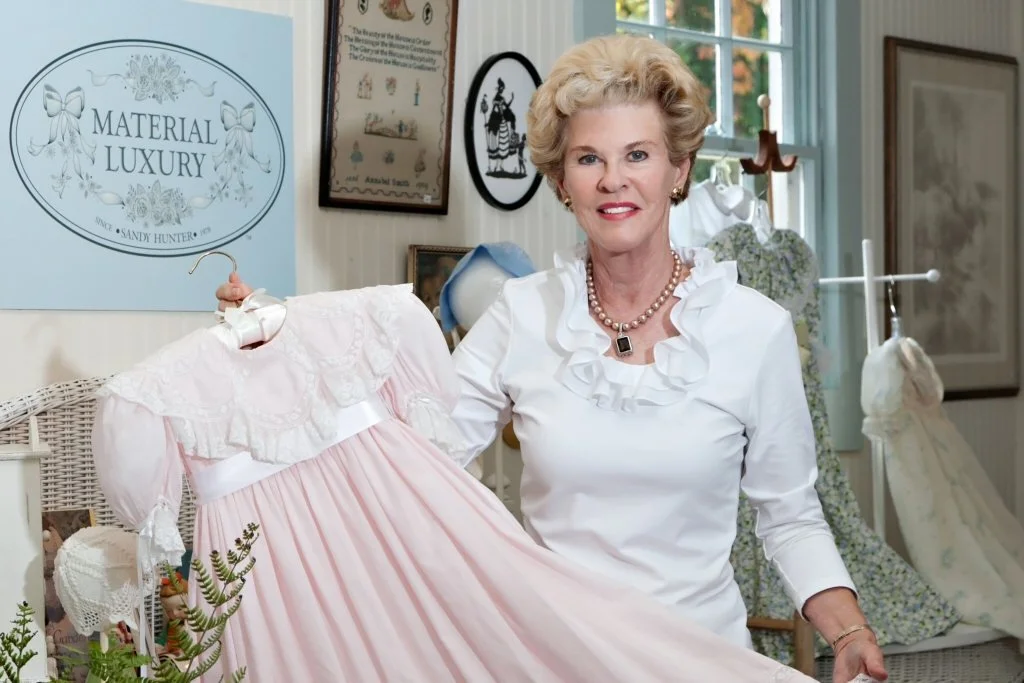
Sandy Hunter Jones
Sandy Hunter Jones was born with a needle and thread in her hand. At just three years old, her mother discovered her carefully mending Elfie, a beloved stuffed elephant. No one knew where she had found a needle and thread, but it was clear she already understood how to use them.
Her father, an avid fly fisherman, often took her along on trips. Sandy could untangle fishing lines with ease and repair delicate flies with remarkable precision. Even as a child, her dexterity and creativity hinted at a lifelong calling.
“Maybe a love of sewing was always in me,” Sandy later reflected, “but I didn’t exactly know it at the time.”
Born in Oakland, Tennessee, Sandy studied education and began her career teaching on the Cherokee Reservation, later moving on to Charlotte and Hendersonville. She loved teaching—skills that would serve her well in an unexpected second vocation.
While visiting family in Asheville one summer, she met the man who would become her husband and soon settled in Flat Rock, North Carolina, where she has lived for decades.
The Discovery of Smocking
In the early 1970s, while working at the White Elephant Table at St. John in the Wilderness, Sandy came across an old McCall’s pattern for a smocked child’s dress. Though some instructions were missing, she felt compelled to try.
Smocking fascinated her. Despite having two young sons and no immediate need for dresses, she took the pattern home and began experimenting. The process—using iron-on dots to guide gathering—was tedious, and mistakes were plentiful. Still, she persisted, carefully taking notes along the way.
Eventually, she mastered the technique. What began as curiosity became passion.
Her first completed piece was a child’s dress, soon followed by adaptations for boys’ shirts and rompers. Friends noticed her work and began asking her to sew for their children. From there, her reputation—and her business—grew steadily.
What Is Smocking and Heirloom Sewing?
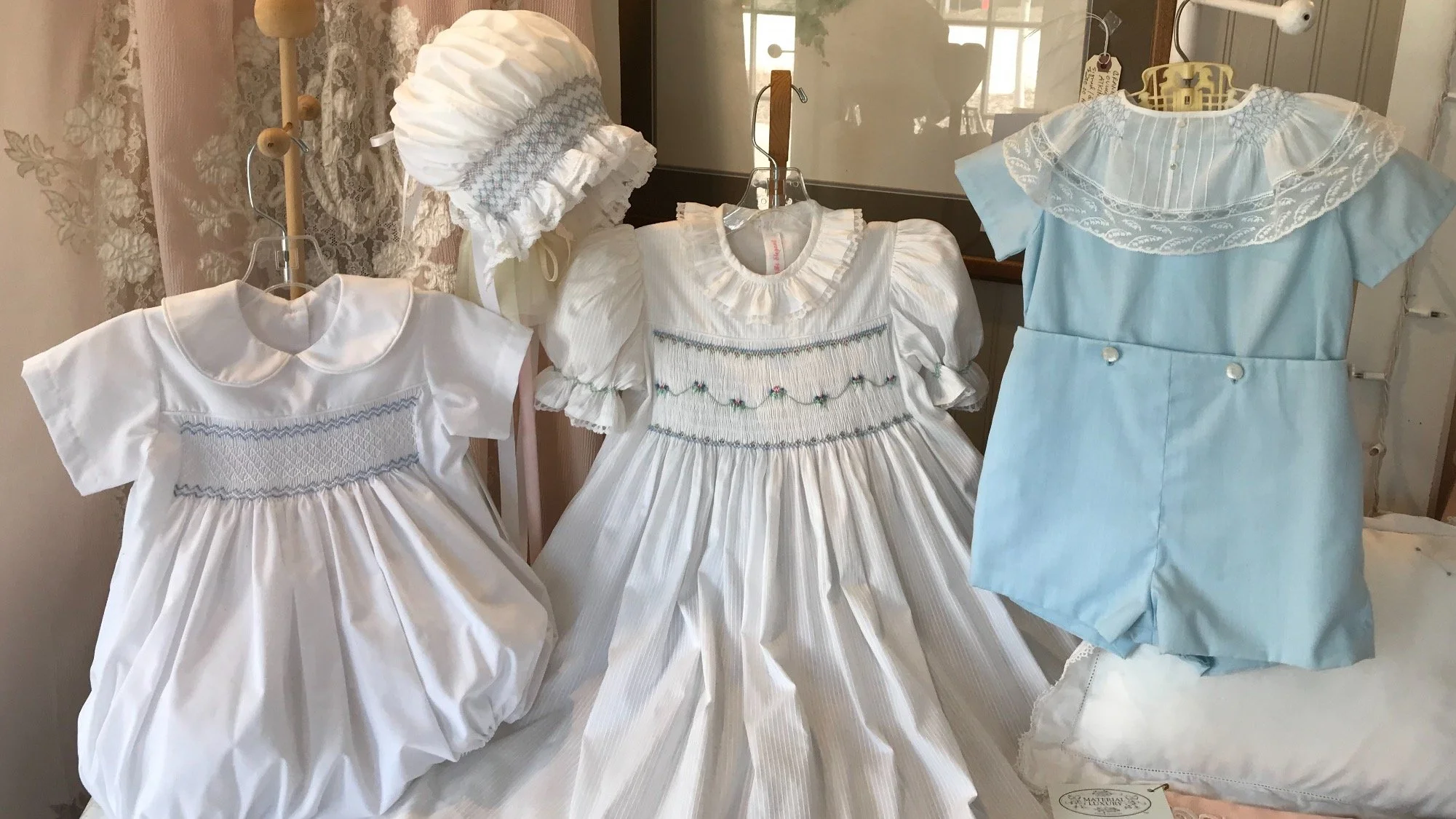
Examples of Smocking
Smocking often brings to mind delicate baby gowns, bonnets, bishop dresses, and bubbles. Its origins, however, are rooted in practicality.
Dating back to the Middle Ages in England and Wales, the “smock-frock” was a durable work garment worn by farmers and shepherds. Made of heavy linen or wool, it featured gathered sections that allowed flexibility and movement—long before elastic existed.
Over time, decorative embroidery developed, often reflecting regional life: sheep and crooks for shepherds, or garden scenes for farmers.
Originally, smocking required painstaking hand gathering using transfer dots, a slow and labor-intensive process. By the 1950s, however, the invention of hand-cranked pleating machines revolutionized the craft. These devices, with rows of fine needles, simplified fabric preparation and made smocking accessible to a wider audience.
In the 1970s, renewed interest in Victorian and Edwardian fashion sparked a revival. Smocking merged with heirloom (or French hand) sewing—a refined technique using fine fabrics, lace, entredeux, tucks, ribbon, and hemstitching. Together, they ushered in a renaissance of delicate, couture-quality children’s clothing.
From Craft to Calling
As interest in these techniques grew, Sandy returned to her roots as a teacher, offering classes in smocking and heirloom sewing at Blue Ridge Community College. Her natural ability to teach, combined with her artistry, opened new doors.

She appeared on local talk shows hosted by Nancy Welch and Peggy Denny. Soon after, Needlework Magazine invited her to contribute articles and projects.
Connections within the sewing world expanded her reach. Through fellow artisans, she met Grace Knotts of Canada and Diane Durand of Knoxville, Tennessee, who was building a business around smocking instruction and craft shows.
Encouraged by these relationships, Sandy compiled her knowledge into her first book, English Smocking Step by Step. Diane began promoting it, and its success marked a turning point.
Together, Sandy and Diane co-founded the Smocking Arts Guild of America (SAGA), with Diane as president and Sandy as vice president. What began as a small group quickly grew into a thriving international organization that continues to this day.
Building a Legacy
Sandy went on to design numerous patterns and author several books on heirloom sewing. Teaching remained central to her work.
“Teaching is a privilege and a pleasure,” she said. “In this fast-paced and turbulent world, hand needlework helps us slow down, refocus, and enter a peaceful rhythm—creating something beautiful.”
As demand for her garments increased, Sandy expanded her work into a small cottage industry. After a children’s clothing factory in Hendersonville closed, she purchased its sewing machines and hired former workers.
Women smocked from their homes while the final assembly took place in a workshop in East Flat Rock. This collaborative effort eventually led to a storefront—Material Luxury—in downtown Hendersonville.
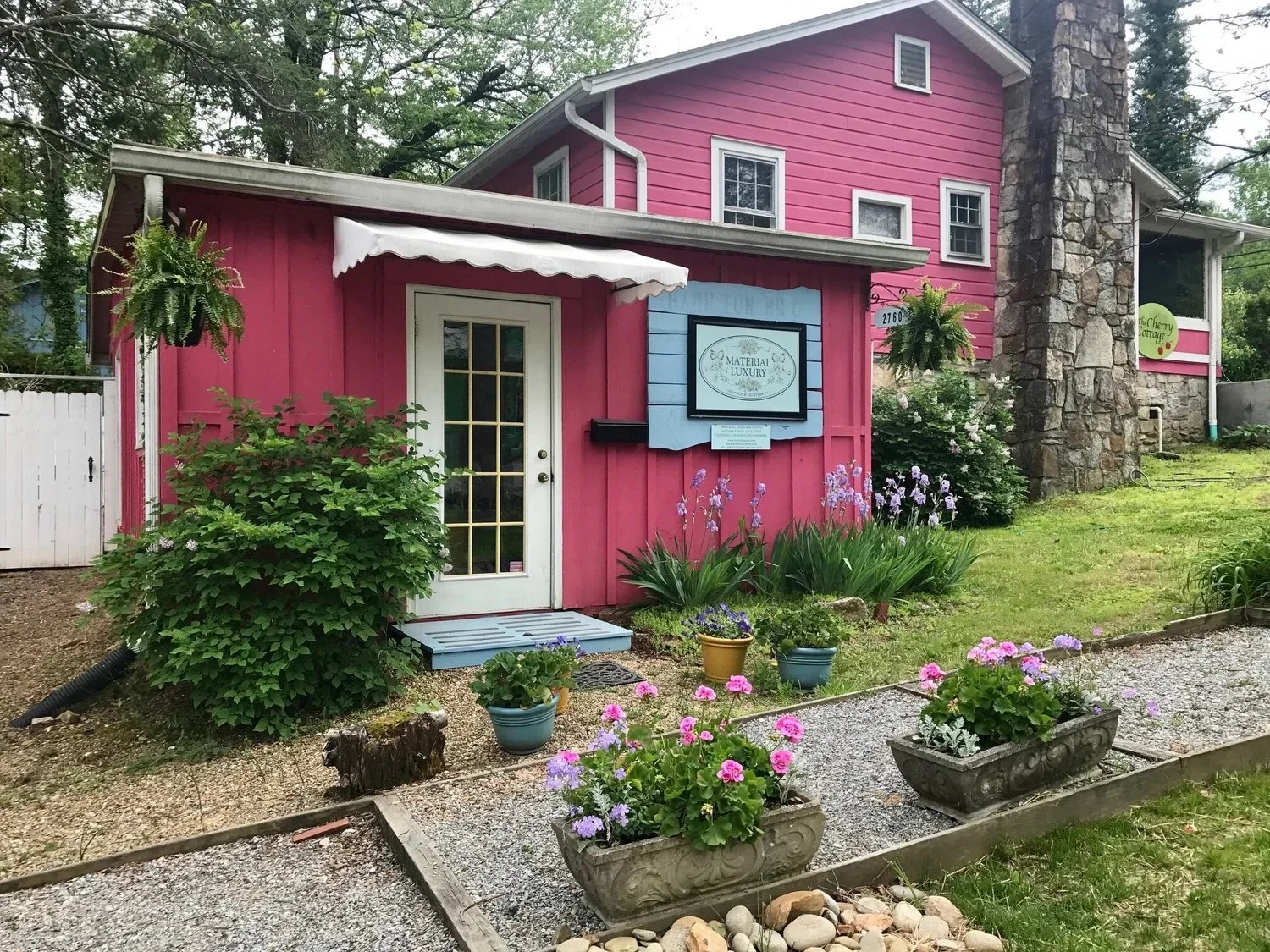
Material Luxury is located in the Cherry Cottage of Little Rainbow Row in Flat Rock
One day, a visitor from Charleston, Janice Waring, suggested Sandy’s designs would be perfect for cotillion dresses and invited her to host a trunk show. Though new to the concept, Sandy agreed—and a new market was born.
Soon, clients from Palm Beach followed. Over the years, Sandy dressed generations of children—babies to brides, and then their children as well—becoming part of the fabric of family traditions.
“Time just flew by,” she reflected. “After a while, it was hard to keep up the pace, and I knew it was time to step back from the physical work and focus on writing, designing, and teaching.”
During this new season, Sandy recognized another need: preserving the garments she had spent a lifetime creating. She developed expertise in archival cleaning and storage, helping families care for their heirloom pieces.
Her book, The Laundry Room, offers guidance on maintaining these delicate treasures so they can be passed down for generations.
A Thread That Endures
From a child stitching a beloved toy to a master artisan shaping a national movement, Sandy Hunter Jones has woven beauty, patience, and tradition into every piece of her life’s work.
And like those spring dresses of my childhood—carefully sewn, lovingly worn, and long remembered—her legacy continues, one stitch at a time.
-
Missy Craver Izard was born and raised in Charleston, S.C., and resides in Flat Rock, N.C. A retired Summer Camp Director and art teacher, Missy is an entrepreneur, speaker, author, journalist, community leader, and the recipient of several awards, including the White House Champions of Change.