Twenty Years of Delighting the Guest

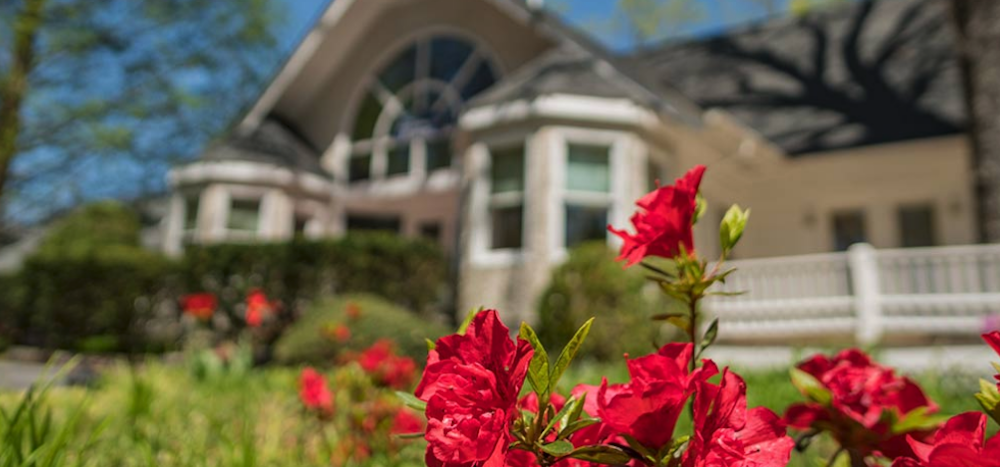
Linda and Jack Grup in front of Seasons Restaurant at their Highland Lake Inn & Resort

Linda and Jack Grup in front of Seasons Restaurant at their Highland Lake Inn & Resort

Twenty years ago, Linda and Jack Grup delivered a daughter to her freshman year of college in Ann Arbor, packed up their life in Michigan, and headed for the mountains of Western North Carolina in pursuit of a dream. Today that dream is a reality, and the Village of Flat Rock has been the primary beneficiary of their vision, professionalism, and commitment to creating excellence.

Jack and Linda (pronounced, Leen-dah) arrived in Flat Rock in November of 1999. They had just purchased the Highland Lake Inn & Resort, and a monumental task lay before them. They were the new - and novice - owners of a 26-acre resort operation. Two decades later, the Grup’s can look back on a remarkable success story of transforming a small, yet growing enterprise into an iconic fixture of Flat Rock.

The couple met in Spain in the 1970s when Jack was stationed there during a tour of duty in the Air Force. Linda’s father was in the U.S. Army, and she and her family had previously moved to Spain when she was 10. Today, they both describe themselves as military brats and credit that experience of frequent transitions as being key to their willingness to embark on their adventure in North Carolina.

Prior to moving to Flat Rock, Jack Grup (pronounced, Group) was coming out of a stint in corporate America. Linda had tired of the cold, extended Michigan winters, and they both thought that owning a Bed & Breakfast would be a better fit for their passions. The couple had worked together previously operating a business that provided financial support for small businesses.

“We've always been kind of entrepreneurial,” explains Jack. “We'd been looking for a new business for a long time. We looked at places in Michigan and California and realized that B&Bs are generally a great place to live, but they're awfully hard to really make a profit on.”  Linda laughs and adds that a Bed & Breakfast setting may have been a challenge for their marriage as well. “Being so close together all of the time would probably not be healthy for our relationship. But here we have 26 acres!”  

Jack was introduced to the mountains of western North Carolina during fishing trips with a brother who was living in Greensboro. “We would come here to go fishing, and I fell in love with the beauty of the whole area.”  So the Grup’s search for a new business expanded south, and they soon discovered that Kerry Lindsey had a 26-acre parcel of land with a lodge and restaurant for sale. At first, they were intimidated by the scale of the enterprise - significantly larger than their original plan to buy a B&B. The cost was also substantially more than they had originally considered.

But the more they looked at the opportunity, the more intrigued they became. As a young boy, Jack had spent many summers at lake resorts, and the Highland Lake property resurrected many of those happy memories.  “We were quite frightened of it at first,” says Jack. “It took a long time to get our heads wrapped around it. But our hearts loved it right away. It has that feeling that I remember as a child when my family would go to lake resorts in Minnesota. We both fell in love with it from that point of view.”

If Jack was nervous about their ability to make the resort successful, Linda was not. “He didn’t know he could do it,” she says with a smile. “But I knew he could do it. I’m a workhorse and he is very organized and meticulous.”  So the couple set aside any trepidations they had and moved to Flat Rock in November 1999.

Because of their lack of direct experience with resort properties, the bank would only finance the purchase of the lodge at first - and not the restaurant. “They financed the lodging piece and said that in two or three years, if you're good at it, we'll give you an option to buy the restaurant.” Jack grins as he finishes the story, “Well, after a year, we were so successful that they let us exercise the option to buy the restaurant early.”

Once the Grup’s realized they could make it work, they settled into their new life and never looked back. They had achieved the dream of matching their career with their passion.  “Once you get over the hump of making the mortgage and can do the things you want to do -  then it starts to become fun,” says Jack.  The resort has allowed the couple to pursue a special passion for food, wine, and hospitality. Linda adds, “To be able to have this canvas that we could write on and express our love for the  things that we were passionate about was really gratifying.”

The business has also been good for their marriage of 47 years in many ways. “Something that we have in common is that we love to eat out and we love to travel. So owning a business that helped put those two concepts together was really powerful,” says Linda.

When asked about their success, the Grup’s are clear about the secret to running a successful business. “It's all about delighting the guest in everything that we do.”  Jack is clear that this business philosophy extends to the entire Resort staff  “Whether our guest is interacting with a housekeeper or with a maintenance guy or in the restaurant, our goal is to have the end result be that they feel delighted with their encounter with us. And we believe we do that quite often.”

Talking to the Grup’s, it is also clear just how much concern and respect they have for their employees - a staff that ranges from roughly 60 employees during the winter months and swells to over 80 during the warmer months. “These people have become our family,” says Linda. “We have employees that have been here for many, many years. We know their kids. We're starting to know the grandkids now.”

Like many of the most successful entrepreneurs, the Grup’s do not count their success in strictly financial terms. They also have a deep and abiding respect for the environment and have worked hard to make Highland Lake Inn & Resort more energy efficient. They’ve also worked to ensure that Seasons creates delightfully tasty and picturesque plates with much of their product produced in an environmentally sustainable manner by chefs that have a passion for what they do. 

Ironically, the seeds for that passion were at least partially sown in Jack’s grandmother’s garden in - of all places - Flat Rock, Michigan.  “I would spend summers with my grandmother who had a lower 40 garden that I maintained. I learned gardening there, but more importantly, I learned how to create an organic garden to avoid the use of harmful chemicals.” Jack continues, “Now we've got our own organic garden and we do things throughout the property to conserve resources. We just won our second award for environmental sustainability from the Henderson Chamber of Commerce.”


Twenty years in, the Grup’s are unabashed fans of Flat Rock and the 26-acre oasis they call home. “It's our heart place,” says Jack.  “It's the most beautiful place we've ever lived, with a  lake on the property and an organic garden right next to our house. And we get to live here year-round!”

Jack and Linda are justifiably proud of what their partnership has created in Flat Rock. For Linda, she is proudest of the dramatic transformation they facilitated for the resort. “We helped grow a small business into a very prominent business.” For Jack, he is proudest of the culture he and Linda have created at Highland Lake Inn Resort. “We’ve maintained a culture within our organization of employees that are warm and friendly and delightful and passionate about what they do.  And that's reflected in the reviews people leave for our resort. I think that's what gets people coming back.”

The Grup’s plan to celebrate 20 years in Flat Rock throughout the coming year by holding special events and inviting the community to join in the celebration. Linda explains, “We just want to spend a year giving back to the community, giving back to our employees.”

After two decades of hard work, Jack and Linda have now started considering their next adventure. They are preparing for retirement, and the Highland Lake Inn & Resort is up for sale. But they are in no rush to leave the business immediately. "We're very committed to making sure that, when we sell it, we sell it to somebody that's going to take care of the employees,” says Jack.  “That the new owners become part of our family and have an interest in carrying on the traditions that we've worked so hard to establish.”

When that day comes, Jack and Linda will leave an important legacy in the history of Flat Rock. A 26-acre resort that is a testament to the beauty and potential of living in a place like Flat Rock. A community of hundreds of employees that have worked at the resort over the years. And the example of following your passion, treating people with respect, and leaving your part of the world better than you found it.

Twenty years later, Flat Rock is an even more special place because a couple from Michigan was willing to take a big chance on a little village.

—-

Read more about Highland Lake Inn & Resort

Getting Oriented at The Park

Chris Gkikas (Left) and Jim Hall (Center)

Chris Gkikas (Left) and Jim Hall (Center)

Chris Gkikas knows a thing or two about navigating difficult circumstances. He is an ultra-marathon runner, a husband and father of four, a casualty of corporate layoffs, and he has a last name that no one can spell without assistance. Chris has faced all of these challenges and still seems to keep moving forward with a smile. You might say he has a gift for finding his way.

Chris and the Western NC Orienteering Club recently held an event at The Park at Flat Rock called Grid-O Endur-O. About 28 competitors showed up and spent a couple of hours one Saturday afternoon working their way through a diabolic navigational challenge that left Chris grinning and runners discombobulated. Chris is a founding member of WNCOC and travels the region organizing and promoting orienteering events.

Two events, in particular, led Chris to his current role with WNCOC. The first, a spot in the infamous Barkley Marathons, taught him the importance of being able to navigate unknown terrain with just a map and a compass to guide you. The second, being laid off from his company after 15 years allowed him the time and freedom to pursue and share his new-found passion for orienteering with the world.

When he first started with orienteering competitions, Chris realized that he could still compete and enjoy the physical challenges of running, but without the enormous time commitment of being an ultra-marathoner. “With four young children, orienteering provides a challenge but is less time-consuming than ultra-marathon training.”

After the layoff, Chris decided to get really serious about orienteering. “I saw a great opportunity to change my avocation into my vocation,” he explained. “I incorporated my business and I started making maps for other clubs. I also started teaching land navigation to anyone who wants to learn. I especially enjoy working with children.”

With the help of a 30-year orienteering veteran Jim Hall, Chris threw his time into WNCOC. He now organizes several orienteering events each year, offers training classes for beginners, and works with school children to help them learn the basics of land navigation. “The life lessons here are plentiful. Not giving up. Teamwork, Planning ahead. Rolling with the punches. Making mistakes and recovering from those mistakes. So this is all kinds of life skills wrapped up into a fun activity that teaches without being an instruction.”

One of the maps used in the Grid-O Endur-O competition.

One of the maps used in the Grid-O Endur-O competition.

Chris exudes a laid back manner and a broad smile - both of which he brought in abundance to the event he organized at The Park. Grid orienteering involves successfully navigating a course of 16 control points arranged in a 4x4 grid with each control point spaced 10 meters apart. For this particular grid challenge, Chris created 22 “maps” or patterns that competitors had to navigate in a very exact sequence. Each map was successively more complicated than the last, and Chris entitled the 22nd map “Grid-diculous”. As a participant myself, I can attest to the fiendish accuracy of that name.

Competitors ranged in age from 8 to mid-’70s. The first few minutes were a jumble of competitors jostling for access to the same control points. But after a short time, the pack began to spread out and the real challenge began as the maps got more complicated and fatigue started to hinder clear thinking and accurate decision making. Chris points to the many lessons provided by the Grid Challenge and orienteering in general. “I think orienteering provides great lessons for people of any age. Critical thinking. How to orient a map. Performance and focus under pressure because the clock is running.”

The competition’s winner was Brandon Smith, an ultra-marathoner who also enjoys the challenge of orienteering. His secret? “Visual acuity. Being able to look real quick at the map and orient yourself as fast as possible.” The youngest competitor, Alaric Aronson, age 8, likes running that involves a mental challenge as well as a physical one. “I like running where you have to go somewhere. Somewhere you have to use a map. I’m definitely not the fastest runner, but I don’t make a lot of mistakes.” For Val Hardin, 58, of Black Mountain, the grid race helps hone her orienteering skills to help improve her results in the adventure races in which she participates. “The physical aspect of this race is just fun for me and the mental part helps me. I’m challenged navigationally, so I’m trying to up my game.”

At the end of the competition, runners and spectators alike were impressed with the physical and mental challenge of grid orienteering. If you’d like to learn more about the sport, there are two upcoming “Orienteering for Beginners” classes that Chris will be offering at The Park on Wednesday, April 15th and Sunday, April 19th. Link here for more information or contact Chris at chris@wncoc.org.

Grid-O Endur-O participants at The Park at Flat Rock

Grid-O Endur-O participants at The Park at Flat Rock

Orienteering 4.jpg

Grand Opening: Campfire Grill

Starr Teel in the kitchen of Campfire Grill

Starr Teel in the kitchen of Campfire Grill

It’s finally here.

Starr Teel’s latest offering to the culinary scene in Flat Rock, Campfire Grill, will officially open on March 5th - and Flat Rock residents who have watched the renovations of the old Dean’s Deli over the course of the past year are very ready to sample the new fare.

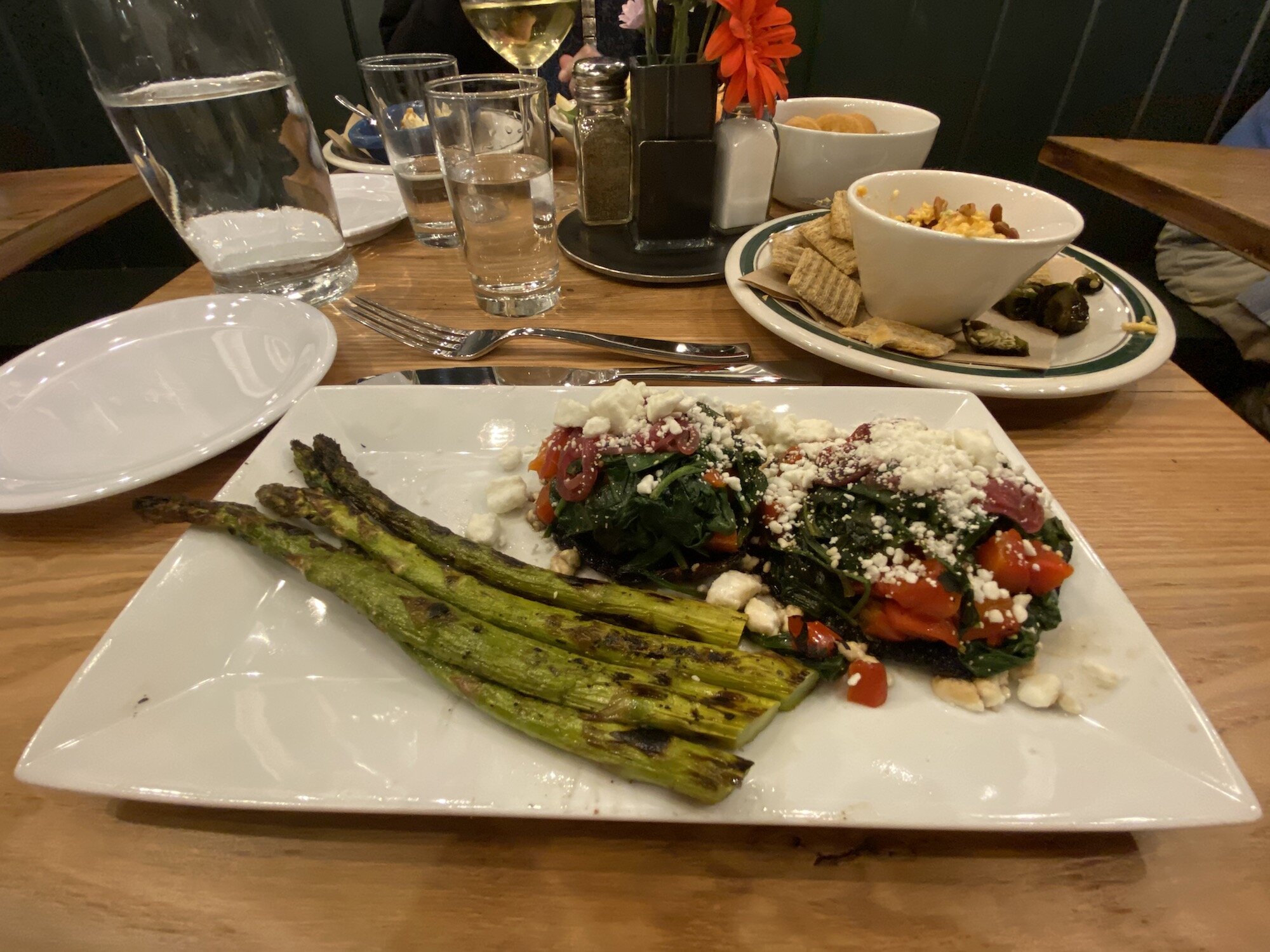
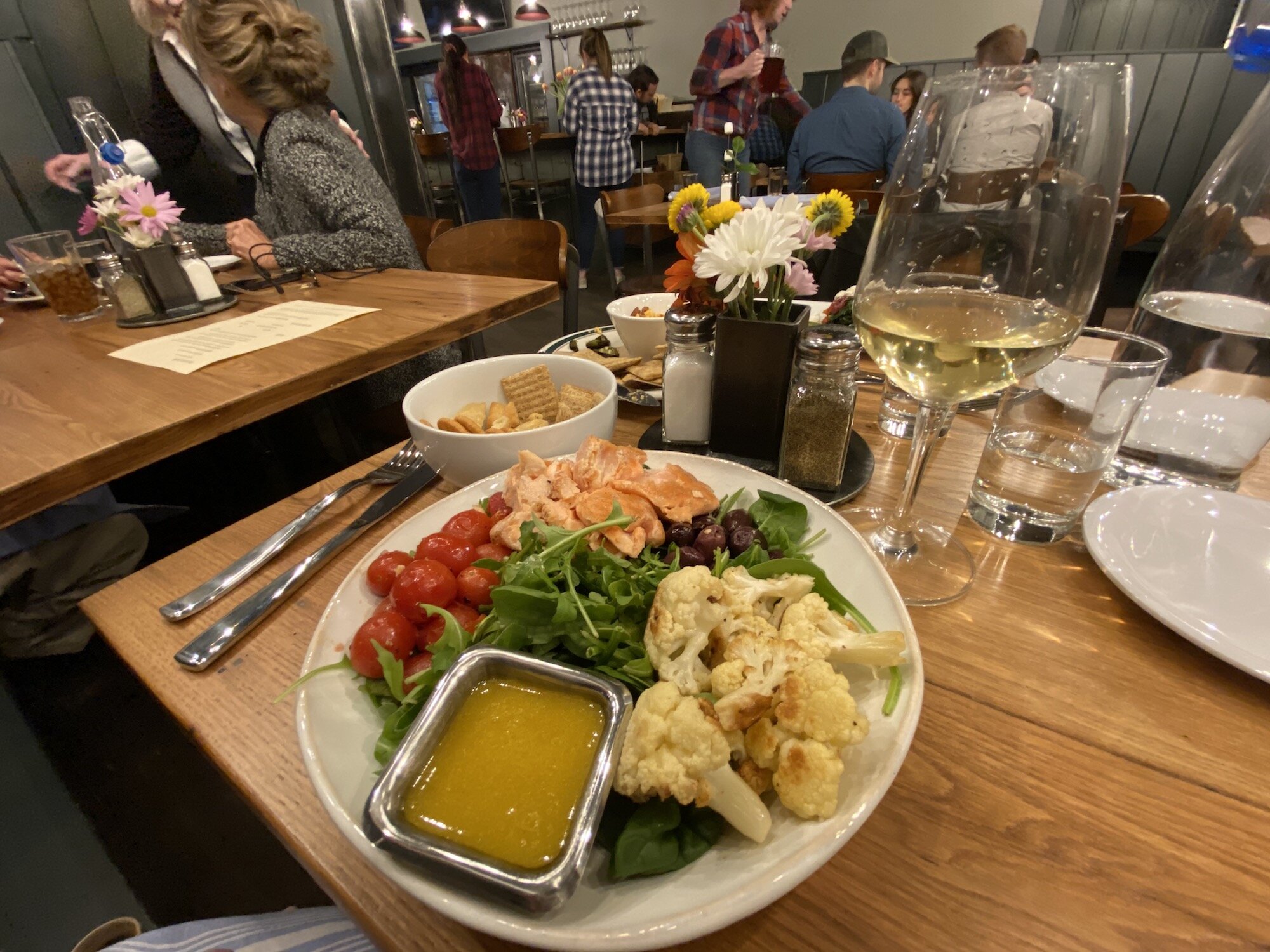
Flat Rock Together was lucky enough to be invited to a preview dinner and we quickly found ourselves immersed in the friendly energy of the Campfire Grill restaurant. Between bites of our delicious meal (see photos below), we had a chance to catch up with Executive Chef, Mimi Alexander.

Mimi comes to Flat Rock from her most recent kitchen posting in Asheville and she’s excited to be here. “When Starr approached me,” she explains, “there were a few things he wanted from the very beginning - excellent food that tastes good and looks good. He 100% wanted a community feel. He wanted a place, a community bar, for local people to hang out. And the best hamburger in Henderson County.” Checking with our neighbor at the next table, we get an enthusiastic endorsement for the aforementioned hamburger.

Mimi Alexander, Executive Chef at Campfire Grill

Mimi Alexander, Executive Chef at Campfire Grill

The interior of Campfire has rustic decor, but with a clean crisp feel that creates the sense of stepping back in time rather than being surrounded by furnishings and decorations that are decades old. The long wooden bar in the center of the restaurant will undoubtedly be the location of many great conversations over glasses of fine wine or draft beers. Seating is cozy, and the amiable, casual atmosphere lends itself to spontaneous conversations with your neighbors at the next table.

Mimi is pleased with the initial reactions from her test customers and she’s already had to turn away a steady stream of passersby who wander in wondering if the restaurant is open yet. “It’s a good indication that we’ve had people coming in every day for the past month asking when we will be open. There’s definitely a buzz and we are excited to get started.”

The Campfire Grill officially opens on Thursday, March 5th. Click on images below to see full descriptions.

Village of Flat Rock Quilt

Village Quilt.jpg

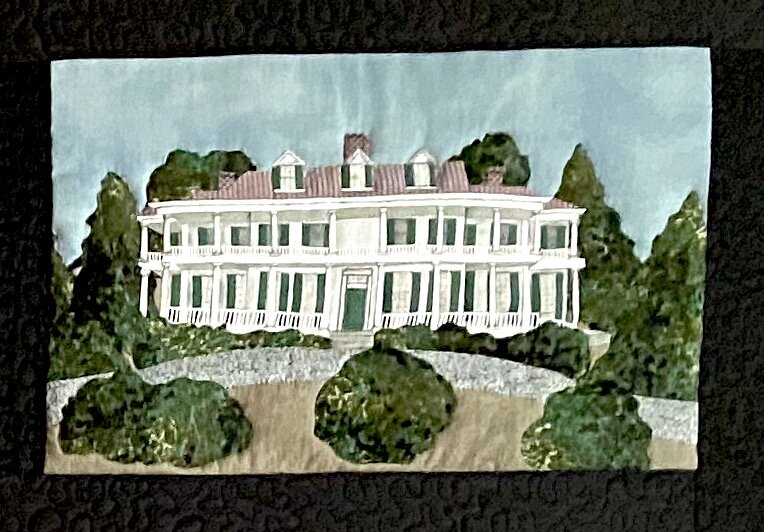
The Village of Flat Rock quilt was created as a group endeavor to highlight the history of Flat Rock and hangs in Village Hall. Several local artisans collaborated to re-create the history of Flat Rock in fabric and thread. The quilt is comprised of 23 panels - several of which depict famous Flat Rock homes.

The following descriptions of those panels were written by noted Flat Rock historian, Louise Howe Bailey. You can read the full description of the quilt here.

Mountain Lodge.jpeg

Mountain Lodge

Charles Baring, a member of the Baring Brothers Banking family in England, found in Flat Rock the healthful climate he sought for his British-born wife Susan. Lifetime heiress of considerable property left her by her fifth husband, James Heyward of Charleston, Susan brought wealth into the pioneer settlement, and with it Baring purchased four hundred acres on which to establish a summer home, Mountain Lodge, built on the order of an English country estate. Baring continued to acquire land until he ultimately owned some three thousand acres, much of which he sold to other Charlestonians desiring summer homes in Flat Rock.

Argyle.jpeg

Argyle

About the time of Baring’s arrival in Flat Rock, Judge Mitchell King, a Scotsman then living in Charleston, traveled to Tennessee in the interest of a proposed railroad linking the southern seaboard with navigable waters of the West. During a few days’ rest at the Flat Rock Inn, King found the health of a member of his family so greatly improved that he immediately purchased land and arranged to have a summer home built, calling it Argyle after his wife’s ancestral home in Scotland. King continued to acquire land, much of it for the price of twenty-five cents an acre, until he owned four thousand acres. In 1841, he settled the issue of where the seat of Henderson County would be placed by donating fifty acres for the town of Hendersonville.

Saluda Cottages.jpeg

Saluda Cottages

Coastal South Carolinians came to Flat Rock, calling it their "little Charleston of the mountains." Among them was Count Marie Joseph deChoiseul, the French consul to Charleston. He built Saluda Cottages, a small two-story house with two houses for employees just south of it. The deChoiseuls remained at Saluda Cottages until 1841, when "The Castle," where the Countess and her son and daughters would remain year-round, was ready for occupancy. The original house was the center portion of today’s Chanteloup.

Saluda Cottages had been so called because it lay near the Saluda Path, the first road to open Saluda Gap to wagons traveling from South Carolina.

Woodfield Inn.jpeg

Woodfield Inn

Woodfield Inn, originally Farmer Hotel, opened in 1850, financed by ten summer residents contributing one thousand dollars each. Henry Tudor Farmer, Susan Baring’s nephew, built the hotel and then bought it in 1853, operating it until his death. During the Civil War, it provided haven to coastal South Carolinians, and for a time a company of soldiers remained on the grounds for the safety of the people in residence.

Glenroy (Kenmure).jpeg

Glenroy (Kenmure)

Dr. Mitchell King, a son of Judge King, built Glenroy, now known as Kenmure, around 1850. After graduation from the Medical College of South Carolina, King had sought further study in Germany, where he became friends with a fellow student Otto von Bismarck. Their correspondence continued throughout their lives and is now in the Library of Congress in Washington. At Glenroy, Dr. King built an office behind the house and there carried on his medical practice. When an epidemic of yellow fever struck the Jacksonville, Florida, area in the 1880s, Dr. King, realizing the disease did not occur at higher elevations, urged the Florida doctors to send convalescent patients to an infirmary he set up for them in Hendersonville. Thus the Hendersonville area became known to Florida residents, and a thriving tourist business has resulted.

Beaumont.jpeg

Beaumont

Beaumont, built of stones quarried from the "great flat rock," was originally the summer home of Andrew Johnstone, a rice planter of Georgetown, South Carolina, and his family. During the War Between the States Johnstone was shot and killed at Beaumont by a band of renegades. His family sold the property, a later owner being Frank Hayne, at one time a "cotton king" of New Orleans.

Many Pines.jpeg

Many Pines

Many Pines was built in 1847 by James Pringle of Charleston. Later owners were Arthur Barnwell and Augustine Smythe, also Charlestonians.

Chanteloup.jpeg

Chanteloup

While visiting their good friends the Barings’ in 1831, Xavier de Choiseul purchased 205 acres on Mud Creek. It was on this property that de Choisuel built the Saluda Cottages ) to live in while Chanteloup was being built. Chanteloup, originally known as The Castle got its’ name because it was made completely out of stone and sat on a hill very similar to the castles in Europe.

A Century of Classic Cars

Our lives can be cataloged in many different ways. Loves found and lost. Places lived. Memorable travels. The arc of a career.

For Madeleine Pennoyer of Flat Rock, nearly a century of living lends itself to stories almost too numerous to recount. But one constant throughout her life has been a love of exceptional cars. Madeleine was born in England and acquired her love and appreciation of fine cars from her father, Bernard Bradford. She recalls traveling the roads of southern England as a young girl in the family’s pale blue Rolls Royce.

Ninety years later, Madeleine has her own Rolls Royce - completing automotive bookends to an extraordinary life. Here are a few of the classics that filled the time between.

 
Mercedes 1914.jpg

Mercedes 1914

Madeleine’s grandmother Bradford with her chauffeur ca 1914.

Picnic in Mercedes 1924.jpg

Mercedes 1924

Family picnic in the English countryside. Baby Madeleine is not in this photo.

Alfa Romeo in 1928 with Father age 5.jpg

Alfa Romeo, 1928

Madeleine, age 5, with her father Bernard Bradford at the shore.

Rolls Royce in 1928.jpg

Rolls Royce 1928

Madeleine, age 5, under the umbrella. The Rolls Royce was a pale blue with dark blue hubcaps. The first, but not the last, Rolls to enter her life.

Rolls Royce ca 1928.jpg

Rolls Royce 1929

Madeleine shown standing with her mother and two brothers in front of the family Rolls.

Alfa Romeo 1929.jpg

Alfa Romeo, 1929

Madeleine with her brother Roy.

Unknown Roadster ca 1930s.jpg

Unidentified Roadster ca 1930s

FAther in a Stutz with Bartoby the Mechanic copy.jpg

Madeleine’s father in his Stutz

Standing with him is the car’s mechanic, Bartoby.

Father in Bentley.jpg

Bentley

Bernard Bradford behind the wheel.

Father with Rolls Bentley.jpg

Rolls Bentley

Mr. Bradford outside the family home, “Belmont”, Eastbourne, Sussex, England.

Fathers Railton ca1933-1940.jpg

Railton

Manufactured in Cobham, Surrey between 1933 - 1940

Austin Healy in Paris 1959.jpg

Austin Healy Sprite, 1959

Madeleine owned this car while living in Paris.

Red MG is a 1955 to 1958 MGA, 1500cc engine.jpg

MGA, ca 1955-58

After moving to Flat Rock, Madeleine became a member of the British Car Club of Western North Carolina.

Sunbeam Tiger mid 1960s.jpg

Sunbeam Tiger ca 1965

Seen for one season in the opening credits as his “secret agent” car in the Get Smart TV show.

MG T-F 002.jpg

MG - TF ca 1953-55

Production ended in 1955 after 9,602 TFs had been manufactured

a Morgan, c.1967 or so. Still in production, hand built cars..jpg

Morgan, ca 1967

Hand-built car. Still in production.

Green MG.jpg

MGB, ca 1964-71

Jaguar XKE V12 CA 73-74?.jpg

Jacquar XKE V12

MGC c.1973. A 6 cylinder variant of the MGB that flopped. Quite rare..jpg

MGC ca 1969

Commercially unsuccessful and now quite rare.

Rolls Royce is a 1987 Corniche II.jpg

Rolls Royce is a 1987 Corniche II


The Breakfast Club with Mark and Paige

The Breakfast Club with Mark and Paige

Paige walks into the studio 20 seconds before The Breakfast Show goes live. She slides into her studio chair, adjusts the microphone hanging in front of her, and picks up the notes Mark has placed on the counter where she sits. With 5 seconds to spare, she is ready to go. Mark flips on the mic and cues the show’s opener.

Announcer: Wake up Sleepy Heads! It’s time for the Breakfast Club … with Mark and Paige!

Mark: Good morning, Good morning! It’s 11 minutes after seven in the morning on a fabulous Friday. Good morning, Paige!

Paige: Good morning, my love.

At a time of day when most of us are fumbling with coffee makers and struggling to formulate anything other than single-syllable sentences, Mark Warwick and Paige Posey are providing their listeners with news, announcements, local interviews, music, trivia, and delightful energy to start a new day in the mountains of western North Carolina.

Read More

Stitching Together an Extraordinary Life

Georgia Bonesteel has created an extraordinary career woven from a life filled with resilience, determination, and a teacher’s passion to share her experience and knowledge. Given these qualities, it’s no surprise that this Flat Rock resident has fashioned a career as a television personality, prolific author, and been accorded the title of “Grande Dame of American Quilting.”

Read More

Escape from Paradise

Escape from Paradise

(Jhan and Tony Dunn recently moved to Flat Rock after losing their home in Paradise, CA to the devastating Camp Fire in November 2018.  Approximately 90% of the homes in Paradise were destroyed and 85 people lost their lives, making the Camp Fire the deadliest wildfire in California history. The following article includes excerpts from Tony Dunn’s blog post entitled, “Escape from Paradise.'“ With permission.)

Read More

Delivering Smiles

Sonja-Bruton.jpg

For Sonja Bruton, her work as Postmaster at the Flat Rock Post Office is more than a job. It is a calling. And for the residents of Flat Rock, that is a very fortunate thing.

For the past seven years, Sonya has been greeting, helping, advising, and generally brightening the day for thousands of Flat Rock postal customers. Her happy voice and bright smile can turn an ordinary postal experience into a better day. And she loves her work. “I enjoy interacting with people and seeing all the people come and go. In Flat Rock, people tell you their stories, you get to develop relationships.”

When Sonya Bruton became Postmaster in Flat Rock in the summer of 2012 she had already been with USPS for nearly 25 years. After finishing school in Asheville, she started working at the Asheville mail processing center on the advice of her mother. She liked the work and her first real job turned into a career that now spans over 30 years.

Sonya eventually left the processing center and started working in the Post Office’s retail locations. She first arrived in Flat Rock in 2003 working in a staff position. She was then promoted to Officer in Charge - responsible for the office when the Postmaster was not present and then was promoted to Postmaster in 2008. 

That first promotion to Postmaster took Sonya on a journey to other Post Offices in the region - including Lake Toxaway and Mars Hill. But she always wanted to come “home” to Flat Rock and when the position opened up in 2011, Sonya applied and the following year became the 32nd person to oversee the Flat Rock Post office since John Davis was first appointed in December of 1829.

Sonya supervises a staff of four and can also serve as an unofficial tour guide for Flat Rock.  “People come here wanting to know the history. They want to know about Carl Sandburg and the Flat Rock Playhouse and all the summer camps in the area.”

Despite the decline of traditional letter writing, business at the Flat Rock Post Office is still growing. Sonya attributes the increase in mail volume to good customer service and the convenience of a small-town post office. “People like being able to walk right up to the counter and having a relationship with us. It just feels more like family here in Flat Rock.”

The holiday season is looming and Sonya and her staff are getting prepared. “Oh my goodness. Oh my goodness. It is crazy,” she laughs!  “But I love it. I'm used to it and I know how to get my mind right for it. My goal is to get people in and out and get them what they need for Christmas. At Christmas, everybody is relying on us the help them get their cards and their packages to loved ones. So it is important to them. And to us!”

With her trademark optimistic outlook on life, Sonya has more good days than bad days at work. “I have a lot of days where I just get a lot of gratitude from customers. And not just because I'm looking for it, but they just give it to me and I love that. It makes me feel like I'm doing a good job.”

Of course, there are difficult situations in any job, but Sonya is determined not to let the challenging situations get the best of her … or her customers. Including the grumpy customer that kept coming back to see her. “He's was grumpy but he kept coming back. So I knew I had him! He actually started talking and was more pleasant. I just knew that he was good inside.”

Ultimately, Sonya’s work is more than just a job. She believes that she has been called by her strong faith to help people.  “Serving people, helping people, being nice to people. I just get great joy in helping people. God instilled the joy of himself in me and I like to pay that forward.”

The next time you are in the Flat Rock post office and see Sonya, be sure to tell her hello. It will make her day. Sonya’s big smile and enthusiastic greetings are sure to make yours.

Screen Shot 2019-12-05 at 4.55.09 PM.png

That Table

This article was originally published in 2019 when our Nana left her home of 35 years to be closer to children. It is offered again today in her memory. -BH


That Table.jpg

As I close the front door to Nana’s house for the final time, I take one last peek at the now-empty dining room. 

A hundred mental images flash through my mind, instantly filling the vacant space with an avalanche of memories. Memories of countless meals shared over an old and worn wooden table.

Sitting around that table was a place of unbridled laughter and heart-wrenching loss. Its wooden surface splashed with tears of both joy and sorrow. Around that table, iconic family stories were ritually recounted and repeated as if being recited from the sacred Book of Family.  

That dining room table was where we celebrated all important occasions … including Thanksgiving dinners too numerous to count.

We won’t be having Thanksgiving at Nana’s this year. Or ever again.  Not that this is a sad story - Nana is as feisty and outspoken as ever.  But now she lives in a beautiful retirement community surrounded by walls and floors and ceilings that do not echo with the memories of generations past and present.

Nostalgia stems from closing a particular chapter in your life. From turning a page and knowing that you can never go back to that place or those times. Those times before the children grew up and moved away. The time before lives and marriages and careers faded from brilliant living color to the muted sepia tones of yesteryear.

That old wooden table was our family sounding board. It was the bench from which parents handed down decrees. It was the pulpit from which we shared our hearts and our souls. It was the stage where we told our favorite stories and re-enacted the greatest moments of lives well-blessed. 

That table was the place where family history touched ground.

Every scratch, every dent, every watermark on that table told a story. Just like the people who sat around it for decades, its imperfections and rough edges gave it a unique personality and a singular place in the world.  The original sterile pristine exterior replaced with a tapestry of family history gouged and carved into its soft wooden surface.

Improbably, that dark wooden table was a brilliant mirror that reflected the breadth and depth of the generations of lives that gathered at its edges for so many years. 

As the gap between door and door jamb slowly closes one final time, I smile and say a quiet prayer of thanks. Thanks for a good home with a good table. Thanks for the place that grounded our family. Thank you to that table that steadfastly hosted a family’s passage through this life.

I close the door and the chapter is done.

Flat Rock 101: A Quiz

Howdy!

Howdy!

How well do you know Flat Rock? Are you conversant in the history and lore of the place referred to as The Little Charleston of the Mountains?

Well here is a quiz designed to separate the Flat Rock insiders from the carpetbaggers just down for the day from Asheville.

Take the quiz and see where you rate. Answers below.


Flat Rock 101 Quiz

1. Which actor honed their craft at Flat Rock Playhouse during the early years of the theater?

a) Natalie Wood

b) Tony Curtis

c) Lee Marvin

d) Mark Warwick


2. Flat Rock observed its “Bicentennial” in 2007 to celebrate what seminal event in 1807?

a) The earliest Flat Rock estate, Mountain Lodge, was constructed.

b) Abraham Kuykendall received the first land grant in the Flat Rock area

c) Flat Rock was first mentioned by geographers in public records

d) Flat Rock was incorporated as a village


3. Which famous character on the Howdy Doody Show retired in Kenmure in the 1990s?

a) Clarabell the Clown

b) Buffalo Bob

c) Cheif Thunderthud

d) Detective Butterball


4. Greenville Highway (Rt 225) closely follows the route of what original colonial road?

a) The Great Philadelphia Wagon Road

b) Mountain Bridge Wilderness Trail

c) The Ancient Cherokee Highway

d) Old Buncombe Turnpike


5. What major geological feature can be found in Flat Rock?

a) The Carolinas Traverse Seismic Fault

b) The headwaters of the Ohio River

c) The Eastern Continental Divide

d) The geographic center of the USA from 1821 until the admission of California in 1854


6. The first movie ever shown at the Flat Rock Cinema was?

a) The Sound of Music

b) Pirates of the Carribean

c) Requiem for a Dream

d) Lost in Translation


7. Flat Rock Square (Formerly Singleton Center) was originally the site of?

a) Flat Rock High School

b) Corporate Offices for Ingles Groceries

c) Site of the stables for Hendersonville Police horses in the late 1800s

d) The Original Flat Rock Millhouse


8. Christopher Memminger, the first Secretary of the Treasury for the Confederacy, buried millions of dollars of confederate gold (in legend) where?

a) Saluda Cottages

b) Below the Great Flat Rock

c) Connemara

d) Bonclarken


9. The clubhouse at Kenmure was originally known as what?

a) Argyle

b) Glenroy

c) Elliott House

d) Tall Trees


10. The iconic Wrinkled Egg store received its name from where?

a) The elderly aunt of the owner who referred to herself as “An Old Wrinkled Egg”

b) The shape of a boiled egg eaten during a conversation on what to name the new store

c) The German word “wringëlt” meaning charmed or indicative of good luck

d) The unique eggs produced by a beloved hen owned by the founder’s grandfather


Answers:

1) c. Lee Marvin

2) c. Flat Rock was first mentioned by geographers in public records

3) b. Buffalo Bob

4) d. Old Buncombe Turnpike

5) c. The Eastern Continental Divide

6) b. Pirates of the Carribean

7) a. Flat Rock High School

8) c. Connemara

9) b. Glenroy

10) d. The unique eggs produced by a beloved hen owned by the founder’s grandfather

How did you do?

Number Correct:

9-10: You probably remember when Greenville Highway was a dirt road.

6-8: Almost good enough to qualify as a native. Almost.

3-5: You need to get out and about in Flat Rock more often.

1-2: Well bless your heart.

Día de los Muertos

Casabermeja Cementario 2.jpg

I was lost in Spain. On October 31st.

Driving alone in the days before ubiquitous GPS devices, I ended up in the town of Casabermeja - and couldn’t find my way out. Not a problem I thought. I’ll just employ my finely tuned and almost supernatural sense of misdirection. Predictably, I managed to get hopelessly lost in the incredibly narrow and winding cobblestone streets of the ancient town. 

Eventually, I gave up and found myself parked in front of Casabermeja's Municipal Cementario.

In Spain, as in most Spanish speaking lands, Halloween is known as "Día de los Muertos." The name notwithstanding, it is a joyous holiday...a time to remember friends and family who have died. Officially commemorated on November 2 (All Souls' Day), the three-day celebration actually begins on the evening of October 31. 

It is a time to honor the dead who are believed to return to their homes on Halloween. Many families construct an altar in their home and decorate it with candy, flowers, photographs, fresh water and samples of the deceased's favorite foods and drinks.  Relatives also tidy the gravesites of lost family members, including snipping weeds, making repairs and painting. The grave is then adorned with flowers, wreaths or paper streamers. Because of the date, el cementario in Casabermeja was a beehive of activity with a parade of locals streaming into the cemetery with flowers and buckets of cleaning supplies.  

Curious, I walked in with them and discovered endless rows of mausoleums built side by side and stretching away in every direction. It felt like another miniature town comprised of small white stone houses with narrow winding streets.  The mausoleums were covered with a riot of colorful flowers. Incredibly, every single gravesite I saw - and there were hundreds - was adorned with flowers. 

The day was extremely blustery and chilly.  Casabermeja is perched on high on a hill and the wind whipped through the cemetery scattering flowers everywhere and creating an eerie whistling sound as it swept through the narrow passageways between crypts.  All voices and sounds of the living visitors were carried away by the wind.  As I walked among the dead, I could hear only the rush of wind, the rustle of flowers and leaves, and my own breath. 

Walking aimlessly among the graves, I turned a corner and came upon an elderly and frail-looking gentleman pushing red and white carnations through the iron gate on the front of a grave - one flower at a time.  He looked very unsteady in the wind and a sudden gust blew the beret he was wearing off his bald head.  

The cap started rolling down the walkway between crypts and I scrambled after it to retrieve it for him.  As I walked back towards him with cap in hand, I realized that he had never looked up to see where his beret had gone.  He was still pushing carnations through the grate.  I glanced at the inscription on the bronze plaque of the grave.   

Maria Diaz González.  
2 Agosto 2010. 
A las 79 Años.
 

His wife. Gone less than a year. 

I stood next to him for a moment - my hand extended with his hat.  Not until the last flower had been pushed between the iron bars did he turn to look at me.  I guessed he was in his eighties.  Thin, stooped, with rheumy eyes set deep and dark into his face.  For a moment we simply stared at one another.  Señor González and the stranger holding his cap.  Two incredibly different lives from two profoundly different cultures. The only sound was the wind whistling through the cemetery. 

His loss was evident in his eyes. I could feel the sorrow in his heart reach across the short distance between us. I thought of all that I have lost, or foolishly given up, or taken for granted until it was too late, and realized that he was not the only person feeling a keen sense of loss that day. Slowly his hand reached up to take the beret. We both held the cap for a moment and stared at each other.  I could see the question in his eyes. Who was this strange-looking person standing before him? Ironically, that was the very same question I had been asking of myself since my arrival in Spain on a solitary journey of self-discovery.  

He mumbled a barely audible, "Gracias".  "De nada", I replied.  And I turned to leave him alone with his wife and his loss. 

A while later I found my way back to Señora Gonzalez's grave.  Her husband was gone. I picked up a couple of loose flowers that had been blowing around in the walkways and slipped them through the grate.

Casabermeja Cementerio.jpg
Casabermeja Cementario 3.jpg
 

Celebrate Día de los Muertos in Flat Rock

What: Day of the Dead Celebration
When: 5:30 -6:30 p.m., Friday, November 1. 2019
Where: The Gallery at Flat Rock, 2702-A Greenville Highway, Flat Rock
How much: Free and open to the public 

To pay homage to the traditional practice in Mexican Culture to honor those who have passed, The Gallery at Flat Rock is presenting a special Day of the Dead celebration on Nov. 1. The event is in conjunction with the current exhibit, “Crossing Cultures,” featuring the paintings , sculptures and work on paper by Jose Bayro C., of Puebla, Mexico. 

Day of the Dead, or Día de los Muertos, constitutes a multi-day celebration during which family and friends gather to pray for and remember friends and family members who have passed on, in order to support loved ones on their spiritual journey. Gallery owner Suzanne Camarata is hopeful that the community will add to the makeshift altar set up at the gallery for the event.

Participants are welcome to bring by an object or photo during the gallery’s regular business hours, or to stop in on November 1, 5:30-6:30, when sweets will be shared with those dropping in to the celebration, as well as Flying Wish Paper to burn. 

“This is for the community to express their love for someone they’ve lost with a memento, photo, or something they’ve made,” said Camarata. “We are celebrating the cycle of life and the ‘Crossing Cultures’ show by combining the traditions of Day of the Dead.”