Raising Cane: A Plant, a Culture and a Changing Landscape
How a nearly forgotten native plant connects Cherokee tradition, conservation and the future of the Southern Appalachians.
—
For countless generations, Native peoples of the Southeast relied on river cane as an important and versatile plant. They harvested it for food, used it to build homes and make tools, mats and baskets, and learned how to cultivate and care for the vast canebrakes that once stretched for miles along rivers and streams.
River cane was also doing work of its own - holding soil in place, absorbing water, trapping sediment and creating habitat for wildlife. Today, filmmaker David Weintraub says, roughly 98 percent of that river cane has disappeared.
As Western North Carolina continues to reckon with the devastation left by Hurricane Helene, Weintraub believes this nearly forgotten native plant has an important story to tell - about protecting our rivers, preserving Cherokee culture and learning to work with nature rather than against it.
That story is the subject of Weintraub’s newest documentary, Raising Cane: The Cherokee and Rivercane, which premieres September 19 at Blue Ridge Community College and explores why a plant once woven into Cherokee life may also matter to the future of the region’s rivers.
—

For Weintraub, executive director of the Hendersonville-based Center for Cultural Preservation, Raising Cane grew out of a story that had been taking shape for years.
He first became intrigued by river cane while researching Come Hell or High Water, his documentary about the devastating 1916 flood. In conversations with scientists and geologists, he learned that places where river cane remained along waterways often suffered remarkably little erosion during major floods. “River cane is incredibly tenacious,” Weintraub explains. “It actually thrives when disturbed. It absorbs water, retains sediment and creates amazing habitat for wildlife.”
The discovery stayed with him. River cane surfaced again as Weintraub worked on later documentaries, including Nature’s Wisdom Through Native Eyes, which explored the relationship between the Cherokee and the natural world. But the larger story of the plant - its environmental importance and its deep connection to Native culture - remained to be told. “I’m always looking for connections between nature’s wisdom and cultural understanding, and river cane is a great example,” Weintraub says.
Then Hurricane Helene struck Western North Carolina. “I guess you could say Helene made me do it,” Weintraub says with a laugh.
What is River Cane?
River cane - Arundinaria gigantea - is a species of bamboo native to the southeastern United States. Large stands are known as canebrakes. For centuries, those canebrakes were a prominent feature of the Southern landscape, particularly along rivers and streams.
The 18th-century naturalist William Bartram, who traveled extensively through the Southeast, described “vast cane meadows,” “cane pastures” and an “endless wilderness of cane.” Weintraub says those descriptions suggest how dominant the plant once was. “You could travel for miles and see nothing but cane,” he says. “It was like a jungle.”
River cane’s roots in the region go back much further. Fossils discovered at the Gray Fossil Site in East Tennessee revealed an extinct relative of today’s red panda, sometimes called Bristol’s panda or the Appalachian red panda. Evidence from its teeth indicates that the animal likely ate native river cane growing in the Southern Appalachians. “I had no idea pandas once lived here,” Weintraub says.
—

Historic Canebrake Image. (US Department of Agriculture)
The vast canebrakes Bartram described are largely gone. Part of the reason is simple geography. “One of river cane’s biggest problems is that it loves waterfront property,” Weintraub says. “And so do humans.”
As European settlement expanded, riverfront land was cleared for agriculture, communities and development. Colonists also discovered that cattle and other livestock eagerly ate the tender young cane shoots. “They found that their cattle thrived on the young shoots,” Weintraub says. “The milk and butter were better when the animals ate cane. But livestock eating those shoots was destroying the cane.”
Over the next several hundred years, vast stretches of canebrake disappeared. The loss affected more than the plant itself. Canebrakes provided habitat for numerous species of wildlife. Weintraub notes that the passenger pigeon and Carolina parakeet were also connected to river cane. Both species are now extinct.
—
For the Cherokee, the disappearance of river cane represents more than the loss of a native plant. For generations, it was an essential part of everyday life. “The Cherokee used strips of cane, covered with clay and mud, to build strong, weatherproof houses,” Weintraub says. “They wove cane mats for floors and walls. They used it for baskets, council fires, rafts, arrow shafts, quivers, containers, blowguns, lashings, flutes and canteens. It had all kinds of uses.”
The Cherokee also understood that a resource so valuable had to be cared for. “The Cherokee weren’t destroying the cane,” Weintraub says. “They found ways to help it thrive. Because they depended on it, they understood the importance of taking care of it.”
Today, one of the clearest reminders of that relationship can be found in traditional Cherokee basketmaking- a cultural practice dating back 5,000 to 10,000 years. About two decades ago, the Eastern Band of Cherokee Indians began an effort to revitalize the craft as elders who carried the traditional knowledge grew older. Some of those artisans appear in Raising Cane, demonstrating the painstaking process of preparing river cane and weaving the intricate baskets for which Cherokee artisans are known.
But preserving the knowledge is only part of the challenge. They also need cane. “It takes a lot of river cane to make a basket,” Weintraub says. Weintraub had hoped to film more basketmakers for the documentary but found that some artisans were having difficulty obtaining enough river cane to work with.
Bringing river cane back, then, is about more than repairing an ecosystem. It is also about preserving a cultural tradition that has depended on the plant for generations.
Bringing Back River Cane
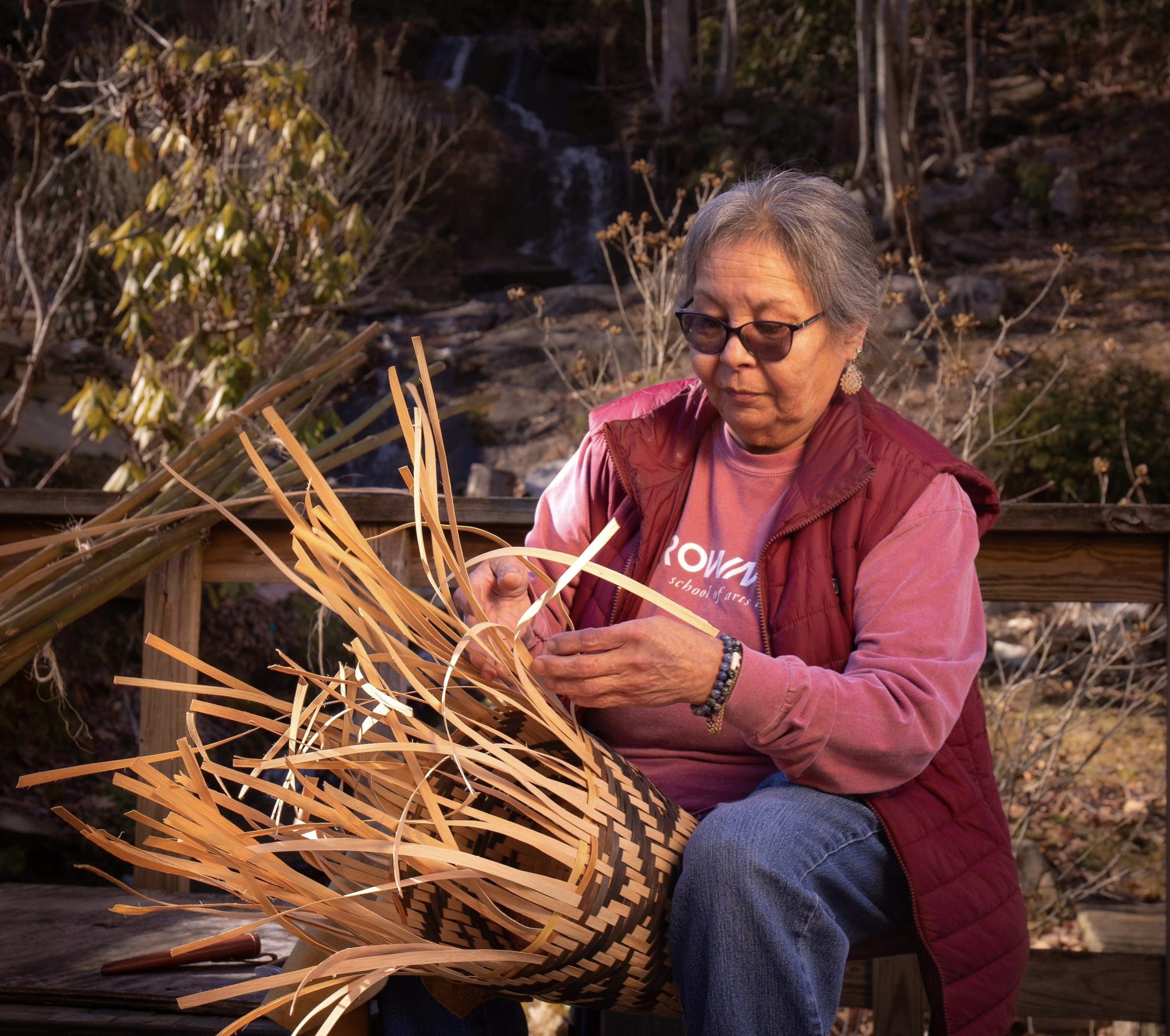
Mary weaving a basket with river cane.
Across the Southeast, Native communities and conservation organizations are working to restore river cane to places where it once flourished. “The Cherokee, the Catawba and other Southeastern tribes are working hand in hand with conservationists to bring river cane back,” Weintraub says. “It may never return to its former glory, but it can still help protect the land and support traditional crafts that have existed for thousands of years.”
That work is happening here in Western North Carolina. Conserving Carolina is working with the Eastern Band of Cherokee Indians to restore river cane along the French Broad River, while RiverLink and the Southern Appalachian Highlands Conservancy are involved in other restoration efforts in the region.
But bringing river cane back takes patience. “One of the challenges is that river cane can take 50 years to produce seed,” Weintraub says. “So they’re transplanting cane into areas where it can grow along streambanks.”
For Weintraub, these partnerships bring together the two themes at the heart of Raising Cane: restoring a plant that can help protect the landscape while preserving the cultural traditions that have depended upon it for generations. “It can create a win for the land, a win for nature and a win for the continuation of basketry, mat weaving and other traditional arts that are disappearing as the resource disappears.”
—
For Weintraub, Raising Cane ultimately asks a larger question: What can a plant that has flourished here for thousands of years teach us about the way we live on the land today?
One lesson, he says, is simple. “Nature is a partner.”
Floods are nothing new to the Southern Appalachians. What has changed, Weintraub believes, is the landscape they encounter — wetlands lost, riverbanks altered and roads, buildings and pavement occupying places where water once moved more freely .“When you put concrete in places where water is supposed to flow, it changes everything,” he says.

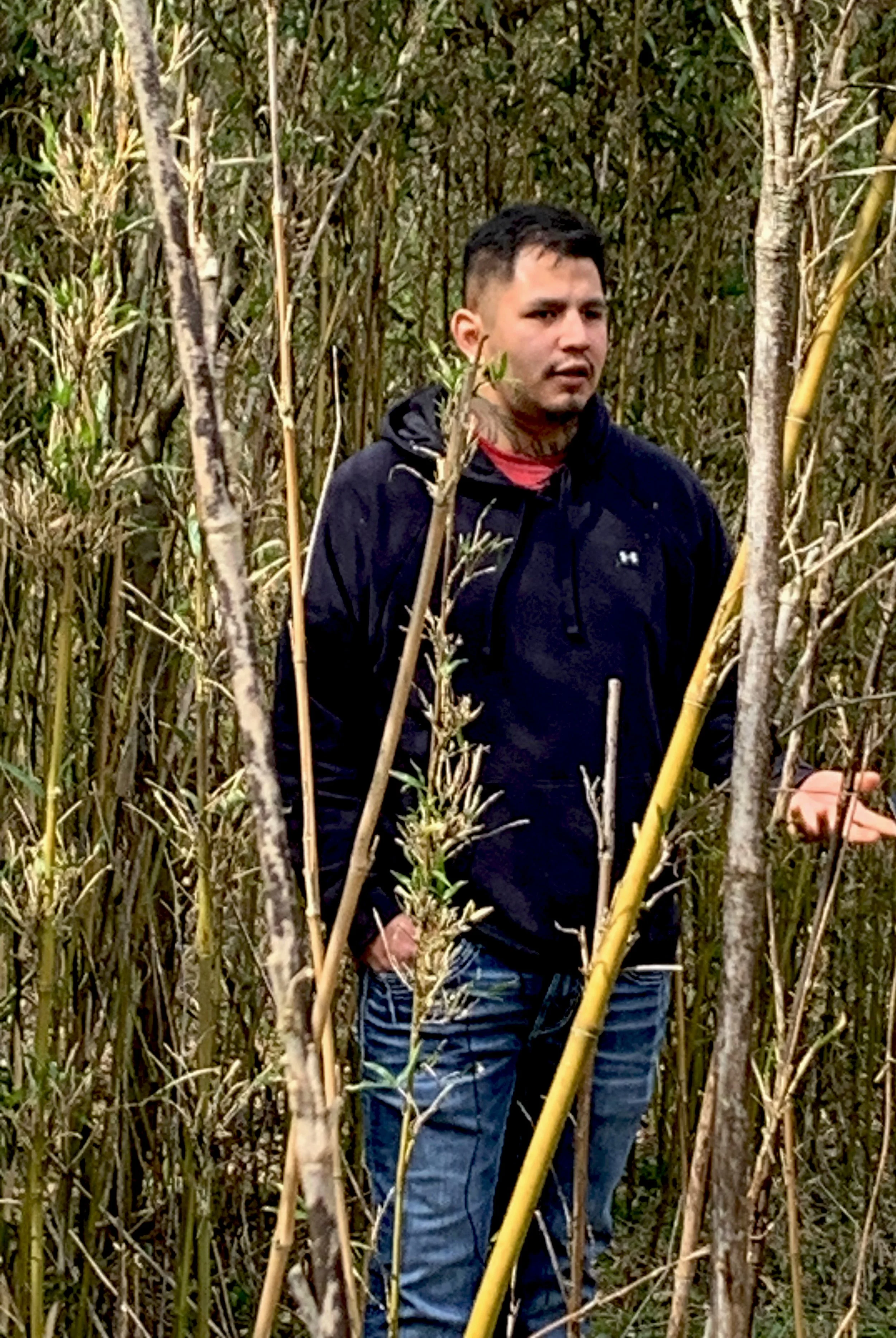
Collecting River Cane
Helene, in that sense, became another teacher. Weintraub sometimes calls the storm “Professor Helene,” a devastating reminder of the consequences of forgetting how natural systems work. “The Cherokee always say nature is the best teacher,” he says. “What Professor Helene is teaching us is that when we work together as a community, we can also find ways to work together with the natural world.”
Weintraub says his relationship with the Eastern Band of Cherokee Indians over the past 20 years has deepened that understanding. “I’ve learned so much from their stories, their observations and the connections they make,” he says. “There’s a world of wisdom there that is important for us to tap into.”
It is a lesson Weintraub says he has heard repeatedly from a career that has included nearly 500 oral histories. “The elders keep telling me the same thing,” Weintraub says. “‘How do you know where you’re going unless you know where you came from?’”
Raising Cane suggests that moving forward may begin with remembering what has been here all along.
--
:Raising Cane: The Cherokee and Rivercane” premieres September 19 at Blue Ridge Community College at 7 pm in Thomas Auditorium. For more information about the film and to purchase tickets, visit saveculture.org/shop/raising-cane/.